Kevin Kilbane: The ultimate professional
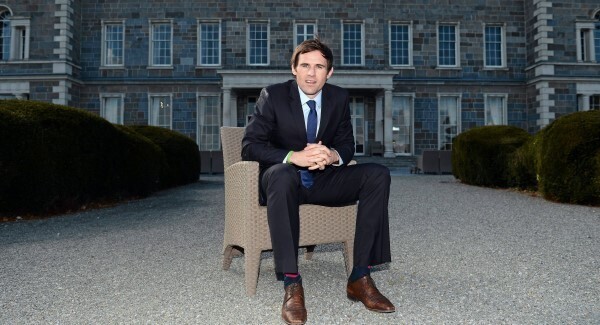
If you’re ever doubting why Kevin Kilbane is constantly on the airwaves and on trains, planes and automobiles all around Britain covering games, it’s because he’s seen just about everything in football.
He’s played in World Cups, yet started and finished in the lower leagues. He began in a dressing room where the most foreign player was Welsh but would later inhabit others where he’d take African team-mates to dinner and them unable to say a word to him. He’s seen so-called mind gurus come in and smash wood and walk on glass in front of his baffled team-mates and another who instructed them all to hug one another. He played with Wayne Rooney when the kid was 17 yet Rooney wasn’t even the best 17-year-old he came across — that would be Robbie Keane. He’s been a hero and a scapegoat to fans, ridiculed and abused by some and lauded, even loved, by others. Yet all that time he seemed to carry himself with a certain poise and dignity, underpinned by a resilience, that would prompt Mick McCarthy to hail him as a pro’s pro and about the most genuine man he’d met in football, someone “I’d be proud to have as a son”. If Kipling knew Kevin Kilbane, he’d probably describe him “as a man, my son”.
But Kevin Kilbane wasn’t Kipling’s son, nor McCarthy’s either. He was Patrick Farrell Kilbane’s, and he’d see it all with him too.
Patrick was a pioneer when he first met Teresa in an Irish social club in Preston but by the time they had a few kids, he was an alcoholic. During the day he was a road digger and a labourer for an Irish firm. Then he’d hit the pub, only to return home after the children were all in bed and drunkenly demand his dinner. Eventually Teresa would kick him out of the house. “His departure made no difference to my life,” his son would write in his fine autobiography Killa out this winter. “At least now we wouldn’t be woken up at night.”
Patrick would still provide Kevin with some sleepless, awful nights. On Kevin’s 17th birthday he spent the night in a psychiatric hospital while his father went into cold turkey. “He was hallucinating and trying to break down the doors of the wall,” writes Kevin in his book. “It was a horrible night and one I’ll never forget.”
And yet he would try to forgive. They wouldn’t talk or meet for years but met up a couple of years ago after a game of his. In the book Kevin speaks about realising that alcoholism is an illness, that his father needed help. “As a child I had no idea what he was going through and the torment he must have been suffering.” They still talk and there’s a tentative plan to visit his native Achill together in the coming years. They’re working on having some kind of relationship — but after all that Kevin’s seen and Patrick’s done, it is work.
The one thing Kevin did get from his father was a sense of Irishness. For that he’s eternally grateful. “I grew up Irishman living in England,” he says. “I’ve always felt Irish.” His football heroes were all Irish. He won a goldfish at the local fair and named him Paul McGrath. He was delighted that his school team wore green and white hoops because that was the strip of his second-favourite team, Celtic, and his favourite goalkeeper, Packie Bonner. He can still remember when Ireland would have to play their midweek games in the mid-afternoon because Lansdowne Road had no floodlights. They went to mass every week. They went to a Catholic school. Everyone who visited the house seemed to have an Irish accent. When Preston’s youth team coach, one Sam Allardyce, informed him he’d been called up to the England U18 squad, Kilbane’s reaction was one of disgust, not elation. He didn’t want to play for England. He wanted to play for Ireland. In every way he was in England but of Ireland.
That had its drawbacks. Six weeks ago he was in Dublin Castle for the recent Cities of the Isles conference in Dublin Castle, in which he and his childhood hero Packie Bonner spoke at a session chaired by this writer on integration through sport. At 18, Bonner was more prepared for Glasgow after a childhood in Donegal than Kilbane was at 20 leaving Preston for a multi-cultural city like Birmingham where he played for West Brom.
The Bonners had run a bed and breakfast in which people of all denominations from the north and Scotland would visit and Packie’s father would regale them with stories. Shortly after Packie moved to Glasgow he met a local girl called Anne. Her father was a Rangers season-ticket holder. When Bonner first called to the house to bring her on a date, he was welcomed into the living room to find his future father-in-law with his back to him, sitting in a seat, with his Rangers’ scarf wrapped around his neck and multiple Rangers match programmes on the ground beside him. It broke the ice; sectarianism might have remained a huge problem within Glasgow football but not within that Glasgow or Bonner household.
Kevin though had difficulty adapting to another city and other cultures. While Bonner bought his own house in another country at 18, Kilbane was still living with his mother until he signed for West Brom for over £1 million.
“When I was younger I was very judgmental about people,” he’d tell delegates at the conference. “I found with my parents that if we were ever away, we’d always look up for the nearest Irish pub or social centre. And at Preston, it was a very British team; a couple of Scots, one Welsh, that was it. So when players from other cultures started coming into the Premier League and into the other leagues, the immediate reaction was ‘He’s lazy, he doesn’t do this, he doesn’t do that’. There wasn’t a general acceptance within the game for foreign players in those years.”
Kilbane thought the same way, especially about French players, French people. “When you’re younger you have an impression of the French as arrogant, stuck up, whatever. You have these misconceptions of people.” But gradually his view of them would change.
He would once share the same field as Eric Cantona. It was during that spell when Cantona was suspended for his karate kick in Selhurst Park, and to keep him ticking over and football fit, he played for a United reserves team in a game behind closed doors at The Cliff against a Preston select featuring Kilbane. Cantona’s work ethic wasn’t hectic but his touch and presence, extraordinary and unforgettable.
Five years later Kilbane was playing alongside another Frenchman called Eric. His old Sunderland team-mate Eric Roy was one of the most professional and convivial colleagues he’d ever have. So was another Frenchman, Antoine Sibierski, that he’d play alongside at Wigan. They still call each other regularly. There were some fascinating personalities and characters there. The Dutchman Arjan De Zeeuw went on to become an investigative detective, specialising in forensics. The future private eye was just another foreign player that opened Kilbane’s eyes.
By those Wigan days Kilbane was one of the senior pros that would look out for a new team-mate, especially one from a different culture. He was the same at Hull. He only wishes he was that way a bit more at Sunderland, though he had his own difficulties to contend with then that he didn’t concern himself with too many others.
He was there that day described in Niall Quinn’s book when a youngster from Dublin called Smithy was running around the training ground with them in preseason, and just as they were coming by the main entrance for a second time, he ran straight out of the gate.
“We never saw him again,” says Kilbane. “Of course you have to laugh at that but there’s something very sad about that too. That was his career ended. There was a lack of support for him. He was obviously homesick and struggling, even though we had quite a lot of Irish there at Sunderland.
“As I got older, I’d look out more for these young lads that were coming into a club. You sign for a club, they might have paid £1m, £2m, whatever it is, for you but you’re suddenly in a strange city and being judged on 90 minutes, even though those 90 minutes are only a small percentage of your life. You might be totally unhappy in your life, struggling with the culture, the food, the weather. So I’d invite them around to my house, or take them out for dinner.
“We had a lad called Kamil Zayatte from Guinea, played a couple of years in France and Switzerland, and suddenly he’s in Hull. He just lands in Manchester Airport, gets a transfer up to Hull, probably doesn’t have a clue where the place is. I was staying in a hotel myself at the time so I said ‘Do you want to go for some dinner?’ He couldn’t speak a word of English. The two of us sat across from each other, just looking at each other’s eyes. It was like a romantic dinner that way.”
Team-mates were there for him too. The professional dressing room could be a hard place, especially in the early years. Apprentices would tip-toe in there where the first-teamers would assess how they’d perform at their various tasks. Their assessment would make Alan Sugar and Bill Cullen seem like puppies and the apprentices quivering schoolboys. The lights might be switched off and you’d have to weather some digs that were outright punches. You might even have to go outside and run around the pitch naked. Kilbane was spared that indignity, often saving himself with an ability to sing any song from Ben E King’s Stand By Me, but while he realises that a lot of that carry-on was very un-PC and some of it downright exploitation and outright bullying, he could see the merits of it too. Performing those menial tasks created a sense of togetherness and humility.
He finds today’s youngsters can often lack that, because they’ve been pampered, protected. He wouldn’t change his own apprenticeship. “It was often harsh but I think it was the making of me,” he says. “The balance has gone too far now.”
He had people looking out for him though in Preston. One of them was the youth coach who first signed him, Sam Allardyce. “If the pros kick you in training,” he’d advise him, “kick them back — harder!” Whenever he would get down on himself, Sam would help pick him up. So would a certain David Moyes. He’d do the same at Everton, rescuing Kilbane from a torrid and often horrid spell at Sunderland.
That was an exceptional dressing room at Goodison. Men like Neville, Stubbs, Ferguson, Gravesen, Carsley and Campbell. They were hard-nosed yet suitably compassionate too. When Kilbane learned that his first-born daughter, Elsie, had Down Syndrome, his Everton team-mates were like a second family, especially his old Irish colleague Lee Carsley. Lee’s son Connor had a similar condition. Lee is Elsie’s godfather, and almost a brother to Kilbane himself. Along with Shay Given, he’s Kilbane’s best friend in football.
Elsie is a huge part of the book, mainly because she’s a huge part of his life. Kilbane was a regular mass attender but stopped going after Elsie’s birth; why would God burden them so? It would take him a year to finally step into a church and have her baptised. The day ended up being a celebration of her and he finds her whole life now something to celebrate. Seeing what she’s capable of doing and being happy has made him all the more challenge his perceptions of everyone.
Often, he’s found, there’s a lot of different sides to people. He thinks of Roy Keane. In his first training session with the Republic of Ireland, he was in a small-sided game in which Keane lashed the ball at him, to see how he was able to control both the ball and being possibly intimidated. A few days later Kilbane would be taken off at half-time in his debut while Keane would score a couple of goals to ensure a 4-2 win over Iceland. It was a tough time for Kilbane but he’d get by. Kitman Johnny Fallon would stay with him for a few minutes in the dressing room as the second half commenced, saying with amazing prescience to someone who would become Ireland’s third-most-capped player, “When you’ve got your 100th cap, you’ll be able to look back at this and laugh.” And Keane himself was another rock for him, spending a lot of time with him the next couple of days, lifting his spirits, learning about his background. Roy could be the good cop as well as the bad cop. That wasn’t lost on Kilbane.
He’s seen some other amazing things on that field and in that dressing room. He can still see Keith O’Neill going around before the Euro 2000 qualifier against Macedonia, ranting and raving at Denis Irwin. “But do you want it, Denis? Do you really fucking want it?” Kilbane can still see Irwin peering over his shoulder and quietly saying, “Get him out of my fucking face.” Only a few months earlier Irwin had won the Treble. And only a couple of hours later O’Neill would trip up and allow his man score an injury-time equaliser that denied Ireland an automatic spot in the Euros.
There’s wanting it and doing it. Often there can be a difference.
Kilbane learned that towards the end of his career. He wanted to keep playing but 12 months ago this week, the body and mind told him it no longer could. He was depressed coming towards that decision, relieved after it. It’s been a rough last few years — his marriage to Laura finished up a couple of years ago, something he attributes to them meeting so young and all the time he was away from home, especially when playing for Hull — but he’s weathered it.
When you meet him, he’s his exuberant, courteous self. He’s extremely busy, between visiting time with the kids (Elsie has a sister, Isla), moving to a new house in Manchester, and all his media work. Newstalk, the Mail, BBC; he’s at it literally full-time now. The other night, he covered Chelsea-Sunderland. Seven goals in that one. Today he’ll be at another ground.
“I’m loving it. For years there, I didn’t get watching much football. I was either playing it or with the kids. But now I’m able to watch games and take in great games. Even if I’m not covering a game, I take one in, so I have my homework done.”
Conscientious, still. A pro’s pro.
-
CONNECT WITH US TODAY



Be the first to know the latest news and updates