Germany’s search for total football
South against North, Bavarian aristocrats against the workers from the Ruhr, top dogs against the best-supported underdogs — all the trappings of traditional rivalry, and this time spiced with a very modern political row.
German Chancellor Angela Merkel, previously bosom pals with Uli Hoeness, has just fallen out with the Bayern Munich president over a tax evasion scandal involving a Zurich bank account and a €2.5 million payment from club sponsors adidas.
Merkel is a football fan but her allegiances are not exactly clear: she has flirted with several clubs. However her opponent in September’s elections is definitely committed; Peer Steinbrück is a member of the Dortmund supervisory board. For Wembley, the Dortmund fans have apparently added a song to their traditional repertoire: “Stand up if you’ve paid your tax.”
Expect a lot of singing tomorrow — before, during and after the game. Sterne des Südens (Star of the South) from the fans wearing red, and all sorts from those in yellow and black, including Unser Stolz Borussia (Our Proud Borussia) which may surprise the English as the tune is Land of Hope and Glory.
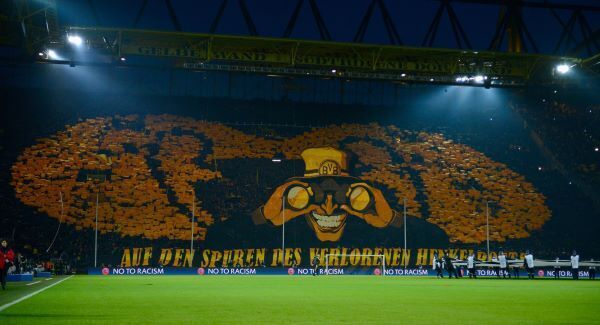
German fans take their singing very seriously — Dortmund have their own choir — just like their amazing choreographed displays. Sadly we’re going to be deprived of the most spectacular as the Wembley authorities have banned it, ostensibly on health and safety grounds but actually because it would have overlapped a neutral, corporate section of the stadium.
That corporate, money-driven aspect of football seems alien to many German fans. Not that the Bundesliga lacks money and sponsorship — Allianz and Audi as well as adidas are all closely involved in Bayern’s success. But clubs have resisted the temptation to make money at all costs, and the fans have played a big part in the turnaround that is symbolised by this first all-German final.
You might think from some accounts Germany has always been a model football nation for others to follow. Not so. There was serious violence both in and outside grounds, Germany too had a period when clubs relied on foreign imports, and they also had a boom based on TV revenues.
The difference between the Bundesliga and the Premier League is the TV company went bust in Germany whereas Sky has gone from strength to strength and English football was turned into a “global product”. Germany had to restructure and several clubs came close to bankruptcy, including Dortmund, who were helped out by a loan from Bayern.
One result was that the German football authorities put their house in order — establishing regional training centres and introducing regulations requiring clubs to develop homegrown players. The results are obvious, with the new generation including Thomas Müller, Holger Badstuber and Toni Kroos at Bayern and the young Dortmund stars such as Mats Hummels, Mario Götze, Marco Reus and Ilkay Gündogan.
The other result was that clubs developed closer links with fans and actively cultivated relations with the Ultra groups. Supporters were allocated safe standing areas with tip-up seats. Ticket prices were held down and Germany’s splendid new stadiums also accommodated supporters’ clubs. You could buy a Dortmund season ticket last season for just €190 — around €11 a match.
Cheap transport and reasonably priced food and drink have also had fans flocking into the stadiums — above all younger fans. The Germans scratch their heads in bewilderment when they look at the typical Premier League crowd — seated, often quiet, and often middle-aged.
Over the past three years, the football authorities and the ministry of the interior had been threatening to change the liberal rules governing fan behaviour, including a ban on pyrotechnic displays and strict controls over away fans.
The response up and down the country was extraordinary. The 12.12 movement, so-called because the decisive vote was scheduled on December 12 last year, agreed a novel form of silent protest. Fans would keep quiet until 12 minutes, 12 seconds from the start of the game: demonstrating their unity, but also how important crowd atmosphere is to football.
It was an astonishing success. The first minutes of every game were played out in eerie silence, followed by enthusiastic cheering. So impressed were the clubs, especially Dortmund, that they changed tack and gave their backing to the protest. December’s vote agreed some restrictions, but the climate of opinion has swung back behind the fans and more draconian measures resisted.

CONNECT WITH US TODAY



Be the first to know the latest news and updates