Baros short of Czech mates

IT’S easy to be misled by scorelines.

Baros short of Czech mates

Russia were excellent against the Czech Republic last week and fully deserved their victory, but the 4-1 margin perhaps suggested the Czechs were worse than they actually had been. For long spells, particularly either side of half-time, they controlled the ball in midfield, probing and teasing, and the last two goals they conceded were the result of individual error rather than structural deficiency.

True, the disappearance of the left side of the defence as Alan Dzagoev charged through – as he had with the score at 1-0 when he had sliced wide – suggested a tactical error, but still, he only scored because his shot bent back Petr Cech’s wrist. There had been a question-mark about the Chelsea’s keeper’s speed off his line for the second goal as Roman Shirokov got to Andrey Arshavin’s ball before him but it was just about possible to give him the benefit of the doubt there as Aleksandr Kerzhakov initially stretched for the pass. But the fourth was calamitous for a number of players – first Roman Pavlyuchenko was allowed a preposterous amount of time to set himself for a shot without being closed down and then Cech again showed a weak hand in not being able to keep the ball out having got a hand to it.

The Czech coach Michal Bilek’s task was to make his side forget the horror of that first game, believe again in their system and cut out the individual errors before the match against Greece. To an extent he achieved that and his side seemed serenely in control when Cech blundered into Tomas Sivok and patted a simple cross into the path of Theofanis Gekas to gift the Greeks a goal. It was, as Bilek said, “a horrific goal”. Fortunately for the Czech Republic, they had already scored twice and they were able to hold out with relative ease. Bilek noted, with justifiable pride that “our defence was really good today” – as it had been for most of qualifying. A draw today against the hosts Poland in Wroclaw will see them through to the last eight unless Greece beat Russia.

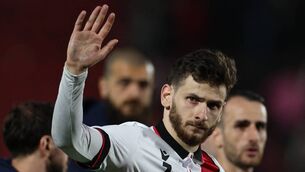
Quite what has happened to Cech, who was being hailed with some justification as the best goalkeeper in the world as Chelsea won the Champions League last month, is mystifying. He is not the only concern, though. Only six players in history have scored more European Championship goals than Milan Baros, but the last of his five came eight years ago. He is only 30, but the former Liverpool forward has the air of a much older man, a beard giving him the air of a grizzled roué rather than the slightly horsey head-girl he used to resemble.

His movement is sluggish, he never suggests he might score and the Czech fans have turned against him; he was jeered with every touch against Greece before being withdrawn for Tomas Pekhart after 64 minutes.

“He did not deserve that,” said Bilek, who was himself booed. “He has scored 41 goals for the national side. It’s a team sport, even the other players who aren’t the target are upset by it. All the players need the support of the fans, even when they’re not playing very well.”

That sounded like an admission that Baros, now at Galatasaray, is woefully out of form, which may mean a chance for the lanky Pekhart, a target-man who was on Tottenham’s books as a teenager and played nine games on loan at Southampton before moving to Nurnberg. CSKA Moscow’s Tomas Necid is experienced for a 22 year old with 26 senior caps, but he is yet to score this year and hasn’t regained his form since a knee injury last year. The other option is David Lafata, top-scorer in the Czech league in 2010-11 and more of a poacher than either of the other two options, but the indications are that Baros will be given another chance against Poland.

Bilek has been criticised in the Czech Republic but he seems to have handled the opening defeat well. The suspension of the Shakhtar Donetsk holder Tomas Hubschman for the play-off games against Montenegro forced him to play Jaroslav Plasil in the holding role with Petr Jiracek creating alongside him at the back of midfield. That gave the Czechs far greater flow than they had had in a stodgy qualifying campaign and so Bilek stuck with the same midfield. It’s one thing to play like that against Montenegro, though; quite another against a team of Russia’s quality and the result was that the Czechs, while good on the ball, were also very open at the back.

Hubschman returned in the second half against Russia – too late to staunch the bleeding – but his presence against the Greeks gave the midfield a better balance. Plasil took on the deep-lying creative duties with Jiracek moving to the right, where he linked well with the full-back Theodor Gebre Selassie. The problem today is that Rosicky is struggling with an Achilles problem and, if he isn’t fit, the Czechs may struggle to pick holes in the Polish midfield. Then again, they may not need to: barring an unexpected result in Warsaw, a 0-0 draw would be enough.

More in this section

Sport

Newsletter

Latest news from the world of sport, along with the best in opinion from our outstanding team of sports writers. and reporters

Cookie Policy Privacy Policy Brand Safety FAQ Help Contact Us Terms and Conditions

© Examiner Echo Group Limited