The Pep in Barca’s step
The Manchester United manager had been asked whether experience would prove pivotal in his duel with Josep Guardiola, his green-horned rival at Barcelona. “I’m not sure it will be decisive,” the Scot replied, before adding a coda that will have clanged in Catalan ears ever since. “But I’d rather have it than not.”
Given the atmosphere of cosy diplomacy which characterised the build-up to the 54th European Cup, it was a startling moment – the equivalent of suffering whiplash on a cruise ship.
Ferguson does not generally harbour regrets – he is unlike his great hero, Frank Sinatra, in that sense – but as he wakes this morning, his head throbbing at the memory of Barca’s euphoric celebrations, it is intriguing to wonder whether he rues a comment which appeared to invite trouble the moment it passed his lips.
In the end, the man making the elementary errors was not Guardiola but Ferguson himself – the wizened Wizard of Manchester who should have been old enough to know better.
The deployment of Ryan Giggs in an advanced role during the first half was an unqualified disaster, the veteran’s creaking legs ensuring Barca’s twin midfield terrors of Xavi and Andres Iniesta – a kind of Scylla and Charybdis, but in a Roman setting – chomped up possession unchallenged. By the time changes were made, it was too late: this had become, indisputably, the Year of the Rookie.
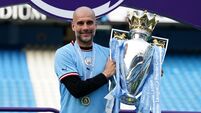
In Guardiola, European football might be forced to sit up and acknowledge the arrival of a new maestro. To win a domestic double at a club boasting the sumptuous resources of Barcelona is one thing; to claim a European Cup, on a night when those resources were stripped bare by injuries and suspension, and against one of club football’s true masters, is quite another.
Guardiola’s triumph was not one for the tacticians to savour. The 38-year-old is an unashamed devotee of the Dutch school which informs the modern Barcelona and never wavers from the 4-3-3 so beloved of that orange Holy Trinity, Johan Cruyff, Louis van Gaal and Frank Rijkaard.
But if that suggests intransigence in Guardiola’s personality, it is misleading. The Catalan is one of football’s students, a man who is regularly to be found poring over DVDs and player statistics long into the night at Ciutat Esportiva Joan Gamper, the club’s sprawling training base, and the hours before last night’s final were put to good use.
There were big calls to make: who would fill in for the suspended full-backs Daniel Alves and Eric Abidal and, having decided Yaya Toure would be converted into a centre-half for the night, who would replace the hulking Ivorian in the centre of midfield?
Each decision required careful deliberation and, ultimately, each was exquisitely judged. Carles Puyol was the talisman at right-back, doggedly determined and always on hand with a bellowed instruction; Sylvinho, on the opposite flank, was a model of quiet efficiency, displaying admirable discipline against the bundle of energy that is Ji-Sung Park; while the bustling Sergi Busquets allowed Xavi and Iniesta to raid with impunity.
That said, the European Cup has never been won on a chalkboard. A trophy that has always inspired epic deeds needs its heroes and, in Guardiola, Barcelona’s players had a ready-made totem: a man with Catalunya coursing through his veins.
On the eve of the tie, Guardiola had issued the kind of clarion call which resonates with a region, not just a club: play with passion and beauty, he said, and glory would be yours.
Such words linger in the minds of more than just the media and fans – players, too, can draw upon them in their darker moments. When Barca wobbled for a few frantic minutes in the second half last night, they followed their manager’s lead and clung to their principles: pinging their passes, maintaining their mercurial movement, keeping faith.
Their reward was a beautifully taken second goal from Lionel Messi, Guardiola’s a first European Cup. It will not be his last.

CONNECT WITH US TODAY



Be the first to know the latest news and updates