The Kieran Shannon interview with Richard Shuttleworth: Open to what the game teaches
“
Last Tuesday night while his England rugby team were in camp preparing for their next Six Nations game, Eddie Jones served his backroom staff a reminder that they had a bigger, longer-term goal beyond Murrayfield by summoning them to the pub across the road.
There he broke them into two groups and posed the question: What is the game going to look like in a few years’ time?
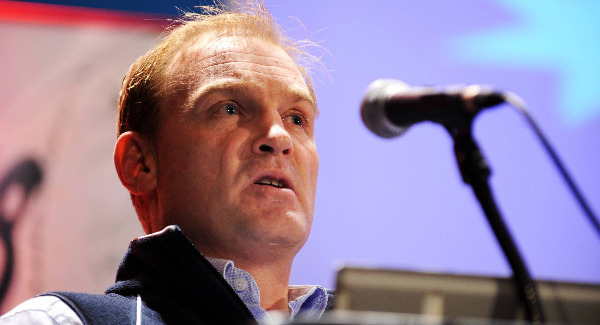
Richard Shuttleworth – or Ric to Jones and some of the world’s other leading coaching minds – was among those tasked to brainstorm with his colleagues. And from his experience of working with Jones and those other coaches, he knew that Jones hadn’t so much thrown them a question as a grenade. Now, how would they react? Adapt?
“Right away he created uncertainty. Because when he asks you a question you don’t know if Eddie has the answer. Some people might want feedback or instruction but he won’t give you the certainty. Just as he does with players probably better than anyone I’ve seen, he puts you into an area of chaos where you can learn. But you don’t want to appease Eddie. He doesn’t want you to say what you think the coaches want you to say. You have to be authentic and real.”
That wasn’t always Jones’s way. If you had asked him back when he was leading the Wallabies to a World Cup final what his coaching would look like a decade later, he’d have been appalled as much as astonished by the answer.
“In the old days,” he’s said, “you’d stand on the chair and tell everyone what to do.” Now, like the other night in that Edmonton pub in west London, he asks. “I’ve gone from being an absolute dictator to now still being a dictator, but doing it in a different way.”
Shuttleworth has seen that transformation and indeed aided it, though he’ll quickly vouch that the game itself humbled and taught Jones more than anything or anyone else ever did. In essence, that’s their shared message now, to coaches, to players: let the game and games teach you, just be open and alert to the learnings.
They first met Down Under. Shuttleworth was working in the famed Australian Institute of Sport as a skills acquisition specialist. Meanwhile, Jones, two years after bringing Australia to within a Johnny Wilkinson drop goal of winning the 2003 World Cup, he’d been fired as national team coach after losing eight of his final nine games. Then in 2007 he left the Queensland Reds after they’d finished bottom of the Super 14. “He’d be the first to admit,” says Shuttleworth, “that he was removed because he was too dogged and didn’t change, didn’t adapt.”
So then he did. He began working with the Springboks that would win the World Cup that year. And he would regularly call into the AIS to see what Shuttleworth & Co were working on.
“Eddie is big into research. When he first came to England [where Shuttleworth by then was working for the RFU] he asked where our R&D department was. When we told him we didn’t have any, his words were, ‘That’s f***ing shite, mate!’
“So what that forces you to do as a coach or as a sports scientist is to know our research. If he wants us to improve the team’s decision-making, we have to know the evidence and be able to design a practice. You have to know your shit to work with Eddie. I think that’s really good. He puts you under pressure to find out what works best and why it works best. You have to be the best at what you do.”
That’s why Jones and various other elite setups like Great Britain hockey and boxing have Shuttleworth around. The guy knows his stuff. He understands how athletes change and improve and how a coach like Jones changed and improved.
“Over in Australia, Eddie was quite top-down. Hundreds of plays. Lots of structure.” In theoretical terms, he was working off the old information processing model: you explicitly told athletes what to do. Player-coach was stimulus-response, subject-object. And it didn’t work. Last year the New South Wales Waratahs coach Daryl Gibson claimed “the Eddie Jones era of playing A, B, C-certain type of rugby” robbed a generation of Australian players of their attacking instincts because his drills-based approach was still being aped through the schools system. “They’re missing that decision-making in an open environment.”
Shuttleworth’s mentors like Dr Keith Davids and Karl Newell realised from studying elite skilful players that there was a better way, a better model. Instead of telling players explicitly what to do in drills, play games and ask questions that implicitly teach them what to do. Jones studied their work and duly adopted their model, the dynamic systems theory, to be precise. The result has been the transformation of the English national team and its players, not just its coach.
“The big thing we’re trying to do here is play what’s in front of us and have the skillsets to find space,” flanker Sam Underhill has said. “You have to be proactive and be used to playing in different circumstances. That’s also quite exciting, because you’re not confined to a certain way of doing things. There’s a bit more freedom.”
To make his players feel so comfortable in the chaos that can be competition, Jones will look to make them uncomfortable in the safety of training. After Italy’s no-ruck tactic in last year’s Six Nations threw his team, Jones ramped up the unpredictability in training. They’ve practised lineouts with a hooker. What to do if they lose a lock to the bin. “We create situations where we don’t tell the players the purpose of the game,” Jones has said. “We want them to work it out for themselves and very quickly adapt.”
In many ways that is Jones’s job, and it’s Shuttleworth’s job to help him and remind him that it’s his job. “The way I talk to Eddie is ‘How are you creating a more adaptive dynamic system team in the England team, so it can adapt to beat the All Blacks?’ That ultimately would be my role. When I work as skill acquisition consultant, my role is to help the coaches to be the best in the world by the World Cup. Eddie would say in order to do that we have to produce the best players in the world. That is how we measure good coaching. And Eddie’s not afraid of going down to a coach who has been doing a drill with a player and saying "Hey, the player isn’t engaged! He’s not having to make any f*** decisions!’”
That’s another part of Jones’s brilliance, Shuttleworth has observed: his ability to cut, bleed and then bandage a player or coach. He’ll cut that coach with that remark, let him bleed a little. Then when he sees that coach adapt and improve, he’ll acknowledge it. Same with a player. Shuttleworth has seen Jones challenge and cut a player and let him bleed for a while, then minutes later shuffle up to that player, put his arm around him, and either gently ask or compliment him on how he’s trying to progress.
He’s worked with other coaches like Jones, coaches who bled and were humbled for a while before they found redemption. Danny Kerry, the coach of the Olympic-gold winning GB hockey team, was savaged by his players in a post-Beijing review, before realising he needed to cultivate decision-makers and not decision-followers. And Mickey Whelan, one of the godfathers of Dublin GAA coaching, would be another.

Shuttleworth is a bit of a citizen of the world. He was born in Perth but lived in Canada and Liverpool for periods before his parents moved back to Australia again when he was 13. There he played underage international rugby and senior representative rugby before injury curtailed him.
Work then as a coach and an academic would take him to Hong Kong and New Zealand before he’d take up a lecturing post in a year in DCU. His father John was – and still is – in town, living in what must be the smallest house between Bono and Enya out in Dalkey, not far from UCD where he’s lectured in sports management for years. The younger Shuttleworth instantly warmed to the grit and the charms of the northside campus and staff and especially Whelan who he describes as “a walking example of the heritage of Ireland”. Here was someone who was best friends with Heffernan, had befriended and played with O’Connell and Ring in the States, and was still studying, coaching, learning all these years later. At the time he was between jobs with Dublin, nearly a decade on from his stint as manager and a couple of years out from helping Pat Gilroy transform startled earwigs into champions.
Conversations with Shuttleworth would have played some part in that process. They would have bounced ideas off each other on how to best design sessions for how the team could improve their sessions. Though Shuttleworth points out “Mickey was already heading down that route”, with his thesis on how games-based coaching, Whelan will acknowledge the shared exchange of ideas was very useful.
“We were very much on the same wavelength in terms of introducing activities within game-like scenarios rather than drills,” says Whelan, who is now working with the Dublin hurlers, aged 78 years young. “Don’t tell them what to do; create a situation through the game where they arrive at the solution themselves.”
In April, three weeks after a certain St Patrick’s Day showdown in Twickenham, Shuttleworth will return to Irish shores, to present at the inaugural Movement and Skill Acquisition Ireland’s inaugural conference in Cork Institute of Technology on the invite of another old friend from that year in DCU, Dr Ed Coughlan, also a regular Irish Examiner columnist.
Shuttleworth’s thoughts and insights are bound to be both fascinating and challenging to coaches in attendance, especially those from Gaelic Games where despite the Dublin and Whelan revolution, there’s a tendency to favour drills over conditioned games. While Shuttleworth isn’t as preachy as others on the issue, his practical experience, as well as research, has taught him that the more challenging and chaotic a game in practice is, the more comfortable and structured the players will be in competition.
“If you have a traditional approach, you will generally constrain your players to be more externally organised. In competition, they’ll be more ‘Am I running the right line? Am I doing the right thing?’ They’ll be more playing in fear that they’re not doing the right thing.”
Back in the Australian Institute of Sport he conducted an interesting practical experiment. At the time Australian soccer was adopting the Dutch system after Gus Hiddink’s appointment as head senior national team coach. Hiddink favoured the more flexible 4-3-3 formation over the more traditional and rigid 4-4-2; principles rather than fixed roles and rules were emphasised. Shuttleworth and the AIS was drafted in to work with some of the national underage teams. One day they set up three stations. The first was a drill where players worked on a skill in isolation. The second was a rondo passing game; then the third a 6v6 match in a big circle with a 360-degree goal in the middle.
Veteran coach Jan Versleijen quietly observed it all and came to some telling conclusions. There is a huge difference between a technically-competent player and a more skilful player. Huge. Some players who were highly competent in the isolated drill weren’t effective and thus skilful in the game because their decision-making was poor; they hadn’t been coached to make decisions.
“Don’t design drills that make you comfortable and stable; set up a game where the defenders initially don’t know what to do. In that third station we didn’t tell them anything. We’d just have said to the third team resting or waiting to go in, ‘What is the attack doing to create more opportunities? What is the defence trying to do? Is it working? When we jump in, what are we going to do that we can improve on those opportunities?’ We call that feedforward, not feedback. You can ask for feedback but that must lead to feedforward. Which is a massive thing we do in England rugby now. Whenever we can we’ll have a third team, a resting group. Though the purpose of resting is not to rest; it is to learn by watching. There is no resting time in training!
The same with Shuttleworth himself. There’s little rest for him, he’s always thinking and moving, though knowing there’s never a destination in what he terms “a voyage of discovery”.
““I’ve learned not to put a tweet out and say these are the six golden steps. I just can’t do that. Sport and life isn’t that linear. What I can do is maybe help and support you as a coach in your own voyage and discuss your six principles.” Jones for one has taken up the offer.
- Richard Shuttleworth will be speaking at Movement and Skill Acquisition Ireland’s inaugural conference which will be held at, and in conjunction with, Cork Institute of Technology on April 6-7. Further details at events.cit.ie


CONNECT WITH US TODAY



Be the first to know the latest news and updates