Tackle laws continue to reduce Irish rugby injuries
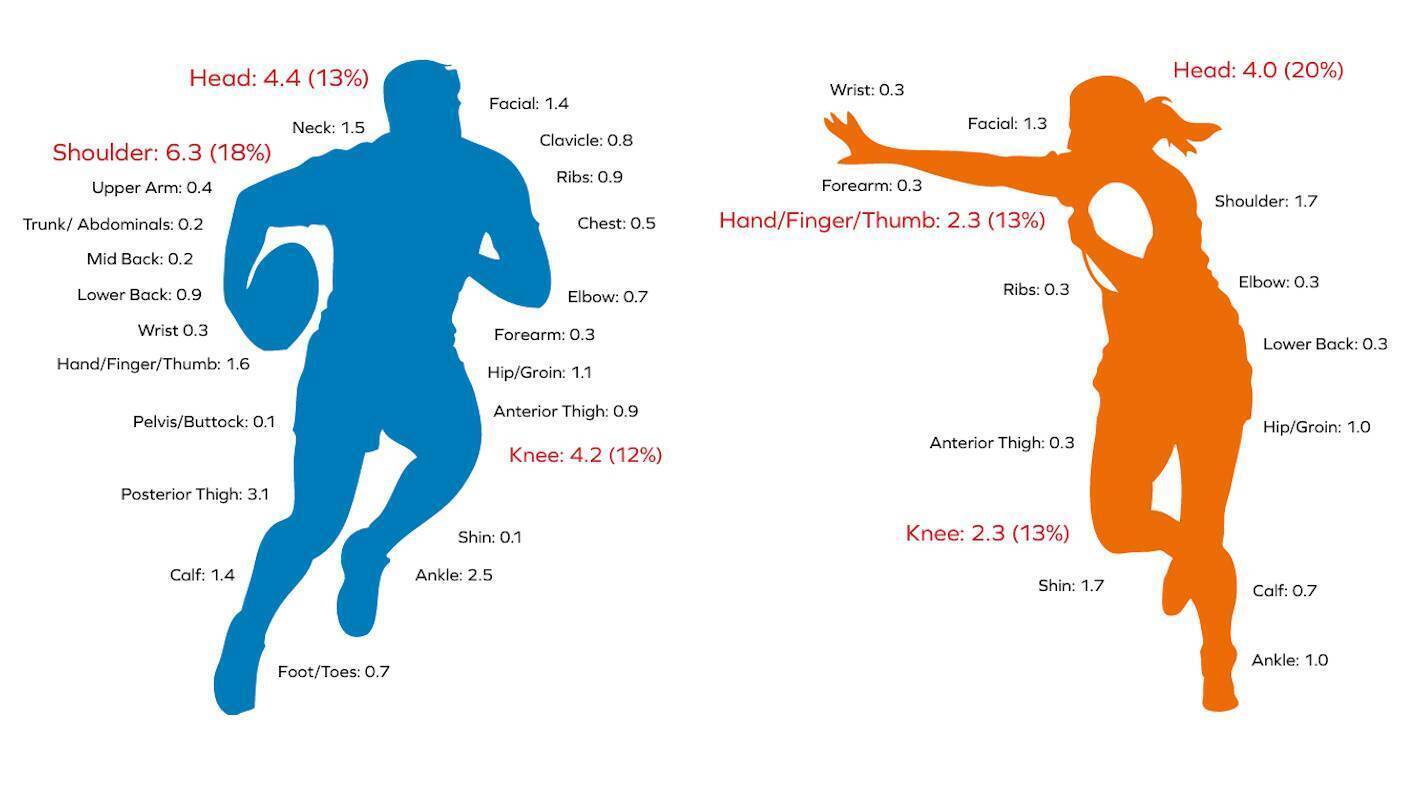
Graphic from the Irish Rugby Injury Surveillance (IRIS) Project
Concussion and overall injury rates continue to drop in Irish club and schools rugby since the implementation of the tackle behaviours trial in the 2023/24 season.
That's the latest finding of the Irish Rugby Injury Surveillance (IRIS) Project, a collaboration between IRFU and UL that monitors injury trends across the adult men’s and women’s rugby as well as the schools game.
The report from the 2025/26 season monitors injuries suffered across 625 adult club games and 229 schools Senior Cup matches.
The most common injury for men’s games were concussions (11%), followed by hamstring strains (9%). Concussions resulted in an average of 26 days’ absence from the game, while hamstring strains resulted in an average of 32 days’ absence.
The most common injury for women were concussions (22%), followed by knee ligament sprains (9%). Concussion resulted in an average of 31 days’ absence. while knee ligament sprains averaged 218 days.
The overall match injury incidence rate for males was 35.1/1,000 player hours, down from the 44.1/1,000 rate for the 2024-2025 campaign.
For women, the injury rate fell from 25.2/1,000 player hours in 24/25 to 18 /1,000 player hours.
Hamstring strains were the second most common injury in the Men’s AIL.
In the schools game, concussion and shoulder injuries were the most common injuries overall, with the shoulder accounting for 25% of all injuries.
Some 69% percent of all schools injuries occurred during the tackle. The proportion of injury to the tackler (52%) was similar to the ball carrier (48%). Some 57% of all injuries were to forwards, compared with 43% to the backs.
Prof. Rod McLoughlin, IRFU Medical Director, said: "The annual IRIS reports are a valuable component of how we develop welfare policies specific to our grassroots game.
"Over the last three seasons, the landmark reductions in concussion and injury rates seen during the IRFU Tackle Behaviours Trial are encouraging and show the benefit of evidence-informed strategies to improve player welfare and performance.
"The ongoing commitment from Schools and Clubs nationwide allows us to accurately compare injury trends following changes to laws and the implementation of player welfare strategies."
CONNECT WITH US TODAY



Be the first to know the latest news and updates