Ciara Griffin: Ireland's clear emotional edge can deliver rare French opportunity
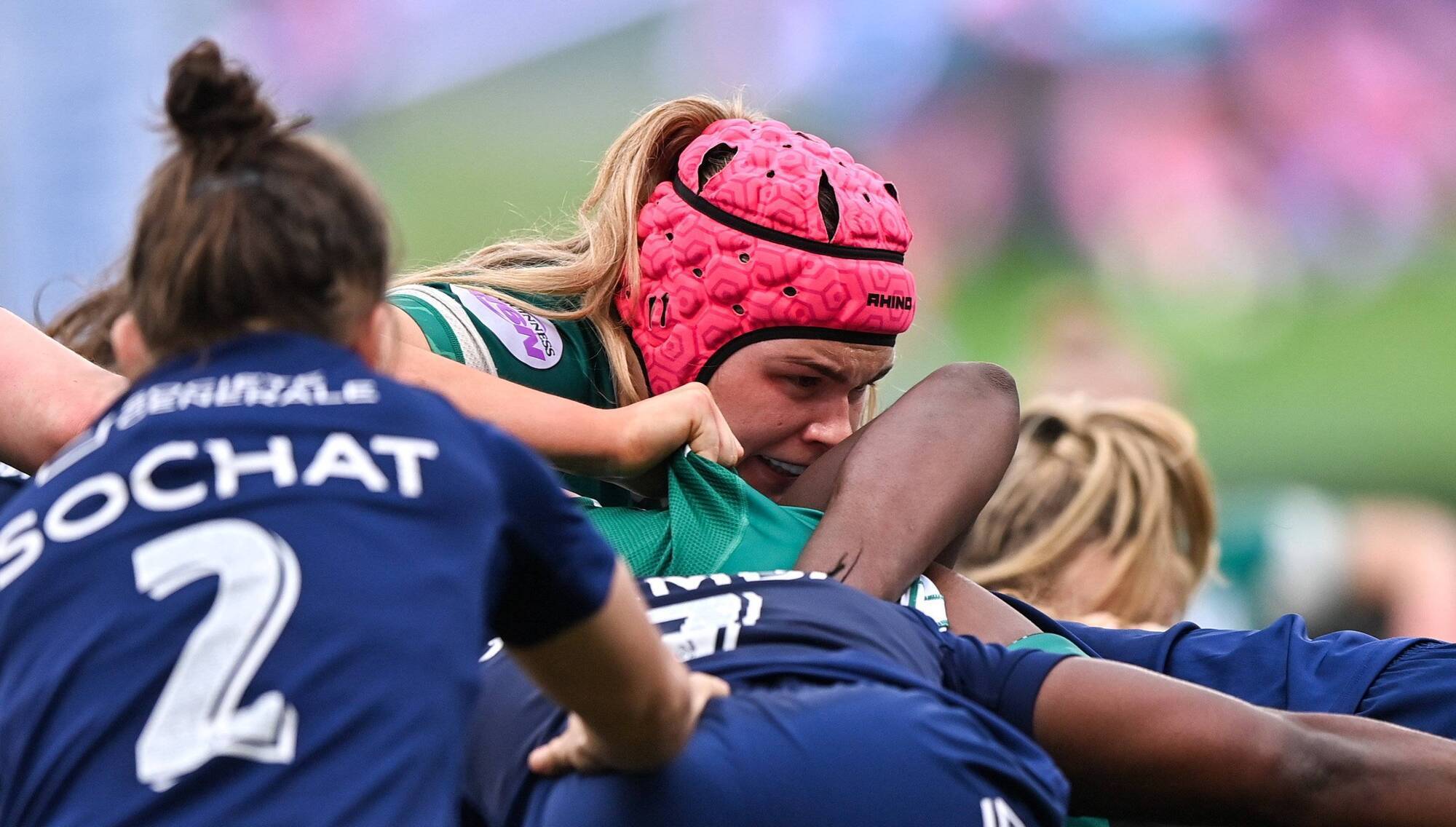
REVENGE MISSION: Dorothy Wall of Ireland during the 2025 Women's Six Nations Rugby Championship match between Ireland and France at Kingspan Stadium in Belfast. Photo by Ramsey Cardy/Sportsfile
Expect to see the atmosphere in Stade Marcel-Michelin play as big a role as any player on the pitch. The stadium design traps noise and turns it into a relentless wave of pressure. The chants of will not just be background noise, they will be a tactical factor.
Communication becomes strained, especially at lineout time, where split-second calls can be lost in the roar. France’s home record in recent Women’s Six Nations campaigns reflects just how influential that backing can be. In 2025, they maintained an unbeaten home run, using early momentum to overwhelm visiting sides.
For Ireland, this is a familiar challenge. A number of senior players, Moloney-MacDonald, Wall, Djougang, Monaghan and Jones, have experienced hostile French crowds and understand the need for composure.
Expect Ireland to rely heavily on non-verbal cues and pre-called systems to maintain structure. France will look to feed off the energy with quick taps, high tempo, and expansive play designed to lift the crowd further.
It becomes a psychological contest as much as a physical one. If Ireland can weather the early storm and quiet the stands, they give themselves a foothold.
If not, the crowd can turn momentum into a landslide very quickly.
Anticipate France to lean heavily into their trademark attacking identity. Over recent Six Nations campaigns, they have consistently ranked among the top sides for line breaks and offloads, with 18 line breaks alone last weekend.
Their ability to shift from structured phase play into broken-field chaos is where they are most dangerous. Quick hands, inside support lines, and a willingness to attack from deep make them unpredictable.
However, that ambition comes with risk. Their commitment to staying alive in the attack can leave rucks exposed, particularly if support players are slightly late. Turnover numbers have occasionally crept up as a result. Ireland will see this as a clear opportunity.
Defensively, they will need a disciplined system, low chop tackles to stop momentum and dominant second contacts to wrap and prevent offloads. If Ireland can force France into static rucks, they can disrupt rhythm and slow the game down.
France will test the width of Ireland’s defence early and use dominant carries from Feleu and Rousset to probe for mismatches.
If Ireland can hold their shape and deny quick ball, they can blunt that flair. The balance between chaos and control will define how effective France’s attack truly is.
Expect to see the breakdown become one of the defining battlegrounds. France’s high-tempo style often stretches their own support structure, creating moments where the ball carrier becomes isolated.
It is in these fractions of a second that Ireland must be clinical. Ireland have improved their turnover efficiency this Six Nations campaign, targeting exactly these kinds of disconnects.
Timing, rather than volume, will be key. Picking the right moment to compete rather than overcommitting and wasting energy.
France, on the other hand, thrive when they get quick ball. Their scrum-half play is sharp, with sniping runs around the fringes a constant threat. If Ireland’s defensive pillars are not set quickly, they risk being caught narrow.
That makes the first two defenders at the ruck absolutely critical. A strong, disciplined setup can shut down those half-break opportunities before they start and frustrate the talismanic Bourdon-Sansus.
You will see France occasionally go to ground quickly if offloads are not on, aiming to recycle at pace. That split second before presentation is Ireland’s window to strike.
When executed well, it can result in turnovers or at least slow ball, disrupting France’s attacking flow. If Ireland can consistently win these small moments, they can tilt territory and pressure in their favour. If not, France’s speed will dictate the game.
The tactical kicking battle will play a pivotal role in shaping territory and momentum in Clermont.
France will look to test Ireland’s backfield early, with Arbez using a varied kicking game to probe space and force Ireland into turning. From the base, Pauline Bourdon-Sansus is always alert to short-side opportunities.
Ireland, under Scott Bemand, have developed a far more assertive kicking strategy, using it as an attacking weapon rather than just an exit tool. However, timing remains crucial.
Poorly executed or ill-timed kicks can undo sustained pressure, and that is where vulnerability creeps in.
Both Italy and England exposed moments where a disconnected chase line left space for counter-attacks.
Without a solid green wall in behind the kick, France will relish the chance to strike back quickly with Murie, Grando and Barrat as the back three.
Tonight you will see Ireland carry a clear emotional edge into this encounter. There is recent history between these sides, with France often getting the upper hand in key fixtures, including the controversial knockout stage of the recent Women’s World Cup.
The narrative around closing the gap has been building, and this is a chance to show it in action.
Ireland’s current squad blends experienced leaders with emerging talent, and that balance could be crucial.
The senior core understands the intensity of facing France away, while younger players bring energy and fearlessness.
Channelling that emotion will be key, controlled aggression rather than reckless play. Discipline will matter, especially against a French side that punishes errors quickly.
France, however, are fiercely proud at home. Losing on their own turf in the Six Nations is rare, and they will be determined to maintain that standard. Expect a physical, confrontational opening, with both sides testing each other’s resolve.
Ireland will aim to stay in the fight deep into the game, where pressure can shift. If they can match France physically and stay composed, this becomes more than just a challenge, it becomes a genuine opportunity.

CONNECT WITH US TODAY



Be the first to know the latest news and updates