Andy Farrell's Ireland profits from reduced reliance on Leinster core
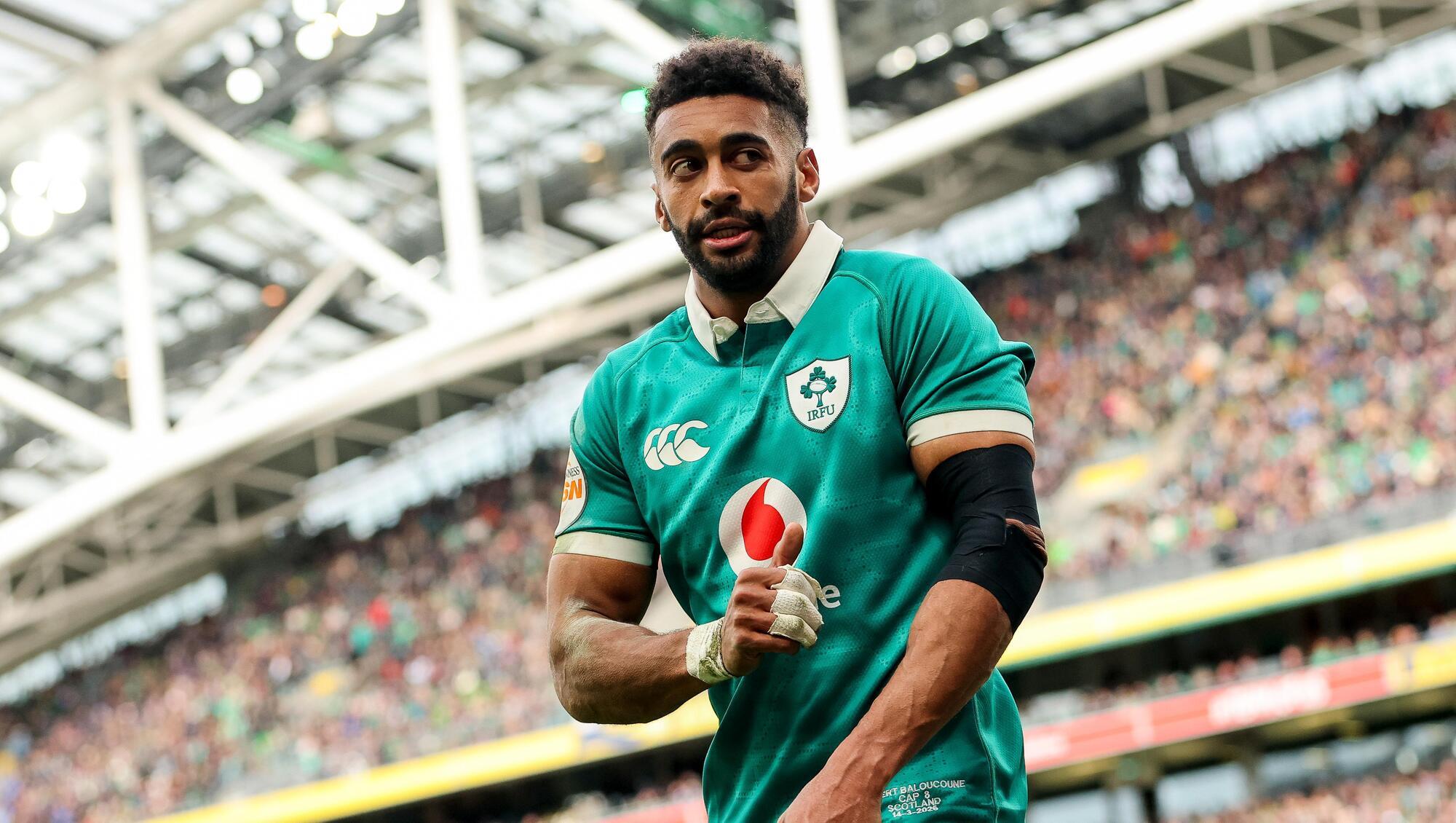
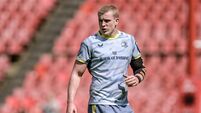
Ireland's Robert Baloucoune leaves the field. Pic: ©INPHO/Ryan Byrne.
Nineteen minutes in against the Scots last weekend when Stuart McCloskey played a long, looping pass wide to Robert Baloucoune on a first-phase strike play. The winger was a good 30 metres from the try line but with space to motor.
Darcy Graham was pumping his legs furiously in a bid to ward off the danger as Baloucoune half-stuttered to hold the Scot in check for a critical split second, and then he was past the clawing grasp and over the line. Try Ireland.
We talk and write about the importance of pace in the modern game. For all the talents and the workrate James Lowe and Mack Hansen bring to the team, this is a try that wouldn’t have been scored without that extra pump of gas.
Read More
The players and Johnny Sexton and Andrew Goodman had talked about this sort of snapshot last week. They were looking to get the ball into space, and this wasn’t the first time that McCloskey had wound up those arms and spun a long one half the length of the field.
The rest was all Baloucoune.
“It’s what I'm good at,“ the wing said, “what I try to do. If I see space, I know it's there in front of me and I'm going to take that all day. I backed myself to beat defenders and got around Darcy Graham, so happy enough to get in the corner.”
The re-emergence of Baloucoune, McCloskey and more besides has been a standout feature of this Ireland team in the Championship just passed, and it all marks something of a sea change in the demographic of the squad that needs noting.
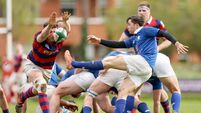
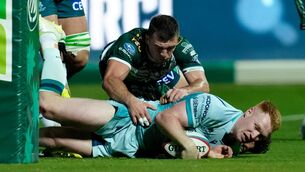
We only have to go back to the start of November to remind ourselves of the inherent dangers in Ireland’s reliance on Leinster for players when 12 of the XV against the All Blacks in Chicago, plus four more on the bench, were players with the province.
Brian O’Driscoll singled it out as a worrying factor on Newstalk prior to that loss in Soldier Field, but the workload has started to spread with ten of the starters last weekend and only two of the bench coming from Leinster.
That’s a drop from 69.5% to just over half.
If the private school route is still the main thoroughfare for international honours then what we saw in the squad that won the Triple Crown at the weekend was a collection of players old and new, ‘borrowed’ and, in a former life, blue.
Jamie Osborne, Ciaran Frawley and Tadhg Furlong had all come through the club system in the province rather than the school, and Jamison Gibson-Park came all the way from the Great Barrier Island in New Zealand.
Other products of the biggest province ended up in Andy Farrell’s plans on the back of their own circuitous routes: Tadhg Beirne via Wales, Michael Milne after a switch to Munster and Nick Timoney having long since decamped to Belfast.
Finlay Bealham started his journey in Australia, Tom O’Toole spent much of his childhood there, and Bundee Aki was another steal from New Zealand. Darragh Murray’s road to Test rugby with Ireland from Roscommon was, in some respects, even longer.
Jack Crowley and Craig Casey are born and bred Munster and then is the trio of late bloomers - Baloucoune, McCloskey and Tommy O’Brien – who showed how much profit can be made by the coaching staff when willing to invest in riskier stocks.
All three have had to bide their time to make it to this level and each one has found a belated stride with Ireland. These are nuggets worth their weight in gold in a country with such a small playing population.
Baloucoune only started playing the game at 15. And he was all set to go to university in either London or Nottingham to study Sports Management until James Topping persuaded him to stick around and try his hand at a bit of sevens.
He has battled injuries and fluctuations in form: scoring a hat-trick away to Toulouse one week in 2022 and failing to reach anything like the same standard a week later against the same opponent stands out for him even now.
It’s only two months since Baloucoune, pestered by injuries far too often, was talking about his appreciation for just being back on a rugby pitch of any stripe in the wake of Ulster’s Challenge Cup game against Stade Francais.
He never saw all this happening.
“It’s something I wouldn't have expected and I’m just grateful to actually get here. I've been in before where I haven't played and done that so, yeah, I've been able to finish it off with a trophy and being part of the group has been really special.”
The clock is winding its way towards next year’s World Cup. Ireland have no more than 14 games to play between now and then, including tournament warm-ups, but what this Six Nations told us is that it may never be too late for a player to wedge his way in.
CONNECT WITH US TODAY



Be the first to know the latest news and updates