'Everything can seem insignificant the year after the Lions': the not-so-simple task of managing a rugby schedule
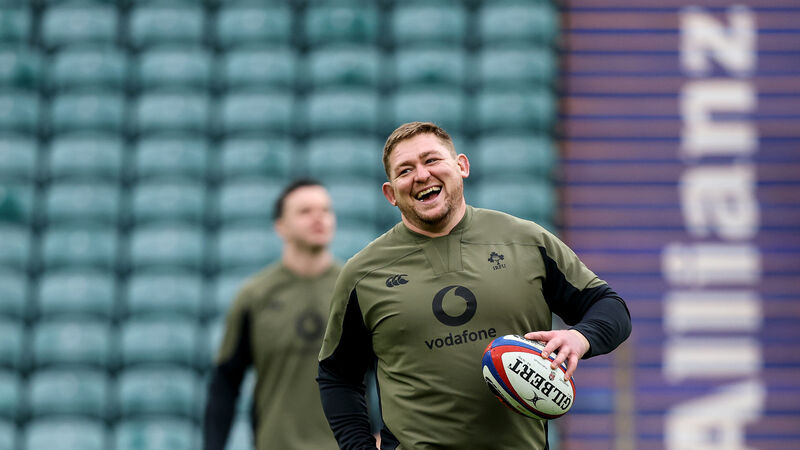
Ireland prop Tadhg Furlong. Pic: Ben Brady/Inpho
Modern life, eh? We’re all busier now. More harried. The contagion that is ‘stuff’ and things to do has flooded what were once our small pockets of space and tranquility, and rugby hasn’t escaped the invasion.
Much always wants more.
Six Nations history will be made at 2.10pm on Saturday in Twickenham when the referee Pierre Brousset gets the England-Ireland game underway.
It will mark the first time the Championship has been contested three weekends in-a-row.
This year’s tournament has been squeezed from its seven-week slot into six. Gone is one of the two rest weeks that had been set in stone since 2003.
Long gone are the days when the Five or Six Nations meandered languidly through three pages of the annual calendar.
It took 10 weeks to walk the course from start to finish as recently as 2002. It started that year on February 3rd and wasn’t wrapped up until the first weekend in April. Not a single provincial game was played in all that time. Breezy.
Munster, the bulk suppliers to Ireland at the time, played just 20 games in 2001/02 despite reaching a Heineken Cup final. Leinster could play up to 29 times if they reach deciders in the URC and Champions Cup this term.
Ireland? They will play 12 games. It was nine back then.
Both seasons will have been played out on the back of British and Irish Lions tours to Australia and the demands on players have been highlighted this week by Keith Wood, who toured Down Under in 2001, and Tommy Freeman who followed suit last summer.
Wood has spoken about how every player that goes on a Lions tour is “wrecked” and shared his belief that Ireland look “flat and jaded”.
Freeman revealed his “mental state wasn't in the best spot” even after five weeks off duty on his return home.
But let’s not generalise here.
Everyone’s experiences are unique. Jack Conan trampled all over the suggestion of any Lions hangover last week, describing the ideas as “nonsense” and claiming it was simply people looking for an excuse or a headline.
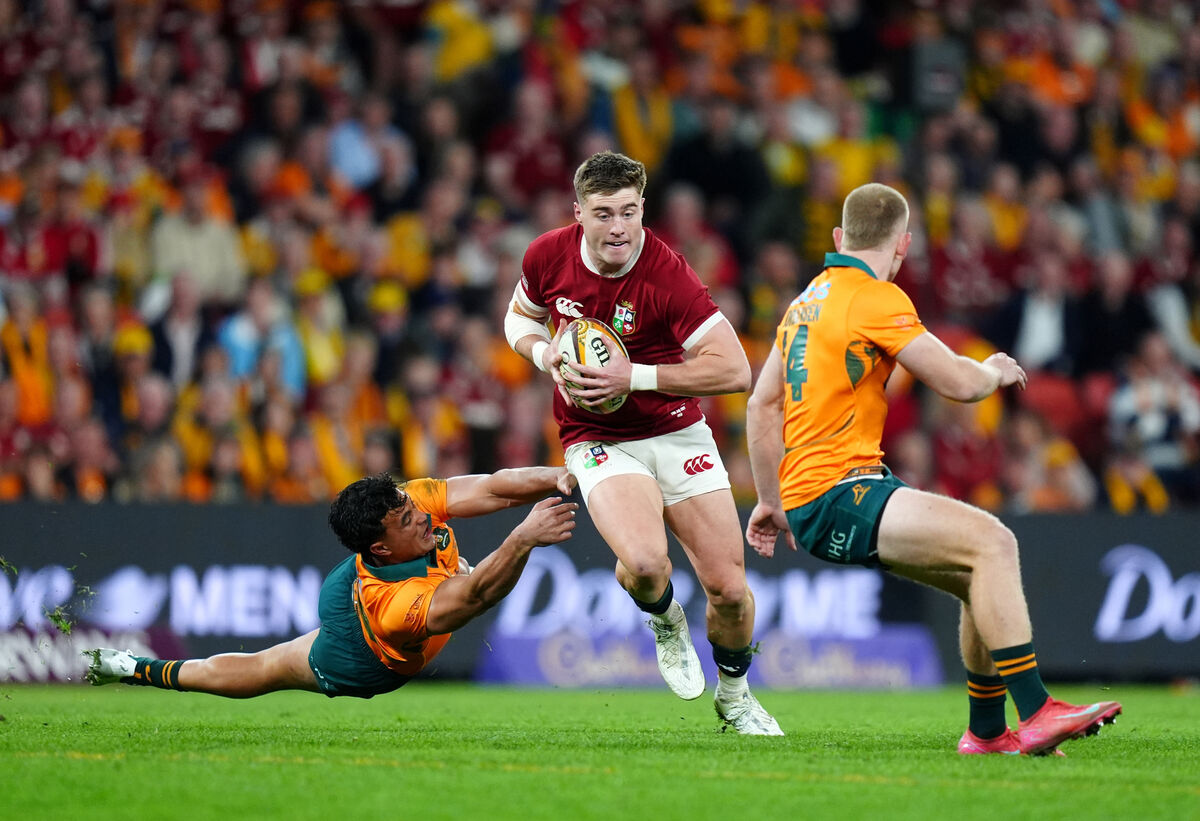
It was a noticeably abrupt retort by a man who is such a good communicator. Tadhg Furlong, like Conan, played all three Tests against the Wallabies. His take when asked much the same question before the trip to London was more nuanced.
“I don't think it's much of an excuse. It definitely puts strain on your body for some lads, I'd feel. Some lads play eight games on them tours, so it's a lot of strain on them. Does that have a hangover? I'm not sure.
“The Irish system would get a good pre-season etc. Granted, it was short this year and straight into rugby. Mentally, for some players, to get on the Lions is nearly like their pinnacle. Next thing, how do they get up for the next game, or how do they get up for this game or that game?
“Everything maybe seems insignificant the year after. Maybe they think they're better than they are. It's some of the experience I've had with people that have maybe dropped off after a Lions tour that I've seen. It could be physically, it could be mentally, it could be within them either.”
Ireland had 18 players on that Lions tour, England contributed 15.
Last October, World Rugby announced new guidelines to manage the workload for elite players. Chief among them was the guideline that players should play no more than 30 games in any one season, or six weeks in a row.
Minimum rest periods should be stitched in to the calendar. There is provision for a five-week off-season break. All of this was integral to the introduction of next summer’s new Nations Championship which will see Ireland play three times in Australia and New Zealand.
Rugby Players Ireland told the this week that, while the body was “initially against a shortening of the Six Nations”, they supported the “proposed player-load guidelines as a balanced approach”.
“While player welfare management in Ireland is already well-established, the new 30-game limit and global guidelines provide meaningful protections for many of our fellow International Rugby Players Association (IRPA) members where no such local agreements exist.
“We also accepted that, if it was the only way to get the Nations Championship underway, this adjustment was a necessary compromise to enable players to benefit from the opportunities the competition presents.”
Freeman played 34 times for England last year and spoke of a “built-up anxiety” as a result. The Irish system is widely regarded as at, or near, top of the class in player workloads and wider welfare, but it’s not like these new ceilings don’t have meaning here.
Andrew Porter played 35 times last season: 18 for Leinster, nine for Ireland and eight for the Lions. Tadhg Beirne played 33. Another eight of the Irish Lions ended up togging out somewhere between 26 and 29 times for the three teams.
Three months had passed between the last Lions Test in Sydney and Ireland’s meeting with New Zealand in Chicago. Eleven of the starters in Soldier Field had been in Australia with the Lions.
So had four of those named on the bench.
Twelve weeks is more than enough time to reset and return according to the new guidelines but, as Wood, Freeman and Furlong know, it isn’t that simple.
Twickenham this weekend will be another huge ask for the two dozen Lions involved.
“We’ve got one of the best in the business in [S&C coach] Aled Walters,” said Johnny Sexton this week. “He takes all that into account. It’s the first time we’ve had to play Six Nations three weeks in a row. We did it in November knowing it was going to be like this now.
“So how we managed the week would be key, but the bodies came out of it pretty well on Saturday [against Italy], even though it was a pretty high-intensity game with lots of ball in play, a lot of collisions. So I think we will be good to go.”

CONNECT WITH US TODAY



Be the first to know the latest news and updates