Jamison Gibson-Park: From failed out-half to world-class nine
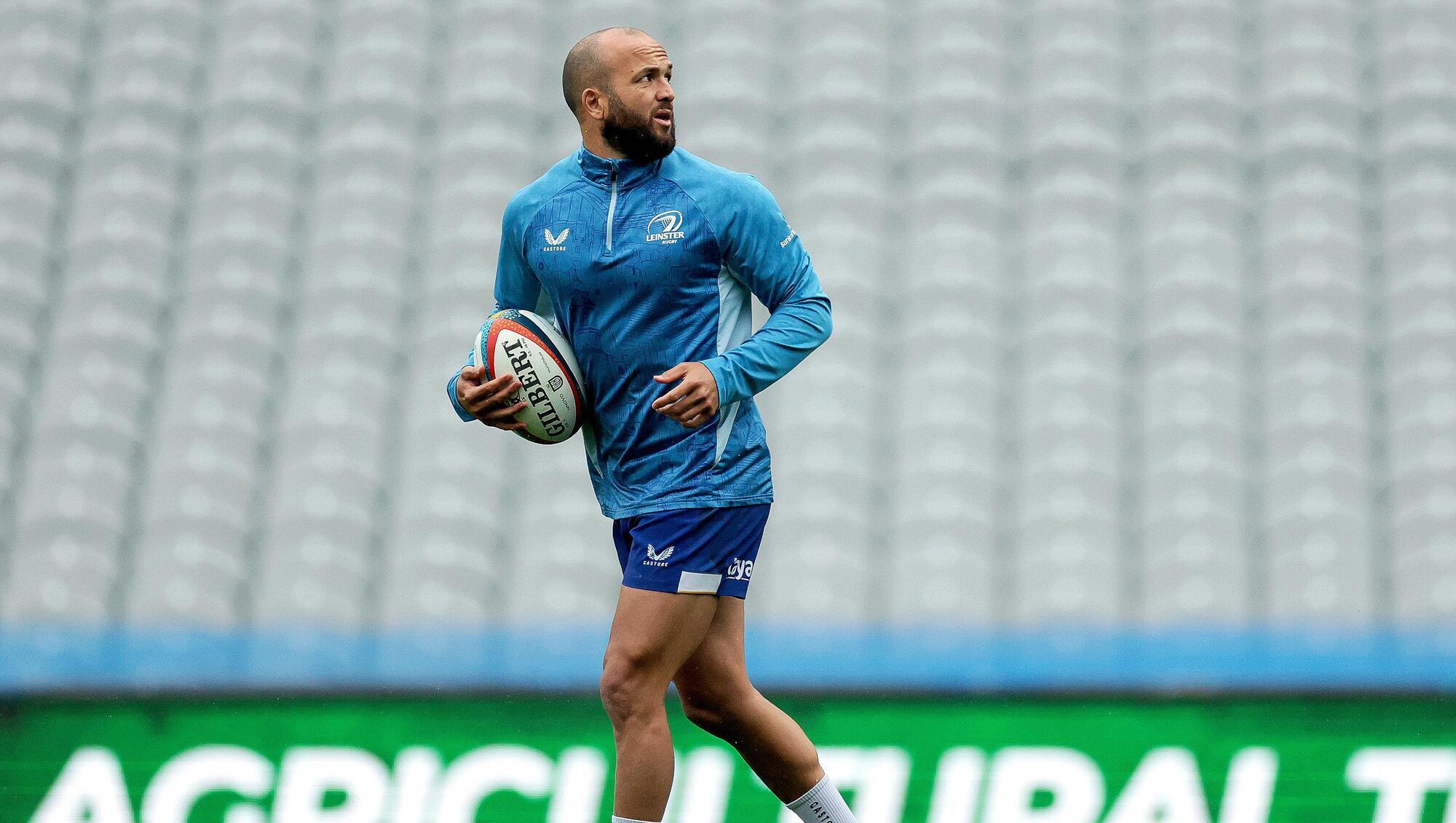
Jamison Gibson-Park during the Leinster Captain’s Run at Croke Park. Pic: ©INPHO/Laszlo Geczo.
Jamison Gibson-Park was ten years old when he moved from the Great Barrier Island, a four-hour ferry ride from Auckland on the tip of New Zealand’s North Island, to the city of Gisborne, over 500km away on the east coast.
Ten is the age when young rugby players in his native country are first corralled into defined positions of play, and the man who would become a world-class scrum-half started out a step removed from it, with a No.10 on his back.
We mention this now, on the day of Leinster’s BKT URC final against the Bulls at Croke Park, because someone put it to him this week that there is something in the way he fires skip passes across the face of the opposition line that screams ‘frustrated ten’.
“You nailed it,” he laughs. “Yeah, I was a failed out-half. I just didn’t grow so I didn’t have much of a choice, but up until I was 13 I played out-half. You don’t really start playing positions until you’re ten so I had a few years there, yeah.”
Gibson-Park isn’t the only nine who can zip a pass across that no-man’s land with such speed and authority. And be so confident that it will A) find its target and B) allow the recipient to break the line rather than get broken by a tackle when left so open to the incoming pass.
There aren't many of them, though.
It’s not that this is becoming his trademark. He has far too many tricks in his bag to be reduced in the imagination to just one action, but the prevalence with which he does this, and gets it on the money, is striking.
Twice last week against the Glasgow Warriors he produced two torpedoes across the face of the defensive ditch that allowed Dan Sheehan and Jamie Osborne to all but fall over the try line. Each was as pinpoint and breathtaking as the other.
Consider the ‘risk v reward’ ratio here. It was only a week before when a more routine – if slightly overloaded – pass zipped at Sam Prendergast led to the out-half spilling the ball five metres out and the Welsh side punting forward for a length-of-the-field score.
Skipping multiple players only multiplies that margin for error.
“I try to make myself aware of who I am putting it across. You would be wary of people who are good at intercepts, or whatever. I don’t always get it right. Sometimes they pick them off. It has happened to me in the past. The lads I play with now have come to expect it.”
There is no mystery or huge reveal as he discusses all this.
Making three or four or more defenders redundant with one thrust of his hands, from the base of a ruck and in the midst of a pell mell game of attrition in front of thousands of people, is relayed with all the drama of a man taking out the garbage.
It's simply a facet of his game that is baked in to how Leinster and Ireland play now. It just … kind of happens: a quiver to be plucked from his bow when the time calls for it. And as with everything on the field of play, it is a multitude of factors combining all at once.
“Penalty advantage is good craic because you can afford to have a little bit of a gamble but other than that it is just space. Not just on the goal line, but when we are attacking. You are trying to identify space. Who is in position? Who is going to be defending it?
“Those are the kinds of things that come into it, as well as the receiver. And some lads are just really good at offering and putting themselves into a hole as well. Yeah, a few different factors to consider.”
It’s easy to take something as intrinsic as the act of passing for granted but we should consider the fact that players like Gibson-Park and Antoine Dupont are able to fire the ball at average speeds per game of in and around 36-37 kilometres per hour.
And it needs to be accurate, too.
The Ireland and soon-to-be British and Irish Lions scrum-half is 33 years of age now and there is no sign of his game dipping. If anything, it has aged like a fine wine with every year since the move from New Zealand.
Encouragement for those who believe in nurture more than nature.
“It can be built in, definitely. Strength is something that comes into it,” he says in relation to that wicked speed of delivery.
“I find some lads are naturally strong and they are able to fire a quick pass. You look at Aaron Smith.
“I know he would have worked unbelievably hard on his pass but he just had an incredible ability to throw a quick pass. But it is something that can be built on over time. My pass has certainly improved over the last couple of years. It kind of had to.”

CONNECT WITH US TODAY



Be the first to know the latest news and updates