Bordeaux was where Munster's glorious European adventure began
Munster will need everything in their favour to make it through. Not many give them much of a chance, which is pretty much how it was 25 years ago. 
Bordeaux was where Munster's glorious European adventure began

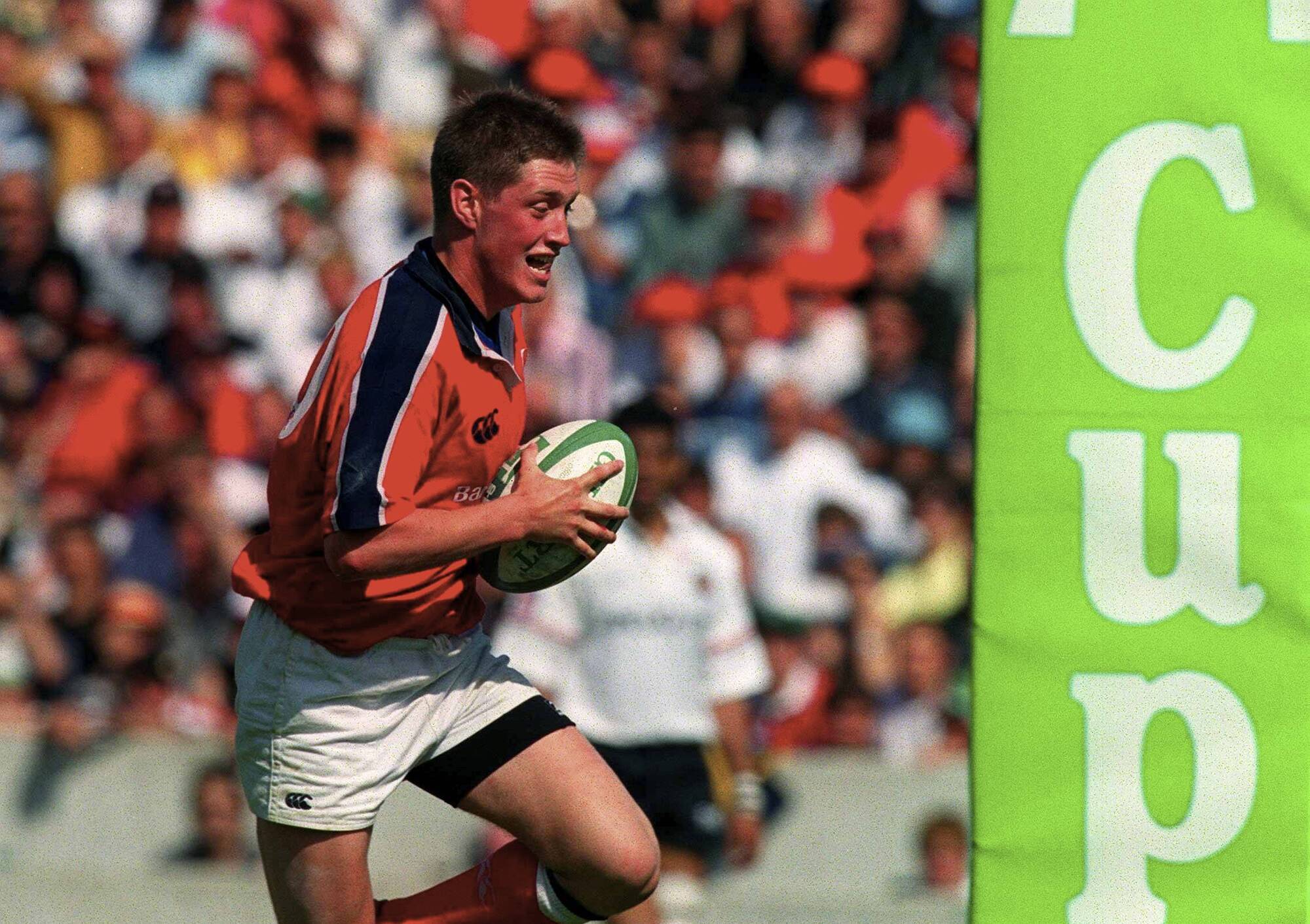
2000: Ronan O'Gara of Munster on his way to scoring with side's second try during the Heineken Cup semi-final. Pic: Matt Browne/Sportsfile
It had started out like many other visits to Bordeaux.

The city was hot and bustling, and the lunch was long, liquid, and bountiful. 

When yet another tray laden with oysters, piped in by a Dax band, arrived 20 minutes before kick-off, it is only fair to report that attention to what was happening outside in the dilapidated concrete bowl that was Le Parc Lescure (now the splendidly-refurbished Stade Chaban-Delmas), was not at its most rapt. 

Yet the stirrings were already there, a sense of a gathering occasion as red Munster shirt after red Munster shirt became visible, out-shouting (if not yet outnumbering) the Stade Toulousain fans who had made the two-hour trip up the A62 to Bordeaux with supreme faith in their Rouge-et-Noir team to make it through to the 2000 Heineken Cup final.

By the end of a dramatic afternoon, it was not just the local wine that could lay claim to being a vintage. The Munster European adventure had begun.

Munster return to the venue today, again as underdogs, the label shredded all those years ago as they beat the tournament favourites (aren’t they always?) 31-25.

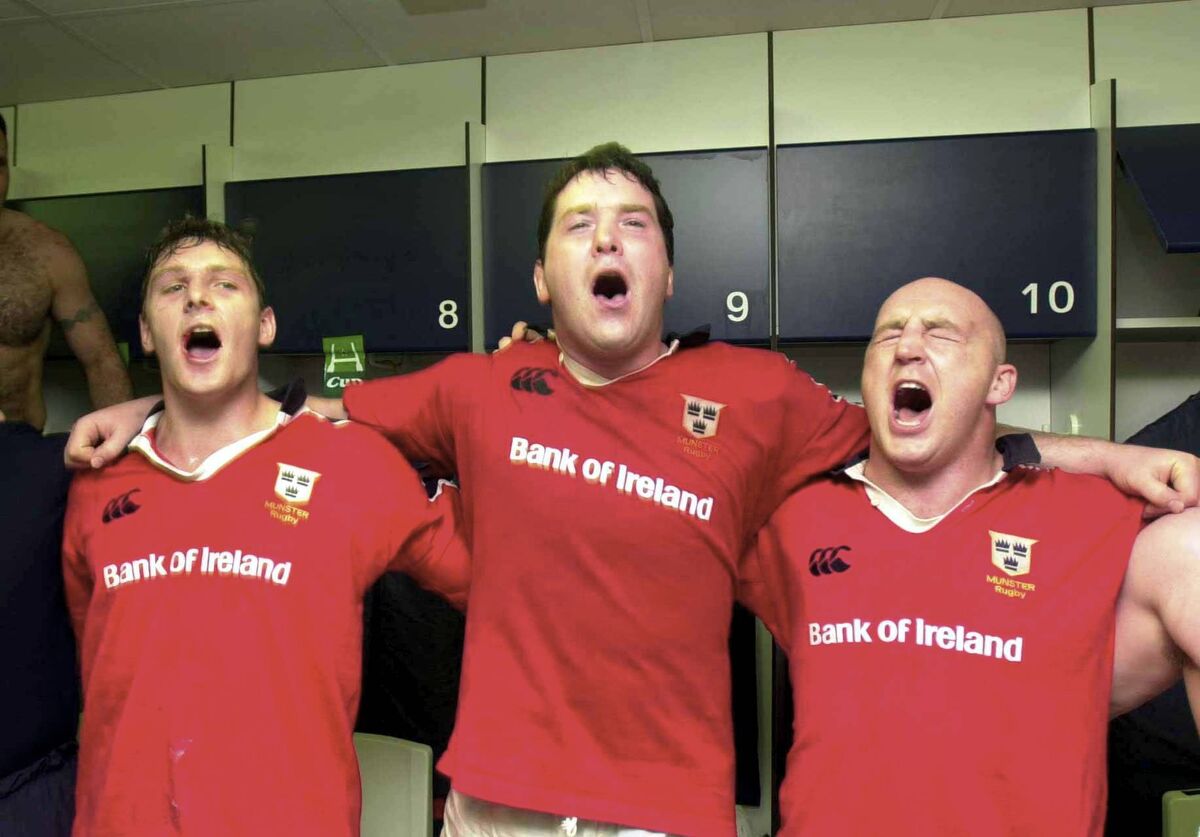
Munster players, from left, David Wallace, the late Anthony Foley and Keith Wood celebrate following their side's victory. Pic: Matt Browne/Sportsfile

Can they beat the odds again? Will Union Bordeaux -Bègles do a Toulouse back then, butchering chances and falling prey to the overwhelming force that is a team and its supporters in perfect harmony? 

Certainly there were shades of that phenomenon in the manner of their thrilling 25-24 victory over La Rochelle last weekend, as opposition head coach Ronan O’Gara would recognise only too well.

A young out-half in 2000, O’Gara scored 21 points that day, including a try. Toulouse might have been profligate but Munster were on the money from before kick-off, when coach Declan Kidney had them cooling down with damp towels and hydrating at every turn.

There has been an unfair tendency to think of Munster back then as a one-trick pony, hard-nosed and gritty, as personified by captain Mick ‘Gaillimh’ Galwey. 

Yet it was Munster who played the rugby; clever, forthright, adventurous, as shown by one of their three tries, a length-of-the-field, multi-pass effort triggered by O’Gara. 

Victory was no fluke, even if Munster’s Lee Stensness butchered a three-man overlap when knocking on midway through the second half with his team one point ahead at 18-17.

The Kiwi would have had his head in his hands for weeks afterwards, only he might have dropped that too.

There was no doubting the merit and significance of the win. “That was the day it all kicked off,” said Galwey some years later. “That was the day we announced ourselves as serious European Cup contenders.”

That Gaillimh went viral — there’s a term not in his vocabulary 25 years ago —with his impromptu rousing of the Munster faithful prior to kick-off at the Stade Marcel-Deflandre last weekend only goes to show that the link with the past is real and still a factor.

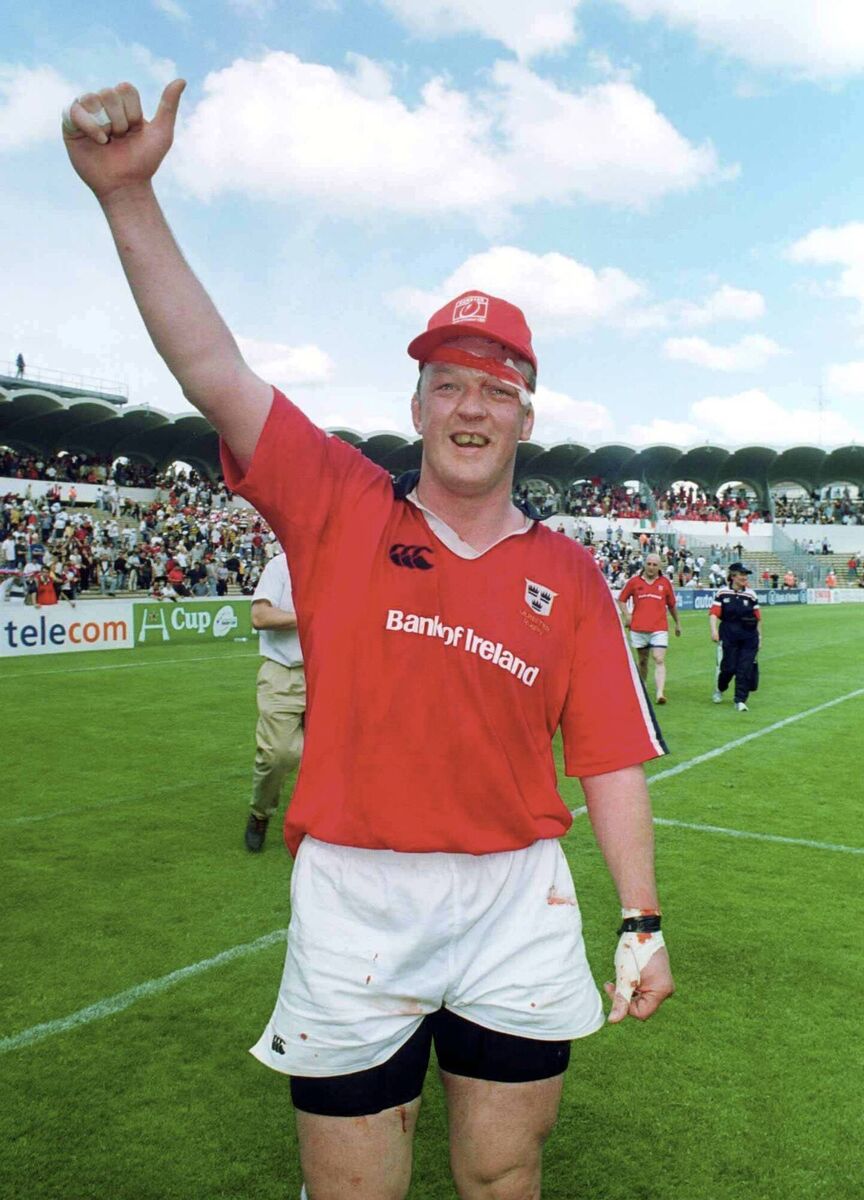
Munster captain Mick Galwey celebrates. Pic: Brendan Moran/Sportsfile

Munster’s glory years were an exceptional thing, hard fought-for and not to be easily recreated in this era of mega-budgets and super-star squads, be they in France or up in D4.

 Yet some of the self-same elements that went into that victory in 2000 are in play once again.

The Red Army, for example, is back on manoeuvres. They took everyone by surprise in Bordeaux all those years ago, the first time that club rugby, which was in its professional infancy, had countenanced the notion. They came from far and wide, including from a film set in Mexico.

My colleague at the Telegraph in those days, Brendan Gallagher, had spent a few years chasing Hollywood hell-raiser, Limerick-born Richard Harris, for an interview. Finally, he had got his man, who contacted him on the eve of the game for team news, weather forecast, and then booked in for match updates. 

In the bedlam that followed the shock victory, down in the stark bull-ring setting outside the dressing rooms, the phone went again. It was passed to Galwey, a direct hook-up to Mexico (Brendan is still paying off the bill).

It all made for a crazy, adrenaline-fuelled backdrop to what was a seminal afternoon. Munster had simply not featured in any pre-tournament reckoning, despite the fact that an Irish side, Ulster, had prevailed12 months earlier in a tournament boycotted by English and Scottish sides.

Munster had a couple of scalps to their name, notably Francois Pienaar’s Saracens, but still were not on the radar of any trophy engravers. Keith Wood had been lured back from Harlequins, although he only lasted half the semi-final after tearing a calf muscle when outstripping Toulouse’s star wing, Emile Ntamack. 

Peter Clohessy, Anthony Foley, and Galwey provided plenty of grunt up front, while young buck half-backs Peter Stringer and O’Gara pulled the strings.

The Stade Chaban-Delmas is now a well-appointed, high-performance venue, hosting a multi-talented, multi-layered Top 14 side.

Munster will need everything in their favour to make it through. Not many give them much of a chance, which is pretty much how it was 25 years ago. 

Perfect.

More in this section

Sport

Newsletter

Latest news from the world of sport, along with the best in opinion from our outstanding team of sports writers. and reporters

Cookie Policy Privacy Policy Brand Safety FAQ Help Contact Us Terms and Conditions

© Examiner Echo Group Limited