Twenty five years on from Italy’s big entrance, the Six Nations’ pizzazz never fades
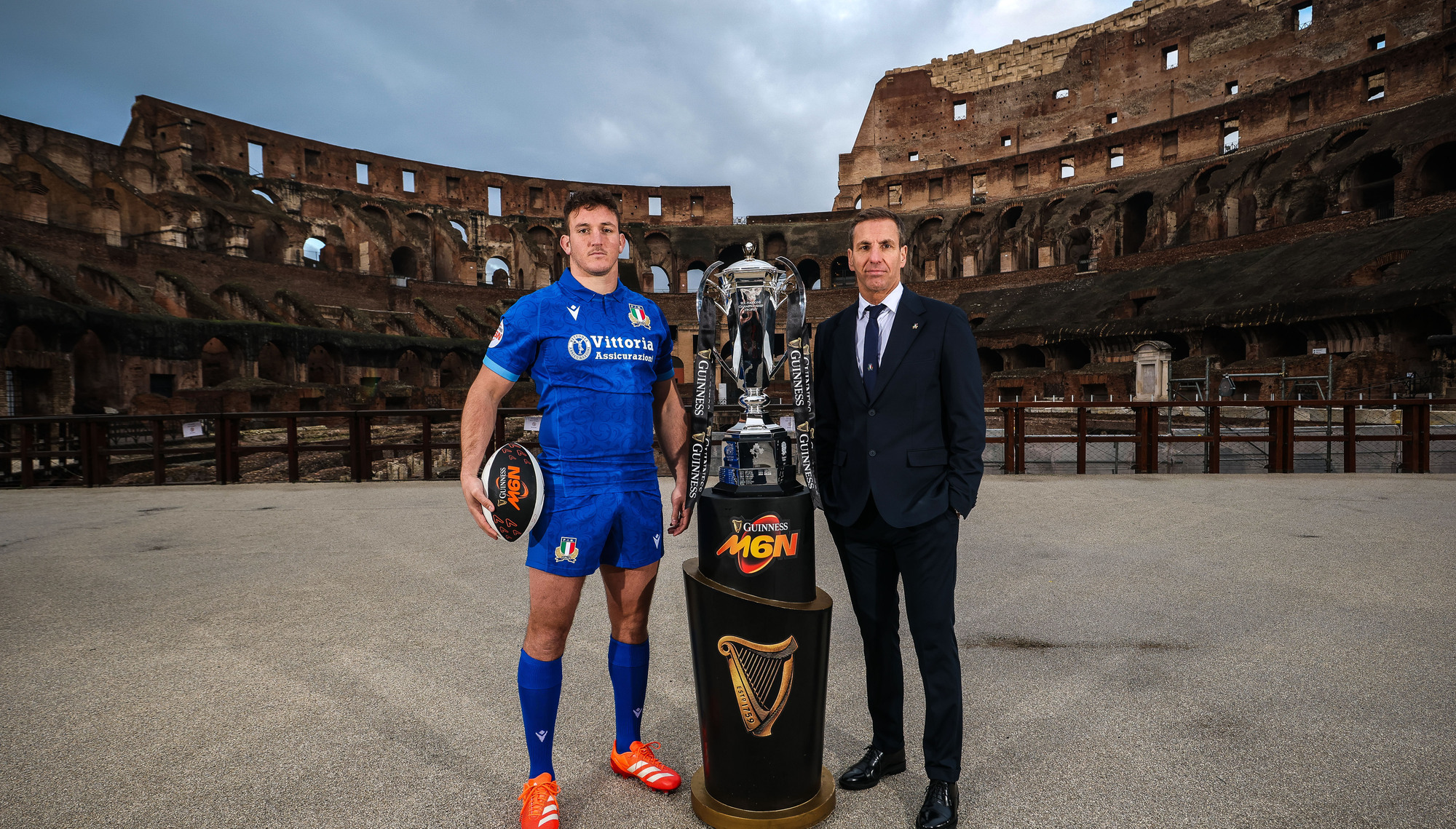
SIX NATIONS: Can Italy can an upset it this year's Six Nations. Picture: @INPHO/Billy Stickland
It is more than 140 years since England beat Wales in the very first match of the old Home Nations championship, 2-0 at St Helen’s in Swansea in 1883, and there is an old man in the back bar of the Kings Head who will tell you that the English winger’s foot was in touch when he scored the winner.
Even the modern-day championship’s getting on. The Six Nations is 25 this year. The tournament brought in Italy and they marked the occasion by beating Scotland 34-20 in their first game. Diego Domínguez, their little wizard of a fly-half, kicked three drop goals and 29 points in total, and Scotland have not had a relaxed flight out to Rome since.
The year 2000 was also when Ireland picked a skinny kid called Brian O’Driscoll at outside centre, only just out of Blackrock College. He scored a hat-trick in Paris while Scott Quinnell became the first player in the tournament to be sent to the sin-bin after he smashed head-high on Christophe Lamaison with a tackle so late it might have been scheduled by LNER.
It was the year that England put 50 on Ireland, 40 on Wales, and then blew their shot at a grand slam in the last round, as they often used to do. This time they went down by six to Scotland, who were winless thus far, on a filthy day in the mud and oomska at Murrayfield. Lifting had just come in, rucking had just gone out and the players’ shirts still flapped in the wind and looked better for it.
Every Six Nations marks a transition, it begins in the winter and finishes in the spring. One of the reasons it is loved so much is that it fills the bleakest weekends of the year and we know that once it is over the sun will be coming along soon enough.
Over those 25 tournaments, the sport itself has been through a transition. In 2000, most of the players had come up in the amateur era; today, most of them were not even born during it. Back then, rugby union still had a dash of amateurishness about it, especially when it came to workloads and player welfare. The plan, in most places, was to do the same thing they had always done, only seven days a week.
England and France had more resources and greater strength in depth, which was enough to give them an edge while everyone was figuring out how to go about professional rugby. Between them, they had won seven of the previous eight before Scotland’s victory in the last Five Nations in 1999 and they would win seven of the eight after it.
There were three grand slams in this era, one for Martin Johnson’s Orcs in 2003, a couple for Fabien Galthié’s fabulous French either side of it, and the biggest worry was that the tournament was going to become a two-team competition.
You would have got long odds, then, on the likelihood that England would win one grand slam in the next 21 years. But here we are in 2025 and the only other they have enjoyed was in 2016, when Eddie Jones flogged the survivors from the squad who had been humiliated in the World Cup the previous season through 18 straight victories.
England’s expectations always appear to exceed their achievements. We seem to forget they have been so mediocre for so much of the 21st century. France, on the other hand, have done things by extremes.
It has taken Fabien Galthié, and the grand project, to bring France back to life again. Given what he did as a player, and what he has done as a coach, he has a claim to be one of the most influential men in the history of the competition.
And Scotland? There have been plenty of famous victories, but they are still waiting for their first Six Nations title, or even, amazing to say, their first runners-up finish. This even though they have gone about playing the game every which way, from the era when they would refuse to run the ball in the opposition’s 22, to the one where they would insist on running it in their own. They live in hope of jam tomorrow and the perpetual expectation that this year might finally turn out to be theirs.
It is more than Italy’s fans have to work with: 25 years after that famous first, you can still count the number of games they have won in the tournament on your fingers and toes.
CONNECT WITH US TODAY



Be the first to know the latest news and updates