Returning to Irish rugby for 'dream job' was easy decision for Aled Walters
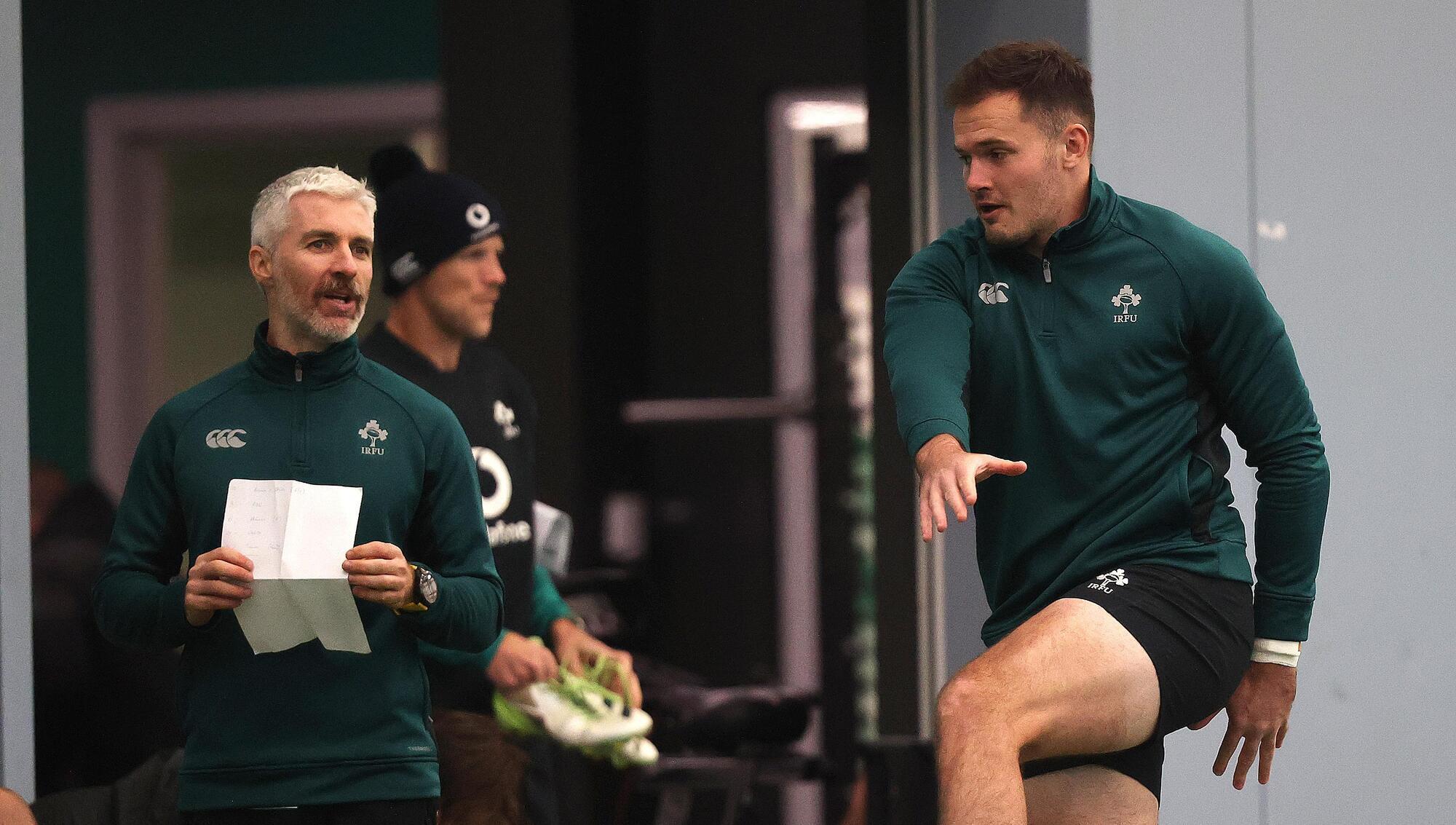
NO-BRAINER: New IRFU Head of Athletic Performance Aled Walters with Jacob Stockdale. Picture: ©INPHO/Bryan Keane
Aled Walters’ first game as a member of South Africa’s coaching staff was a loss to his native Wales. His initial experience with England last year was another defeat to the land of his fathers.
Last Friday brought different opposition but that same sinking feeling as he got his Ireland chapter underway: a ten-point reversal against New Zealand.

“Hopefully back on track now,” he smiled on Monday.
The announcement that the IRFU had persuaded Walters to leave his post as head of athletic development with England and take on the same gig with Andy Farrell’s squad was described in August as a coup.
His Test experience aside, Walters has worked with Scarlets, Taranaki, Brumbies, Leicester Tigers, and he did six years with Munster that played a major part in his decision to return to these shores with his Irish wife.
“It wasn't actually a big decision to make. This has been a dream job since my time at Munster. It was very, very easy to settle into Irish rugby. It's welcoming, great people, and Jason Cowman had been here a long time and done such good work.
“It's like someone has built an incredible car and I've been given the keys now, my job is not to crash the car.”
It’s not that the wheels came off against the Kiwis last week but Ireland stuttered in a way that we hadn’t seen under Andy Farrell in the last three years. The refit, it seems, will be more mental than anything physical.
Walters spoke of the “home truths” that have been delivered and digested in the days since, and there must have been plenty of those given a performance that threw up areas of concern across both sides of the ball.
“I think we were flat but, having seen them in Portugal [at a pre-November training camp] and seen all the numbers, I don't think it was a fitness issue. I'd be pretty certain it's not a fitness issue. I can't really explain it because I haven't seen them before.
"I mentioned to Faz on Thursday or Friday that I don't know what a good week looks like yet because I don't know the group. That's where I need to get up to speed very, very quickly to make sure we tailor the weeks appropriately to get the performance response we need.”
He accepts that this is something of a vague take but the process of ensuring readiness for professional players and teams can still throw up grey areas despite the scientific advances in strength and conditioning and diet and mental prep.
The same applies with the unique nature of the Irish player welfare system that is looked at enviably elsewhere, but Walters is a paid-up admirer of the physical specimens he will be working with despite the view that France, England and the Boks have beefier ‘cattle’.
Walters always admired and envied the speed of movement of players, from the loosehead prop to the full-back and all-comers in between, when it came to coaching against Ireland. His appreciation for this is only heightened now.
“Traditionally, we'd talk about the aerial game and the Gaelic football and hurling background helping guys being able to contest, but it goes way further than that now. They're incredibly strong, incredibly powerful and fast and fit.
“So I wouldn't see any reason to go into any game and fear the opposition for their physical quality. That's massive credit to the work done in the provinces. I've been here 11 days and I'm coming in to work with players of this quality and a capability you don't see in many places. It's pretty special.”
Another variable in all of this is age and Ireland’s profile against New Zealand showed a XV with half-a-dozen thirtysomethings and five more on the bench.
Walters talks about the need to bring the Thomas Clarksons, Gus McCarthys and Jack Boyles through, but not at the expense of more experienced players just because they have more candles on their birthday cakes.
That’s no surprise for a man who worked with a veteran Bok core that had men like Duane Vermeulen and Frans Steyn, or a Leicester group that made major use of a 38-year old Richard Wigglesworth and a 34-year old Chris Ashton.
"If age becomes a factor, it can only be a factor if it's down to their performance. I don't think you can ever put a label on someone and go, '35, move on’… It wouldn't be a theory in my world anyway, I don't think it exists.”