Dorothy Wall confident Ireland women have turned corner ahead of Six Nations
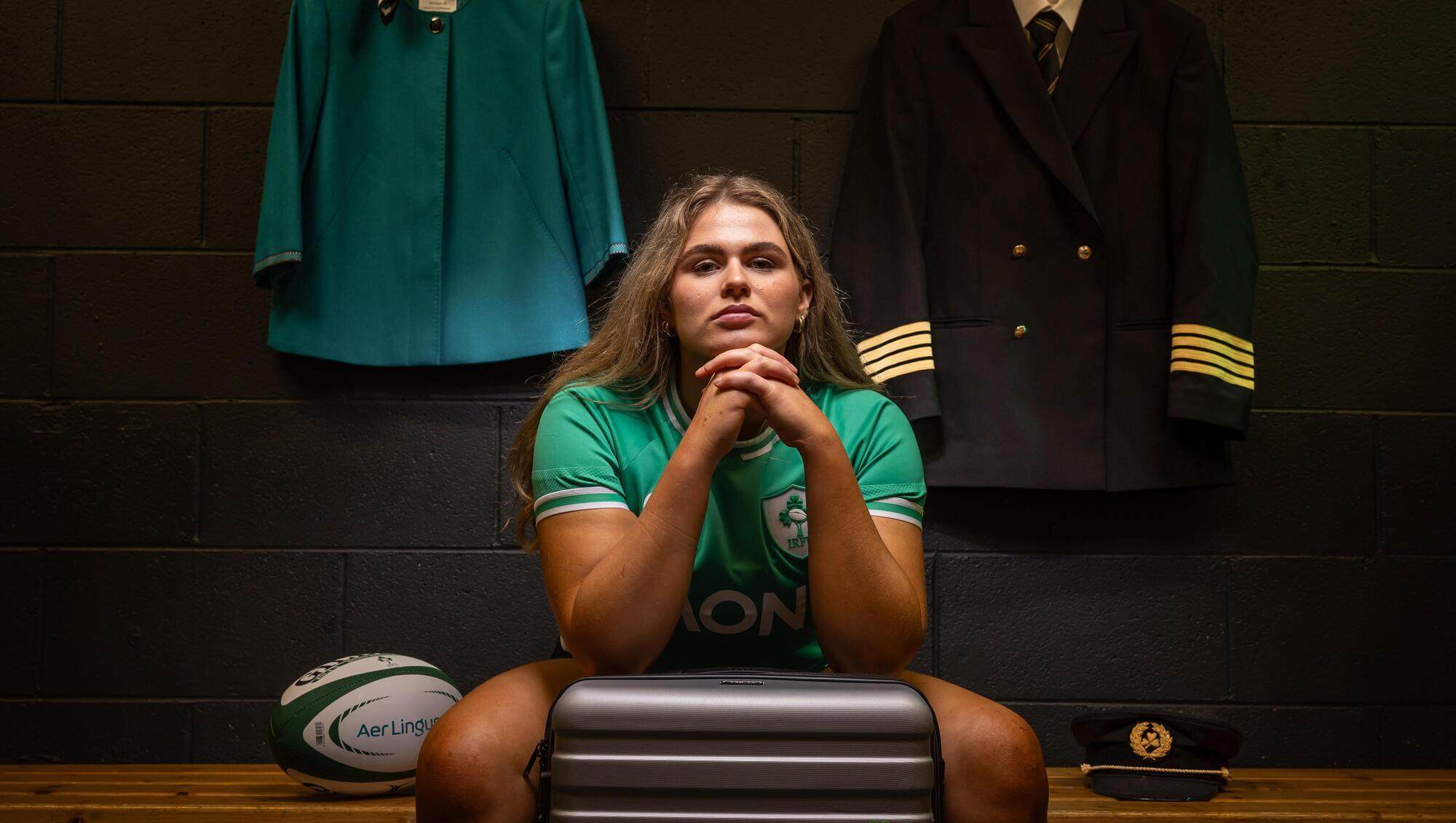
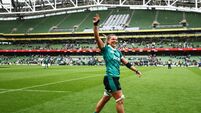
BACKS TO THE WALL: Pictured is Aer Lingus ambassador, Dorothy Wall (Munster), as Aer Lingus celebrated its long-standing partnership with the IRFU. Pic credit: Morgan Treacy, Inpho.
Two Six Nations down, one to go. Ireland’s men claimed another Championship title, the U20s went unbeaten for a third successive year. Now it’s the turn of the nation’s women to take up the baton, starting in Le Mans against France this Saturday.
It’s a daunting opening for a visiting side now operating under head coach Scott Bemand after the exit of his predecessor Greg McWilliams last year and a 2023 Six Nations campaign that delivered five defeats and a wooden spoon.
Ireland’s last win in this particular fixture was a 13-10 in Donnybrook in 2017. Six losses since have seen them ship 170 points for 47 against and the 25,000 capacity Stade Marie-Marvingt will likely make for an intimidating bearpit.
“It’s never going to be easy away to France with that crowd,” said Ireland’s Dorothy Wall.
“It’s a huge test but we are ready for it. It’s not like it’s only this week that we learned we are playing France away. We’ve known for a while that that’s the case.”
Ireland go into this one with a familiar feel of flux about them.
Bemand isn’t the only arrival onto the staff with Declan Danaher taking over the defence brief and joining Denis Fogarty, Larissa Muldoon and senior coach John McKee in guiding a 35-strong squad that has eight uncapped players.
The return of five sevens players – Beibhinn Parsons, Eve Higgins and Aoibheann Reilly among them – is a major boost and a surprising volte face given previous policies of separation and the presence of an Olympic Games less than four months down the road.
“They add that speed and that flair,” said Wall. “You call them sevens players but everyone started in XVs. In our eyes there's no real separation between the two. Beibhinn Parsons is the youngest capped international player at XVs when she was 16.
“So it's great to see their success in Perth as well and also qualifying for the Olympics. We want to build on the women's programme's success too so it's great to see them doing so well and hopefully we can do something similar.”
The callow nature of this collective remains stark and unavoidable. The average number of caps per player in the squad is roughly 8.5. Compare that with England’s champions who can boast an average of 31.5 and the chasm is clear.
Co-captains Edel McMahon and Sam Monaghan have 42 caps between them. England’s skipper, Marlie Packer, will make her 100th appearance this weekend against Italy and she isn’t even the most experienced member of their squad.
Ireland’s is a team with a long way to go.
The hope is that some of that distance has been covered by now. The advent of full-time contracts and improved supports and resources for the XVs players prior to last year’s competition means that players should be better physically, technically and tactically.
Three WXV3 games in the Middle East late last year brought three wins but, with those games played against teams of a much lower standard, the main benefits should come from the time the group spent together on the training field and in camp.
Players and coaches have placed a huge onus on the team’s culture, mindsets, how to be better ‘high performers’, nailing down their ‘training ID’ and a buddy system, all of it led by Sean Ryan as the new high performance, leadership and culture lead.
If there is a feeling of a fresh start then that’s probably no bad thing after the downward spiral in results in recent years and the litany of off-field issues that cast such a shadow over the women’s game and the IRFU up to and including last year’s tournament.
“Yeah, it was really hard, especially with the media speculation and what was going on within our own camp and knowing that it wasn't completely right in terms of our performances and everything,” said Wall.
“It was very hard personally, and for a lot of different players. And I think the strong emphasis on culture and building that togetherness was so important for us, that we had that connection and that team bond going into these competitions.
“When you're playing England it's 'right, who is going to die for me here beside me, whose going to go for it today'. And that's what you need when you play these teams so, yeah, it has been a huge turnaround since then. I would say and a positive one.”
CONNECT WITH US TODAY



Be the first to know the latest news and updates