Cantwell calls for further financial backing for women's game
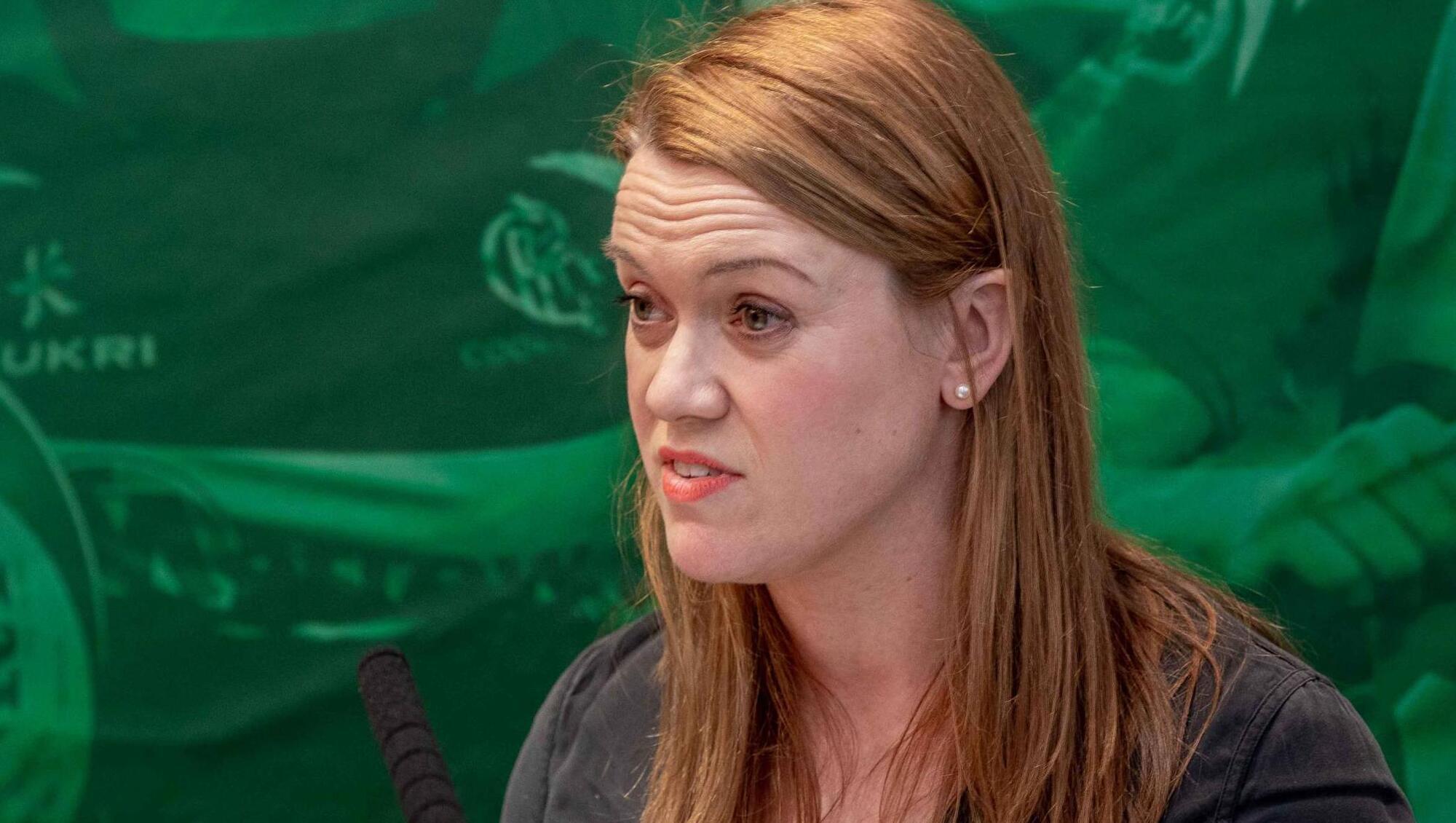
Watching closely: Lynne Cantwell is currently Women’s High Performance manager for South African Rugby. Pic: INPHO/Morgan Treacy
Lynne Cantwell has called for further investment to domestic women’s rugby in Ireland if the game is to build on the positive steps taken by the IRFU this summer.
The former Ireland star and current Women’s High Performance manager for South African Rugby backed the appointment of new IRFU Head of Women’s Performance Gillian McDarby and the governing body’s move to contract Ireland’s elite women’s players. But speaking on the TritonLake Perform podcast Cantwell said the professional direction taken needed to be underpinned at lower levels of the game if the moves were to be sustained and Irish women’s rugby was to go from strength to strength.

Speaking in Cape Town ahead of the Rugby World Cup Sevens, where both Ireland’s men and women reached the quarter-finals yesterday, Cantwell said: “I think Gillian McDarby will do a great job. I think she has been in the system and she knows the system.
"Any code or country that are going to invest in the women’s game with the right insights, and with the right insights is the really key piece, is going to do well.
“The contracts are great, they definitely reflect a professional direction. I think where we need to be careful with contracting is we are still in an infrastructure building phase.
“We need to invest in our domestic game, we need to have people working to attract excellent coaches into the women’s game, this is absolutely key. Full stop, around all of the world. If we don’t drive the standard at the technical and tactical level of your ABCs then the game is not going to produce what we know it can produce.”
Addressing the development of Women’s Rugby globally, Cantwell said data and scientific analytics were crucial for progression.
“The difference I think is we know more of the female nuances," she added. "We know how women differ at a physical, emotional, psychological, practical level. The countries and the codes that are tapping into that and researching that, and are applying the research that we know and are being brave to put spends in areas of the women’s game that don’t exist in the men’s, or do it differently and not see it as an expense, but see it as an important nuance that we include in this programme in order for females to flow through without any blockers.
“It is an important era for data science for women in sport because we haven’t got a lot of it. We blame female’s body shapes a lot for increased injury risk but I think a lot of it is at developmental age.
“Girls are not getting access to the kind of loading patterns that guys do because just simply the pathways aren’t there. We are assuming that’s girls bodies are made differently and therefore we have to be careful but I think a lot of it is just based on training age, I think data will help us an awful lot there.
“There is lots more data on periods, on maternity, on postpartum, on all of these things, that if we know more about it, I think we will create way better systems that enable women to be represented, to feel like they belong, to be represented in sport more and therefore we will just get more and more coming through and better performance.”