Reform of Irish women's rugby must start at the foundation level
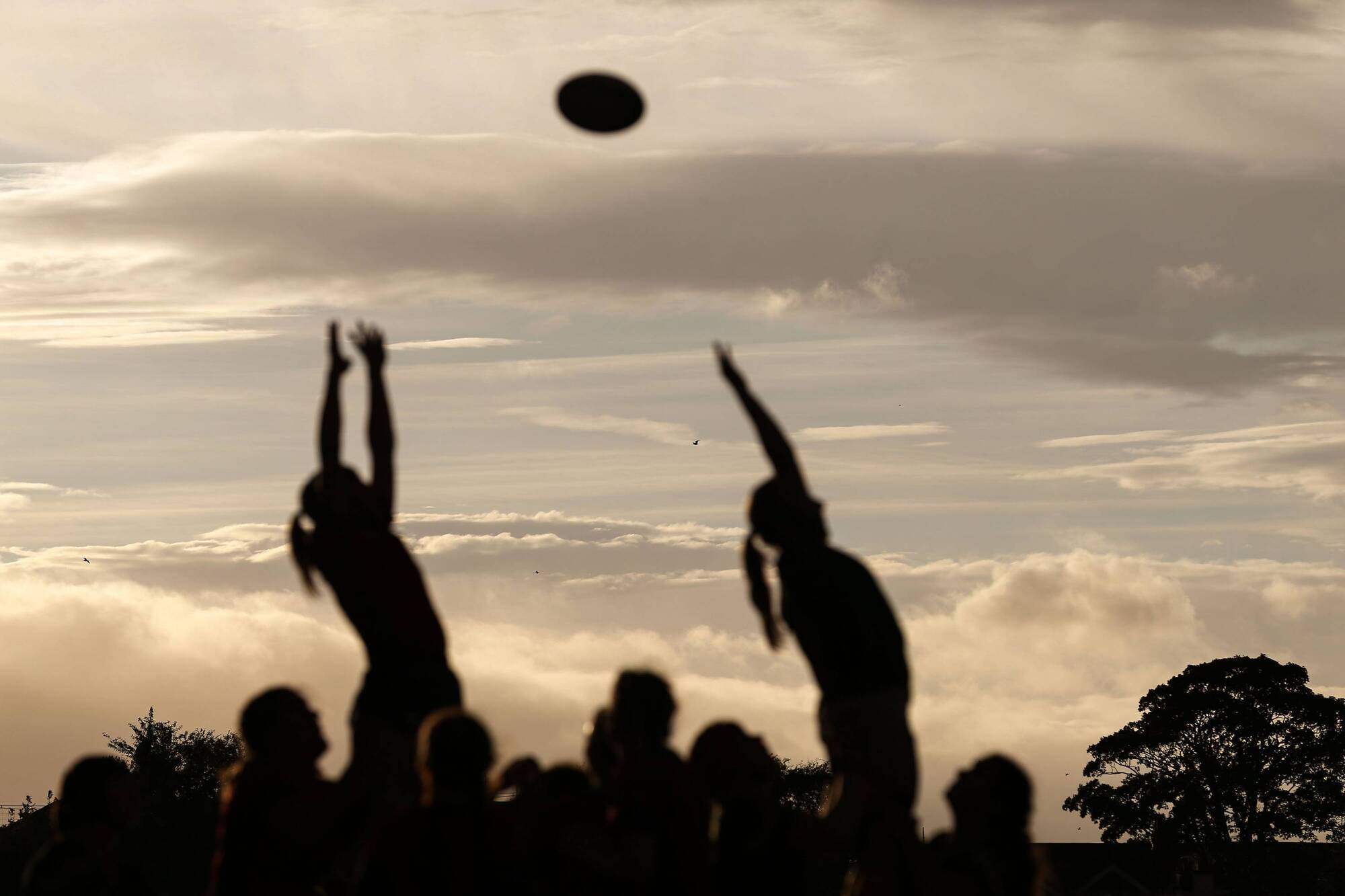
Is having only three home-based forwards (Dorothy Wall, Katie O’Dwyer and Brittany Hogan) in today’s starting pack an indictment of the standard of the domestic league?
WHEN Greg McWilliams named his first Six Nation’s team something stood out even more starkly than Beibhinn Parsons’ absence from the starters or his new half-back pairing.
Five of Ireland’s starting pack today play their club rugby abroad - four of them in England’s Allianz Premier League.
Linda Djougang joined French champions ASM Romagnat (aligned to Clermont) last August.
New Irish captain Nichola Fryday moved to Exeter in November, Edel McMahon and Sam Monaghan both play for Wasps and Malone’s rising front row star Neve Jones moved to Gloucester-Hartpury in January.
Ireland’s female players have long played in England’s top tier (including Claire Molloy) for higher-quality competition and, unlike their male counterparts, there’s no IRFU rule that precludes those from international selection.
Continuing to go to England and now France - where professional international contracts have lifted the standard of the domestic league – to improve their game is not radical.
But is having only three home-based forwards (Dorothy Wall, Katie O’Dwyer and Brittany Hogan) in today’s starting pack an indictment of the standard of the domestic league?
It’s been criticised as ‘Top Four and No More’ but the IRFU sought to alter that this season.
It expanded it from eight to 10 teams with no promotion/relegation and gave clubs more games against teams of equal standard via a post-Christmas play-off series that separated the top four from the bottom six.
Each group had a trophy to play off (League and Conference) and the finals were played in a treble-header in Donnybrook, including a third-fourth playoff.
The league still featured some early eye-watering results, like Railway Union’s second round 142-0 defeat of Wicklow, who lost 63-0 to Old Belvedere in their opener.
They were one of three teams that failed to score a single point against the league and Cup champions.
Debutants Ballincollig also scored zero in two big shellackings while Suttonians lost 0-50 to Blackrock.
But England’s premier women’s league also featured massive mis-matches this season; Exeter beat Durham 90-7 and Worcester by 53 points. Durham failed to score a point against Wasps who put almost 50 on them and they also lost 74-5 to Worcester.
Just as the Six Nations is currently split - England & France/ The Rest - there are gaps in standard in domestic leagues which are unavoidable when there’s little depth of talent and everyone is not singing off the same hymn or spread sheet.
There seems to be a consensus that the IRFU has made a genuine attempt to start closing the gap this season.
Former UL Bohs and Irish international star Fiona Hayes, who is a Level 4 coach and lives in Cork, led Ballincollig into their inaugural AIL, the city’s first female All Ireland League side since Highfield left in 2018.
“Our worst defeat was 84-0 to Blackrock at home. They had all their Sevens players back so it was tough going, but no one’s delusional here, we’re nowhere near the top four. All we’re focusing on is developing as a team and what we can do to get better, ” she says.
“Over the years I’ve heard coaches in the Munster League refusing to play games - I’d never believe that! Players need to be playing against the best players, realising they’re humans too, taking the little wins and learning.
“When it came to the Conference everyone except the two Ulster teams had a chance of qualifying in the last round. We had beaten every other team at some stage bar the Top Four so there was genuinely something to play for. ”
Suttonians are Dublin’s only Northside AIL team and made it to that Conference final and beat Galwegians and Stephen Costelloe coached them in what was their first full AIL season.
He'd coached in it before (St Mary’s) and says things were radically better, including playing standards.
Suttonians’ biggest challenge is getting and retaining players. Two come from Naas, two from Tullamore and a handful play interpro with Connacht. Injuries meant that he had only 22 players for the Conference final and they’re going to lose a few now to travelling abroad.
“This year’s league structure probably gave us more freedom to go out and put things in play, ” he says.
“There was a carrot too of silverware but, talking to the players, they’d say we actually played better rugby against the top four sides and would have liked to play them even more.
“We fell asleep for the first 20 minutes against Belvo and went 22-0 down but only lost 22-17, we were really competitive. Our game against UL Bohs was phenomenally competitive for long periods and we went into that with just 19 players.
“I think everybody wants to keep the league as a full league, ” he says. “No one wants to see a score-line that absolutely sky rockets but it’s what you take out of it as a coach and players that matters. ” Costelloe says the IRFU’s help with video analysis through ‘Huddle’ software is another support.
“We upload the game video, they clip the basics for us and we can then work further on it, that’s a huge help for data and analysis. ”
Making international players available to their clubs was another notable change this year though largely favoured already dominant teams.
“We’re not blessed with too many of them but when the likes of Katie Farrell-McCabe comes back to us from Sevens there’s a buzz about her that lifts a lot of the other players, ” Costelloe says.
Suttonians’ biggest weakness, ironically, can also be a strength in terms of recruitment.
“We can actually offer players AIL game-time because we don’t have a big panel. You’d hope that, the way we play and the fact that we won some silverware, will attract more players here. ” This year’s changes still don’t go far enough for someone like Railway Union’s thought-provoking Director of Rugby John Cronin.
Railway’ is unapologetically ‘high-performance’ and ambitious, not concerned with creating Mini nurseries or social players.
Cronin acknowledges they have a geographical advantage that some others don’t have but stresses: “I didn’t convince every inter-pro and international to move to Sandymount. They’re inter-pros and internationals because they play with us. That’s because we have a good coach and a high-performance’ environment that puts players first. ”
How they do it is freely available to all on their website and he says he is consulted by other teams on an almost weekly basis.
Railway’s women’s side is the club’s highest-ranked team. They raise and spend €170,000 to support them annually, feed them after training, provide a gym in the club and pay for a skills coach, S&C and physio, though Cronin himself is a volunteer head coach.
His ‘geography before club’ rationale for developing the domestic league further (see sidebar) will have traditional alickadoos choking into their hip flasks.
He believes that for Ireland to thrive internationally it needs the sort of radical domestic re-think that saw England’s women’s game ditch its historical ‘counties’ allegiance (the equivalent of Ireland’s provincial system) in favour of city-based franchises.
Others may query Irelands’ ability to double up codes given the small adult playing numbers here yet Cronin sees great symbiosis between women’s Sevens and XVs and firmly believes that Ireland could be equally successful in both, given some basic IRFU investment and support for clubs.
He’s not alone in observing a sea-change in attitude to the AIL this year from the new international head coaches.
“Aidan (McNulty, Sevens) and Greg have both been a breath of fresh air in their engagement with clubs and attendance at games. Aiden’s philosophy is that he wants them playing (for club). ”
That may have disadvantaged some of the league’s minnows but it’s part of the ying-yang of every sporting league.
Cronin says he runs his bench whenever possible against weaker teams but is appalled by the notion of asking his team to deliberately ‘ease up’ on anyone.
“What the most respectful thing to do? To hold back? Or knock on the ball and have a laugh at them? No. This is the elite league that the IRFU have put in place.
“Big discrepancies in results happen in the English Premiership too and in men’s leagues but are men ever asked to do that, to hold back? Why is there this obsession with controlling women?”
Fiona Hayes believes Ballincollig faded towards the end of their first AIL season largely because they lacked even one player experienced at this level but feels they are on the right track.
“The women’s team is the main team in the club. They’re completely focussed on it which is really great, I’ve never seen that before. We have first option on the main pitch and whatever they can do for us.
“Winning our first two home games of the season - beating Galwegians and Suttonians - and beating Wicklow by three points up there. Those are things that will stick with this club forever. We just need to learn how to be more consistent now.”

BLACK FRIDAY
Already a subscriber? Sign in

CONNECT WITH US TODAY



Be the first to know the latest news and updates