Tom Kiernan: Proud Irishman, proud Lion, and the saviour of European rugby
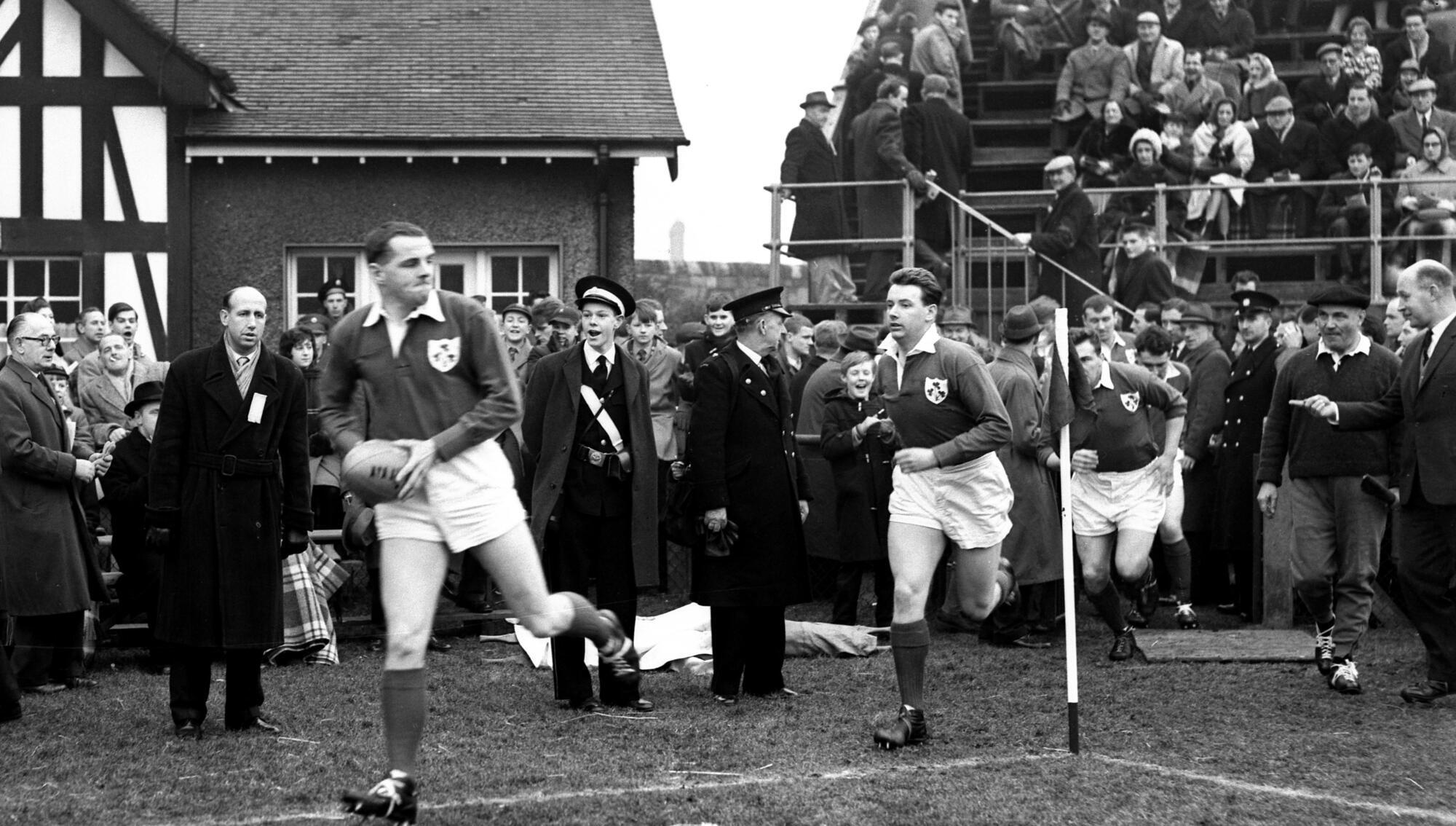
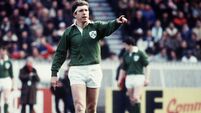
Tom Kiernan leads Ireland out, ahead of Cecil Pedlow, Sid Millar, Paddy Dwyer, and Ray Hunter, for the 1963 Five Nations clash with France.
Tom Kiernan’s old friends remembered him as the man whose unbending leadership averted a global crisis during the volcanic eruptions over professionalism.
Kiernan, who died on Thursday, had captained Ireland 25 times over a period of 10 years, led the Lions throughout a four-Test series in South Africa, and coached Munster on that blessed day in Limerick when they reduced the All Blacks to their last, literally pointless defeat on this side of the equator.
And then, almost two decades later, he reappeared in a role which would make him a major figure on the world stage, a saviour of the sport’s most treasured event. As a powerbroker, he helped rescue the then Five Nations and the wider international game from smashing itself on the rocks of an unholy war against the English and French clubs.
His was truly a life of two halves. The first one ended in cruel anti-climax exactly 50 years ago with Kiernan the captain and his team left high and dry by first Scotland, then Wales refusing to play in Dublin for security reasons in the immediate aftermath of Bloody Sunday in Derry.
Ireland had done the hard bit, winning in London and Paris. Beating a poor England side at Twickenham may not have been much of a deal but beating France at Stade Colombes most certainly was. Suddenly the Grand Slam loomed only to disappear like a mirage when, ironically, their fellow celts stayed away.
No sooner had Kiernan re-entered the fray in his new role as a man of many parts – administrator, diplomat, politician, and unyielding defender of the rugby union faith – than he found himself fighting fires on every front.
As the first chairman of the Heineken Cup, Kiernan needed all his people skills and every ounce of his humour to bring the warring factions together and launch a tournament which, under the control of the unions, rapidly established itself as the supreme club competition.
It was to prove merely a warm-up for an infinitely bigger row, one which threatened to destroy the Five Nations championship before it became the Six.
England's RFU, tired of the collective bargaining for television rights which limited them to one-fifth of the loot when they and France had infinitely more clubs to provide for than the Irish, Scots, and Wales, did their own deal.
They sold television rights to their matches at Twickenham to Sky for £87.5m, a staggering sum today but more staggering still in 1996. The other four ganged up on England and expelled them from the following year’s championship.
They allowed them back on the understanding that the RFU had agreed to share the £87.5m with the other four countries, to the tune of some £17m each. When they accused the RFU of reneging on the deal, they kicked England out again, this time in January 1999 just weeks before the tournament was due to begin.
‘’In those dark times, Tommy proved himself over and again to be a man of steel,’’ Alan Hosie, the former Test referee, SRU President and Five Nations’ chairman, said last night. ‘’We needed strong leadership at that critical time and Tommy provided it.
‘’He was the ideal man to have in the chair for the serious issues which threatened the game of rugby football as we knew it and loved it. He recognised the need for a united front in confronting the issues and he was able to defuse many a tense moment with his wonderful sense of humour. The game owes him an awful lot.’’
The hawkish wing of the RFU cooked up a plan to spread their wings and secure annual fixtures with New Zealand, South Africa, and Australia. At a point when their old relations with the other home countries were about to go up in flames, the hawks added insult to injury by letting it be known that they would continue to take part in the Five Nations but with a second XV.
That had the effect of lobbing a jerry can of kerosene on the fire. As Kiernan and the rest of the game’s world governing body stood firm and the crisis deepened, Bill Beaumont’s personal initiative set up emergency talks sealed over a ‘pint-and-a-pie’ with Hosie at the Drum & Monkey public house in Glasgow.
A majority at the RFU were in favour of taking the Five Nations to court. Beaumont conceded that ‘some at Twickenham had been doing their best to extricate England from what would soon be the Six Nations in a deluded belief that our interests would be better served with the big three in the southern hemisphere.
‘’I wasn’t prepared to stand by and watch us turfed out of a marvelously compelling tournament,’’ Beaumont, now chairman of World Rugby, said. ‘’In the end we found enough common ground for Alan to reverse a decision that I felt should never have been made.’’
Rugby’s ‘Bay of Pigs’ moment had been averted. The 70,000 fans who had bought tickets for the opening match of the last Five Nations against Scotland in 1999 had been reassured in the nick of time that England would be allowed to take part.
Back home in Cork, Kiernan heaved a sigh of relief. He and the unions had saved the oldest annual event in world sport from disintegration, just as he and they had saved the European competitions from being hijacked by the clubs.
They would eventually take control but by then Tom Kiernan had taken his leave of the world stage with the gratitude of delegates from the major rugby nations ringing in his ears.
"Deeply saddened to hear of Tom Kiernan's passing. Tom was a fantastic player, captain and coach, but he was also an exceptional administrator. We have lost a true legend of Irish, European and World Rugby. My thoughts are with his family," Beaumont wrote on social media last night.
In recognition of Kiernan's unswerving refusal to take a backward step in the face of enemy fire, the International Rugby Board, now known as World Rugby, presented him with their Distinguished Service award. Nobody before or since could have been more deserving.
When the chips were down, when the battle lines looked distinctly dodgy from a union perspective, Kiernan would hunker down in his bunker fortified by an old-fashioned belief.
‘’We’re keeping the faith,’’ he’d tell anyone who cared to listen. ‘’And if we keep doing that, we’ll come through tomorrow and whatever else lies round the corner….’’ Tom Kiernan kept the faith right to the very end.


CONNECT WITH US TODAY



Be the first to know the latest news and updates