Tadhg Coakley: Why was the loss of Anthony Foley so overwhelming for so many people?
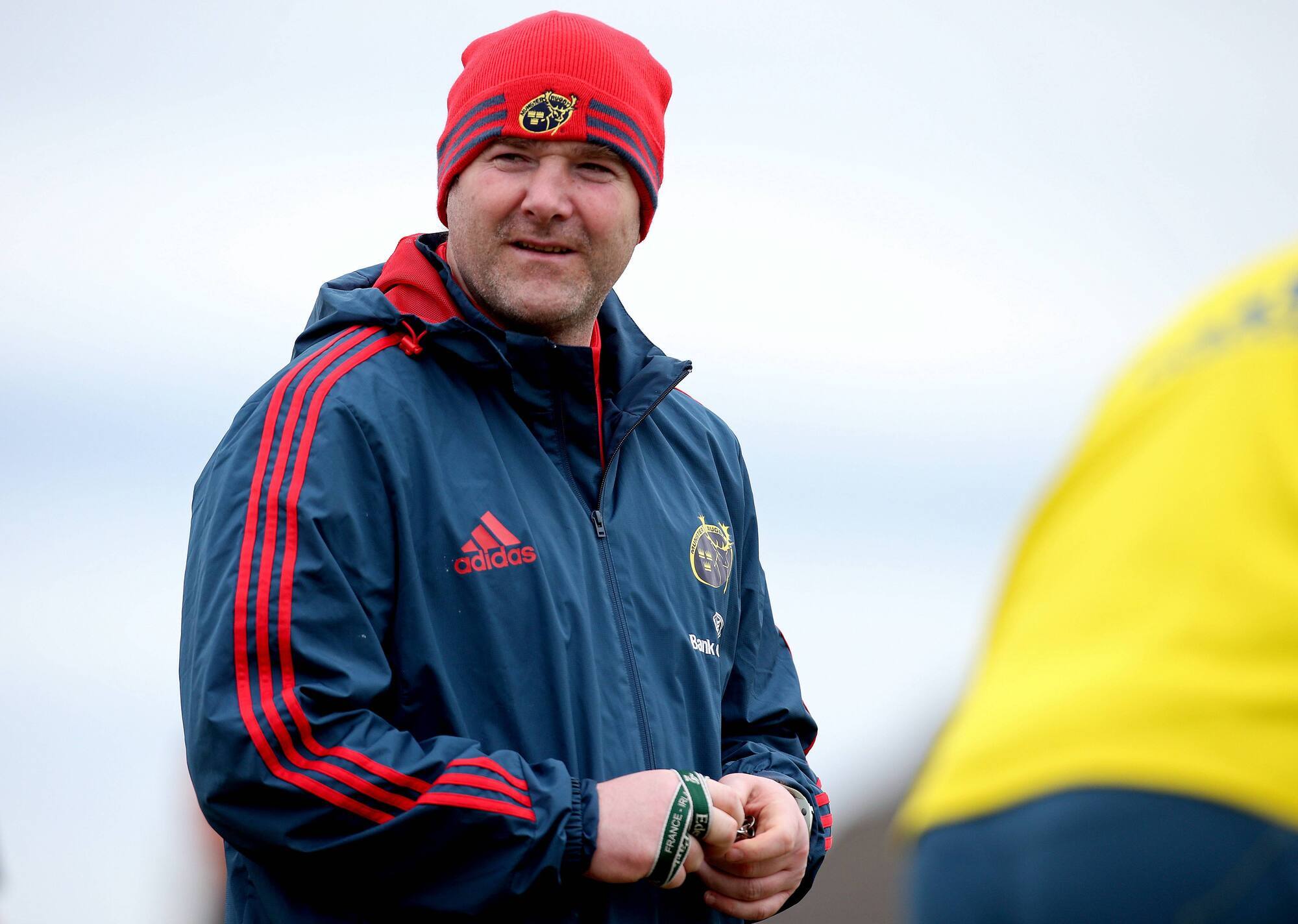
Anthony Foley. Picture: INPHO/Ryan Byrne
It’s hard to believe, today is the fifth anniversary of Anthony Foley’s tragic death. It seems in one sense like it was only a few months ago. In other ways, it feels like it’s been decades. I guess time has lost all its meaning over the last two years.
Do you remember exactly where you were when you heard the news that dark day in October 2016? I think you do. I certainly do. I was in France on a walking holiday with my brothers and the shock and upset we felt has stayed with me. It was one of those JFK or 9/11 moments that etch themselves indelibly into your memory.
The American writer Siri Hustvedt says that emotion plays a vital role in memory. ‘Indifference is the swiftest road to amnesia,’ she says, and none of us is indifferent to a young life lost — especially a life such as Anthony Foley’s.
But we hear of young people dying all the time — it’s a sad reminder of all that is fragile in the world. So why was the loss of Anthony so overwhelming for so many people? Especially for those outside the intimate communities of his family, friends, neighbours, work colleagues and teammates?
I wonder if it was some perception we had of his humanity? It’s a strange characteristic of sport that we love some players more than others. Yes, we might idolise the great high-scoring out-halves of rugby or the flamboyant free-flowing forwards in other sports. But we don’t associate with them as much as we do with the woman or man who seems to reflect our own sense of fallibility and the emotions we pour out of ourselves when the game begins. The ones we seem to connect with more, with whom we perceive a greater commonality.
I wonder too: do we have a greater sense of debt towards those players? A sense of how much more deeply they have to dig inside themselves, of how much more they have given to their teams — and hence to us? The sense that it all means more to them than it does to other players? That we mean more to them than we do to other players?
Yes, of course, we remember and honour Anthony’s heroics in rugby, his achievements for St Munchin’s College and Shannon, not to mention his 201 appearances for Munster and his 62 caps for Ireland. We honour his service as a coach too. How could we not have a special place in our hearts for the first Munster man to lift the Heineken Cup when we — yes, we — beat Biarritz in the 2006 final in Cardiff?
But it was more with Anthony. Maybe it was something about his ready smile, or the little bit of divilment behind it. Maybe it was his nickname after the mischievous Detroit cop stuck in posh Beverly Hills. Maybe it was the swashbuckling way he played the game. Or maybe it was something more fundamental to do with his values; the values his wife Olive spoke about at his funeral.
In sport we achieve a kind of Aristotelian mimesis. Sport (and art) hold up a mirror in which we see ourselves, but in Anthony Foley’s case it wasn’t a real version of ourselves, it was a better version. And we love him for that. In some special way he didn’t only represent Munster Rugby, he was Munster Rugby.
Perhaps I should say that he is Munster Rugby. Olive also said at his funeral that he would live on. And he does. He’ll be there in Thomond Park tonight, for sure. I picture him shaking his head or rolling his eyes at the fuss when his picture appears on the big screen; impatient for the game to begin.
When we saw those heartbreaking scenes in Killaloe five years ago, it emphasised something we’d also prefer not to acknowledge. That we have to maintain perspective in sport.
We know deep down that sport is only sport but we don’t want to admit it. We know, too, that behind legendary sporting figures there are parents and brothers and sisters and partners and children whose lives can be utterly devastated by such a loss.
We also saw at his funeral the grief of Anthony’s former coaches and teammates and opponents; the players he, himself, had coached. How bereft they were, how lost and helpless. Men we mythologise week in, week out, humbled and shrunken into vulnerability by sorrow.
When a marauding number 8 bursts over the line, it seems like nothing else matters in that moment, that nothing can come between us and our ecstasy and joy and pride. But beyond the physical prowess and courage and celebrity of sport there’s so much more.
There’s identity, community, the ties that bind. And we were certainly bound to Anthony Foley; the man moreso than the hero. That makes all the difference.
And so, there will be silence and reflection in Thomond Park this evening before the match with Connacht.
Silence and reflection, too, in homes and bars and clubhouses spread out all over Munster, spread across Ireland and among our diaspora abroad.
And if there are tears, let there be tears, let them run.
Tears of sadness but also tears of pride and gratitude.
And after the tears, the applause.