The big interview with John Kelly: 'All I want to see is Munster getting better and stronger'
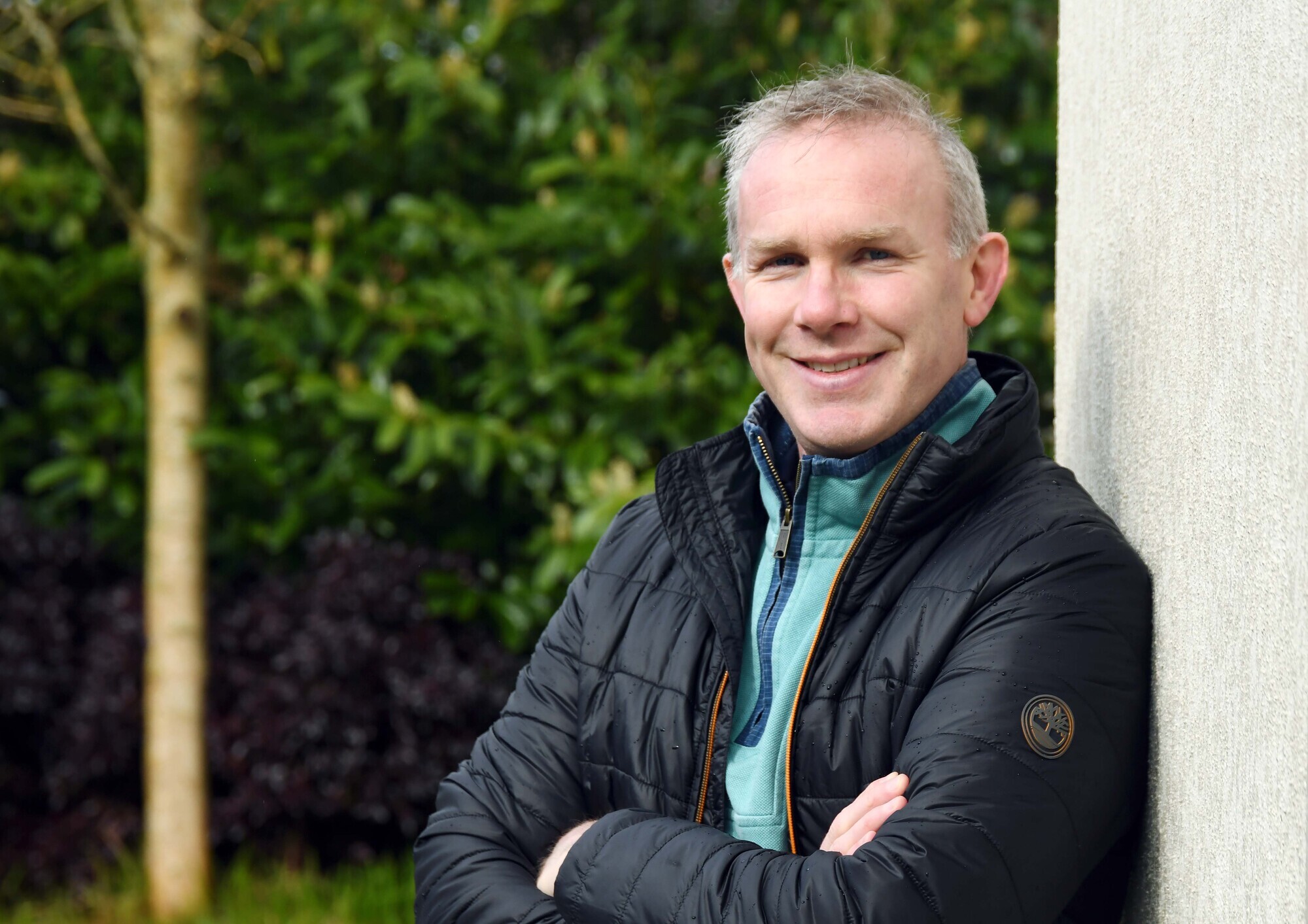
John Kelly:’If you’re playing 13 or on the wing, you have a lot of time to think about where you need to be and what you need to do next. While rugby is instinctive to a certain extent, a lot of the game is about thinking and reading the situation and being able to be in that moment.’ Picture: Denis Minihane
“We learned through experience, but it wasn’t just about experience through matches, it was about talking about rugby every day over teas and coffees. People on the outside will never understand how much John Kelly brought to our team. He believed so passionately in Munster, and thought about our success so deeply, that whenever he spoke, everyone listening had the same thought in their head: ‘This guy has it sussed here. I’m going with him.’”
Paul O’Connell, The Battle
It's only this past year that he’s been able to find the serenity to put pictures of his playing days up around the house but John Kelly’s memory remains so photographic, his mind so forensic, that incidents now just a blur to everyone else remain vivid to him.
Very early on in our conversation, I raise something that arose very early on in the 2006 Heineken Cup final. Potentially his worst moment with Munster happened in their finest hour but the likes of Paul O’Connell have vouched how his calm response to that moment helped it become Munster’s finest hour. That chimes with Kelly’s own recollection, only he can add detail and context the rest of us had forgotten or never knew.
A month earlier Munster had played Leinster in an even bigger one than Saturday's, and during that European semi-final Kelly had dislocated his ACL joint. Nothing was going to keep him off the pitch in Cardiff and during those intervening four weeks he got in a lot of bag work but minimal full-contact work.
“A minute in and I made a tackle and I thought, ‘Yeah, I’m okay!’ But then I went to make the next one. And it must still have been playing on my mind: Is the shoulder okay? And when [Philippe] Bidabé was trying to cut through, I went in too high. He handed me off and bounced me for a moment and went through to give the pass to Sereli Bobo for the try.”
It was something, as O’Connell has put it, that happens to every player at least once a season, but it was a deflating one for the huge Munster support, and fleetingly, even for the team. Kelly was one of six players playing in their third European final and the concession of such an early try triggered a sense that this was likely to go the way of the previous two.
Kelly prided himself on his defence. “I didn’t miss many tackles in my career,” he says.
And because of his analytical nature, they would often torment him. But only after a game. During it he had the remarkable capacity to park his mistake; to, as the NBA Zen master Phil Jackson might say, leave it at the river instead of continuing to carry it. And never was that skill more required than when he and his teammates huddled under their goalposts.
“The one thing we always had as a group was that we were very honest with each other. When we first went into that huddle there was almost a sense of panic. A few of the lads were talking about this and that and what we needed to do, but then I basically said, ‘There’s nothing wrong with our system, nothing wrong with our defence.
'I missed a tackle. I won’t miss another one.’ And with that everybody kind of calmed down.
“And being able to say that to the team was very useful for me to help wipe the slate clean straight away. And while it was gone, it was still there, as in it was a motivating factor for me. I didn’t let it affect my performance in a negative way, but I tried to make it impact my performance in a positive way. And I felt for the rest of my game I did my part. I didn’t have an amazing game, it wasn’t one of those games when I could say I played a huge role, but I was relatively happy with how I played from that moment onwards.”
A look back at the video and you’ll be able to see some of the plays he made: a few carries here, a few tackles there. But when he thinks back on that game, it’s an intervention you wouldn’t even have spotted at the time that stays with him most.
Long before Joe Schmidt and IRFU performance analyst Vinny Hammond would speak about analysing and preparing “a shitload about the very little matters because a little can matter a shitload”, Kelly was known to devour opposition video.
In the closing minutes of that final, Munster were hanging on to a four-point lead when Biarritz had a scrum inside the Munster 22.
Kelly from his research instantly recognised the play they were looking to run. Munster at the time were playing a drift defence, waiting for teams to pass and then catch them on the outside, but Kelly in that moment called for his teammates to blitz.
“The idea was to shut it down before it got to the outside and ROG saw it as well, so he went, yeah, ‘We’ll go with that’, and Trevor Halstead went to blitz as well. But then when I called it to Ian Dowling, he called it back to Shaun Payne who overruled: No, we hold.”
A less intelligent player wouldn’t have spotted the dilemma Munster were in: O’Gara and Halstead were committed to the blitz while Payne and Dowling were sticking with the drift. Had Kelly not recognised Dowling and Payne’s moment of caution, he himself would have gone to blitz the opposing number 12, meaning one pass flashed across him to the number 13 and there’d be a massive gap between them, Dowling and the tryline.
But Kelly did spot it; he readjusted to the readjustment. While a part of him is annoyed he didn’t force Dowling to blitz and believes it would have led to an interception and a try at the opposite end, he recognised and understood his teammates’ conservatism: so long as we don’t concede one at this end. Ultimately they kept Biarritz out, with Kelly and Dowling dragging Bidabe to the floor and Halstead putting in a huge tackle. The crisis was averted, the game won, the Promised Land finally reached.
Only then he went back to the river to pick up the mistake he’d parked 90 minutes earlier.
“After the game I was very annoyed with myself for missing that tackle. I was thinking to myself, ‘God, I let the team down there, that could have cost us.’ It definitely took me awhile after the game to come to terms with it. It was only after Paul O’Connell made a joke about it that I was able to let it go. ‘Jesus, Rags, you nearly cost us that one!’ In front of the whole group! Sure nobody cared.
“That happened plenty of times over the years. I remember we won a big European game in Thomond where 14 of us were brilliant but Quinnie [Alan Quinlan] was terrible and he went around moping the rest of the evening! But we’d won, we didn’t care. That’s how team sport works.
You rely on your teammates and often they’ll bail you out, just like there’ll be times you bail them out. I’ve also played in games where teammates have ended up costing us a game but you’d never hold a grudge.
"You might remember it but you wouldn’t hold a grudge.”
It was a constant challenge as a collective to strike that optimum balance of holding each other accountable, yet not overly-beating each other up, especially during a game. Kelly usually got the balance just about right but it wasn’t always a smooth or painless process.
“Growing up I played a bit of GAA with Paul O’Connell’s cousin, Ken; we won a Sciath na Scoil together with St Anthony’s. And he told me years later that his father had said to him what he noticed most about me was that while I wasn’t the most skilful player, I was the most focused. And I don’t know if it’s an inbuilt personality trait or not, but I was always very good to be able to focus on the task at hand without drifting off thinking about the last thing or the next thing.
“And rugby in particular is a game that very much goes from play to play. There are breaks in play where you can take a breather and talk to the guys about the next play coming up. I knew I had a certain role in the move and so did everyone else. We had some guys who if they weren’t getting the ball in a move, they’d run a half-ass line. And it used to drive me insane! And it was something I’d give fellas an awful hard time about. That they could run this amazing line if they were going to get the ball but would run it half-assed if they weren’t. If I knew I was the decoy, I’d run it with everything I had.
“If you’re playing 13 or on the wing, you have a lot of time to think about where you need to be and what you need to do next; while rugby is instinctive to a certain extent, a lot of the game is about thinking and reading the situation and being able to be in that moment.
“But once the final whistle went, I found it harder to move on. Over stupid things. I remember we played a Heineken Cup game in Bridgend [in late 2001] and it was that rare day when I ended up man of the match, yet what I still remember most about that game is I gave John Hayes a pass on the inside when I should have dummied and gone myself. I still remember it vividly.”
These days Kelly is a signing director with Deloitte, who, a couple of years ago sponsored a gig in UCC where he and Paul O’Donovan and the performance psychologist Caroline Currid were among the panel describing the commonalities between business and sport.
Currid spoke about a vital process in enjoying and excelling in your sport was to value yourself: train hard but not to be too emotionally hard on yourself; recognise when you’ve done well. It struck a chord with Kelly precisely for being so out of synch with Munster’s thinking in his day.
“We were a group that prided ourselves on being down on each other. We had a disdain for something we used to call AHS —Above His Station. Any time anyone got above his station they got a hammering! It was almost as if we didn’t want to recognise what we had achieved: don’t get ahead of yourself, be humble.
But that idea of stepping back and patting yourself on the back resonated with me. And it’s something I try now to take on board doing performance appraisals in my own job: if it’s merited, be able to say, ‘Yeah, actually, I did a good job there.’
Not that the Munster Way was the wrong way for that group. It worked for them. But in his later role as a member and chair of the province’s professional game board, he’d observe that Munster Way shouldn’t have been carved in stone.
“I think the mistake made as time went on was some of the older lads tried to impose that psyche on the younger guys. And it didn’t work for them and it doesn’t work for this generation of players.”
“In professional sport, goodbyes are strange. Somebody that you saw every day, somebody that you promised to die for a few times a year, is suddenly gone.
At Christmas 2007 Munster lost John Kelly. His contract was coming to an end and the next offer on the table wasn’t very attractive. Most of us would probably have accepted whatever offer they made and hid away from the real world for another while. John wasn’t like that. He had a career as an accountant waiting for him and decided that now was the time to go for it.
After his last game in Musgrave Park he made a brilliant speech. I remember looking at him, thinking: What a heartless game this is. This is how it ends, on a miserable December night in the middle of the season. I went over to him and said all I wanted to say. The lads were going for a few drinks in Douglas but I couldn’t face it and pretend it was a great laugh and act the maggot because it upset me to see him go. He had been a great player for Munster but somebody decided his time was up and he was gone.”
Donncha O’Callaghan: Joking Apart: My Autobiography
Sometimes you’re what’s left at the river.
Kelly’s recall of that night in Musgrave Park isn’t total. But he does remember that it would have been in the Dolphin dressing room that he’d have addressed his teammates for the last time. His message was for them to appreciate how fleeting and precious their days in that room were.
He was blessed to have stepped foot in it at all. “In 1997 myself and ROG got numbers 29 and 30 out of the 30 contracts,” he says. “And we only got them because other fellas decided to play in England.” So much changed over those next 10 years and yet they’d gone so fast.
He went on a holiday shortly after that, then, about early February, decided to pop in to training. And they were all there, all the familiar old faces, bar one that wasn’t familiar. That threw him a bit.
“There was a new fitness guy in and I was like, ‘Who’s this guy?’ I’d known everything about Munster and suddenly there was a face about the place that I didn’t recognise. And while all the lads were friendly to me, I saw them go out and do their job and it hit me, ‘This is over. They’ve moved on and I need to move on.’”
Although he was now out of the bubble, Munster weren’t necessarily out of his life for good. After throwing himself fully into his work, he got a call from Garrett Fitzgerald in 2009 about looking at what a one-stop training centre for the province might look like.
It had always baffled the likes of Jim Williams and Alan Gaffney that a squad could train some of the week in Cork and the rest in Limerick but Kelly had been reared on knowing nothing else.
“We were proud that we were from Cork and that we added something different but starting out there was definitely a Cork-Limerick divide in the squad. And even in the Limerick clique you had cliques within cliques: Shannon, Young Munster, Garryowen.
“It was very important to the Con guys that we won the All-Ireland League in ’99 — and beat Shannon and Garryowen along the way.
“It took until that 1999-2000 season for Munster to become our club because these were the guys we were training with almost every day. If I was travelling up to Limerick with the Cork lads for training, I’d then sit in a completely different part of the dressing room [to the Cork lads].”
Whenever they were together, they were one. But the problem still remained: they needed more time together in the one spot. Less travel. By the time that one training centre in UL was unveiled, Kelly was chairperson of the province’s professional game board.
There were some other lean days and years for Munster during his tenure: for all the European semi-finals and PRO14 finals reached, there was still no European final, no silverware.
On top of that then there was Axel’s passing, then Garrett’s.
For Kelly the latter’s passing was the cue for him to step down as the chair. While it would be an exaggeration to say Fitzgerald became like a father figure, Kelly would freely say that after his own father’s death in 2008, Fitzgerald became the person he could confide in and seek counsel, a source of refuge and wisdom which his father had been.
“When I think of Garrett, I think of him with that serious face but you knew he was smiling behind it, only winding you up. He was brilliant to stand back and analyse something logically and give you honest, direct advice which usually made huge sense.
“And he was like that with Munster too.
Everything you see on and off the pitch today is his legacy. The operation it’s become, all the people it employs, the facilities, it comes from his vision and knowledge of every level of the game.
A year on from Fitzgerald’s passing and Kelly believes the province is in the best position it’s been since 2011, the last time it lifted silverware, beating Leinster in a PRO14 final just as they hope to do on Saturday.
“It’s not a singular thing, it’s a combination of things. We’ve the coaching ticket in place and a brilliant balance in the squad between experienced guys and young guys coming through. You can’t underestimate the addition of world-class players.
“Damien de Allende was an absolute brilliant signing. RG Snyman is potentially the best second row in the world; I’m so excited about what he’s going to be like when he comes back [from a long-term injury]. And they’re driving on the rest of the lads.”
Kelly still remains part of Munster just as part of Munster will always be part of him.
“That won’t change, even when I’ll leave the board altogether and I’m either just sitting in the stand or standing in the terraces or watching from home. All I want to see is Munster getting better and stronger.”
Just yesterday he was sent some photos by one of the lads from ’06, including a picture of him in the dressing room spraying a beer over someone after the win in Cardiff.
“I must have stopped beating myself up [about the missed tackle] at that stage.”
This past year he’s also started putting up some of the pics from his playing days. “In discreet places,” he says, “not out and centre”, as was and is his style.
It took some time being comfortable with the idea of being a former player, and even longer to be content with what he won and contributed. But finally he can pat himself on the back, value himself. He did well there all right.
CONNECT WITH US TODAY



Be the first to know the latest news and updates