Kieran Shannon: What lessons can schools and club rugby take from lockdowns?
This should be Schools Cup season, not just the Six Nations.
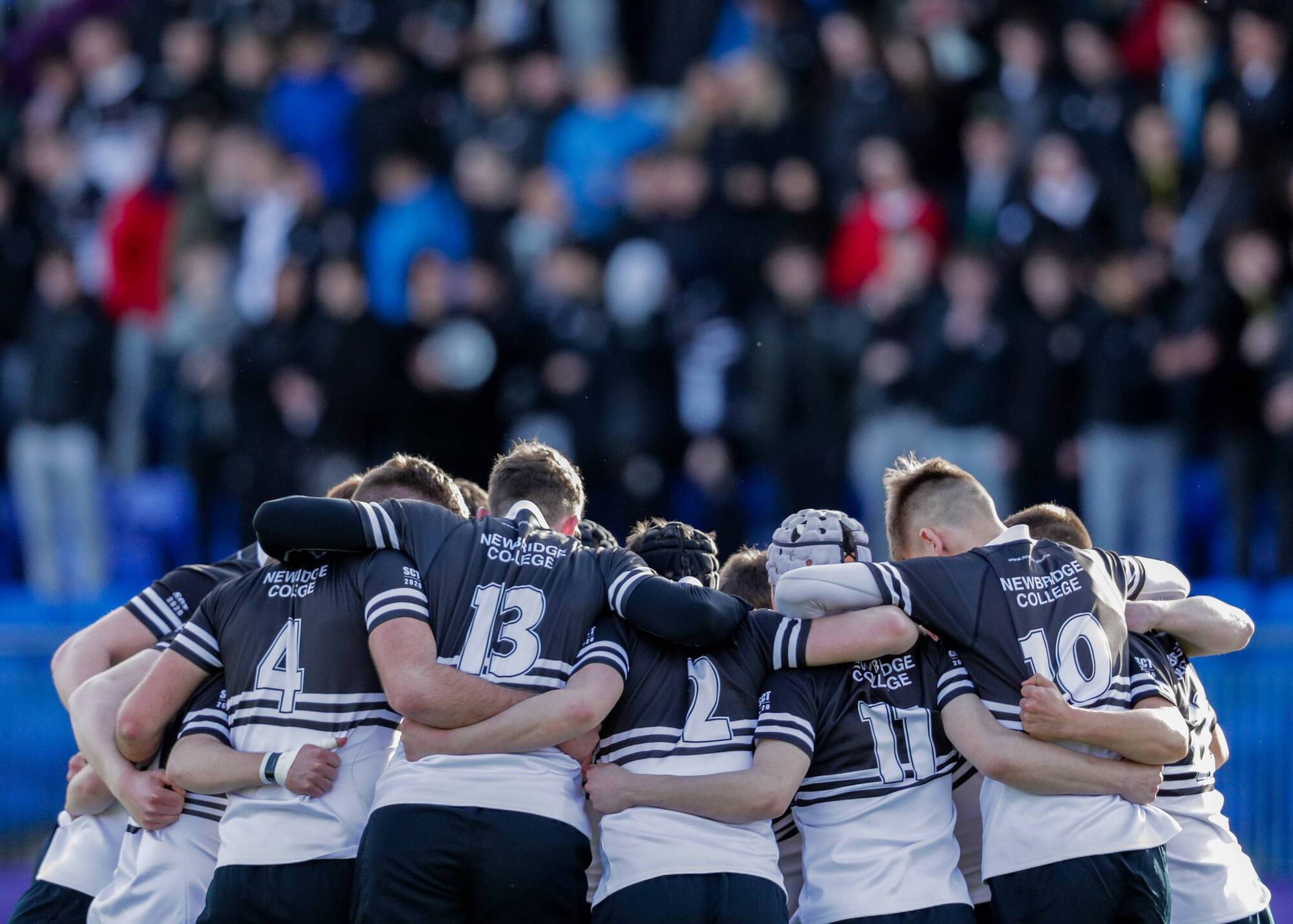
This time last year, Johne Murphy was over a Newbridge College side blazing a trail through the Leinster Senior Cup, and would make it all the way to the school’s first final since Geordan Murphy and the boys of ’96 with the chance to bring the trophy back to his alma mater for the first time in 50 years.
But their Christmas Day that is St Patrick’s Day never came. They never got to play against Clongowes. Once Covid shut school and everything else down, they didn’t even get to convene as a unit again until a jersey presentation ceremony in mid-December. The only people able to attend were the 23 players named on the last team programme, Murphy and his coaching staff, the principal and his two vice-principals and the winning captain and coach of the 1970 winning team, all of them masked. There were no parents, no friends. Just another experience compromised in a year where other experiences were completely denied.
“If you think about it, especially the lads who were in sixth year, the chance for them to play in front of 15,000 in the RDS for the first time is a massive lifelong memory and personal development opportunity that has been taken from them,” says Murphy.
“And then you have the other guys who are in sixth year now. Four of them are in with the Leinster U18s now and a couple of them have a chance of going all the way. But come September a lot of them will have played one game in 18 months. Physically they’ve grown because they’re still doing their weights and S&C, but they’ve missed out on that rugby element and the pressure element that comes with playing Cup rugby in front of thousands of people and then more watching it on TV. You can’t mimic that.
“Some of the guys who were meant to play last Paddy’s Day can still go on to very big things in rugby. But then there are lads who might not play again because of how the long layoff has been.”
The irony was that after the first lockdown there were more lads than ever ready to continue or resume playing the sport. Murphy, who as a player won three Premierships for Leicester along his namesake Geordan before winning the 2011 Magners League with Munster, also coaches in the Naas club and neighbouring Newbridge and was struck by the numbers flooding to their pitch.
“Naas could have fielded five adult teams last year which would have been unheard of. It was something similar in Newbridge. There were lads who hadn’t played in years but had been out walking and running during the lockdown and thought, ‘God, you know what, I’m feeling good, I’m going to back to the rugby!’
“I’m worried about the social aspect of our sport that could be lost. People say rugby is a professional sport but the overwhelming majority of the people who play it aren’t [professional]. A lot of people get their jobs out of sport: they’re maybe chatting in a bar to a business owner who says, ‘I have a job going. Would you like to come and interview for it?’
“In no way am I downplaying the seriousness of Covid and the illness and devastation it’s brought but it’s going to be very challenging to get the sport back up to where it was last August and September when numbers-wise it was probably at an all-time high.”
The supply lines to the top end of the game have also been disrupted. Murphy can see that by looking at a case like that of his team captain last year, former Irish U18 centre Marcus Kiely.
“Marcus is a very good player who could develop into a Chris Farrell but he missed out on the final cut of the Irish U20 squad and has only played three games since last year’s Leinster Schools semi-final. He’d just started playing adult rugby but has now missed out on a year’s development which would have given him the chance to catapult forward.
“Or you take Chris Cosgrove, the St Michael’s full back. He’s someone else who has missed out on his first year of adult rugby testing himself against guys who have been there like Matt D’Arcy who has played at the pro level or an Adam Coyle who has played prop for Connacht and Leinster.
“There are other lads who haven’t had that chance to get recognised to be in the shake-up for spots in the [provincial] academies. They aren’t getting viewed because they’re not playing. So that makes it a harder job for the likes of [Leinster elite player development officer] Noel McNamara and Trevor Hogan who’d be looking to see how players go in a pressurised environment.”
There are still ways though. Murphy took encouragement from how Jamie Osborne, a 19-year-old from Naas, shone in his Guinness PRO14 debut for Leinster last week against Scarlets. Osborne was only brought into the Leinster senior setup a couple of months ago on the back of impressing in the Irish U20s camp. If it weren’t for the international break and all the bubbles within Irish rugby, he wouldn’t have gotten his opportunity this soon.
For now all he and his Newbridge team of 2021 can do is control what they can, see the opportunity there can be in a crisis, and be prepared for whenever their chance comes, even if it’s simply their next game of rugby, whenever that may and whoever it may be with.
Right now they’re all individually working on a speed programme that wouldn’t have been possible if they were playing a series of Cup matches. They’re analysing video clips of recent pro matches while skills coaches Bryan Croke and Henry Boyce have everyone working on their passing and footwork and the team’s kickers working on everything from place kicking to punting.
Still, it’s challenging. Coaches and players alike are craving to try out all those things on a field together. But they’ve to wait.
“It’s difficult for them not having that physical and social outlet that is rugby. But we speak a lot about the need for maturity and patience. They’re leaders in their peer groups and they’re aware of their responsibility to make sure they behave correctly and to do their bit for the community and country to help keep numbers down.
For those coaching at club level down in Munster, it’s a similar story. Like Murphy, Conor Quaid is well familiar with the magic of Schools Cup rugby, having been a part of the coaching staff of various Christians teams that reached and won Munster Senior Cups, but these past 18 months he’s been involved coaching his home club of Highfield in the AIL.
If you think you can imagine his frustration during that period of time with all its lockdowns, you only know the half of it.
Last March Highfield were all set for promotion to the top division for the first time in their history, being eight points ahead of their nearest challengers and 15 points ahead of the third-placed team with only four games to go. But then after Covid shut everything down, the IRFU deemed the entire season null and void, leaving Highfield still stuck in Division 1B.
Fuelled by a sense of grievance, Highfield put in a serious pre-season and started the autumn impressively, beating UCC in the Munster Senior Cup quarter-final and then coming from 19 points down at halftime to earn a draw in their opening Community Shield series game against Garryowen, an established top-four Division One AIL team. Then everything shut down again.
Players kept ticking over and when they returned to the field in early December, Quaid was struck by how seriously in shape they all were. But then came Christmas and they obviously haven’t met again since.
“Lads are working away hard on their training programmes but to be honest I think at this stage we should all be aiming for next September. Even if they [the IRFU] decided in March or April to start the Community Series again the appetite would no longer be there. Because you’d need at least a six-week lead-in to any physical contact and then after a game or two the whole thing could be pulled again.
In the meantime, while his players continue to work away on their strength and conditioning, he strongly feels the national governing body should use the window to reimagine what its domestic competitions should look like by the time September rolls around.
For Quaid, the Community Shield series was a hint that the new normal could become the norm.
“If you look at the history of the All Ireland League, there was a huge novelty factor to it in its first 10 years or so years. But that has long worn off. And if you look at the season before the inception of the AIL in 1990, Highfield won the Munster Senior League. I travelled the length and breadth of the province with my father during that campaign and there were huge crowds because the clubs and teams all knew each other. The bars were full, the craic was fantastic.
“You might still have decent interest in a [AIL] Division One game but if you go down the leagues you won’t have 200 people at a game between say Highfield and Banbridge.
“You’re asking amateur players to go up the country and stay in an hotel on the Friday night, play the game where there’ll be no one in the bar afterwards and then you don’t get back home until midnight.
"Because that way you’d have games against teams you have a history and rivalry with. Dolphin would be going to Young Munster. Highfield would be going to a Garryowen. It would mean far more beating a rival than beating an Omagh just as it means nothing for an Omagh to beat a Highfield; they probably hardly know who we are.
“Financially and socially it’s a no-brainer. Lads wouldn’t have to take half-days of work to play up the country. It wouldn’t cost clubs thousands of euro to stay overnight in a hotel. You’d have bigger crowds, the clubhouses full, better craic and everyone home at a reasonable hour that night instead of a ridiculous hour.
“Because what we have now, why would a young fella want to play? It’s not encouraging men to play rugby into their late twenties. That’s why they’re packing it in in their droves. They’ve girlfriends, wives, careers, other things to be doing with their lives.
"But if they made that change, it would keep more players in the game and the league for longer.”


CONNECT WITH US TODAY



Be the first to know the latest news and updates