The leader of the pack: Billy Holland - the ultimate players' player at Munster for over a decade
There have been few constants in a turbulent few seasons for Munster rugby, but lineout leader Billy Holland is one such. At 35 and with over 230 caps behind him, the Cork man is in the final stages of a blue-collar pro career – but he’s slow to walk away just yet with a reinvigorated playing group ready for lift-off.  He spoke to Donal Lenihan
The leader of the pack: Billy Holland - the ultimate players' player at Munster for over a decade

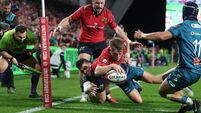
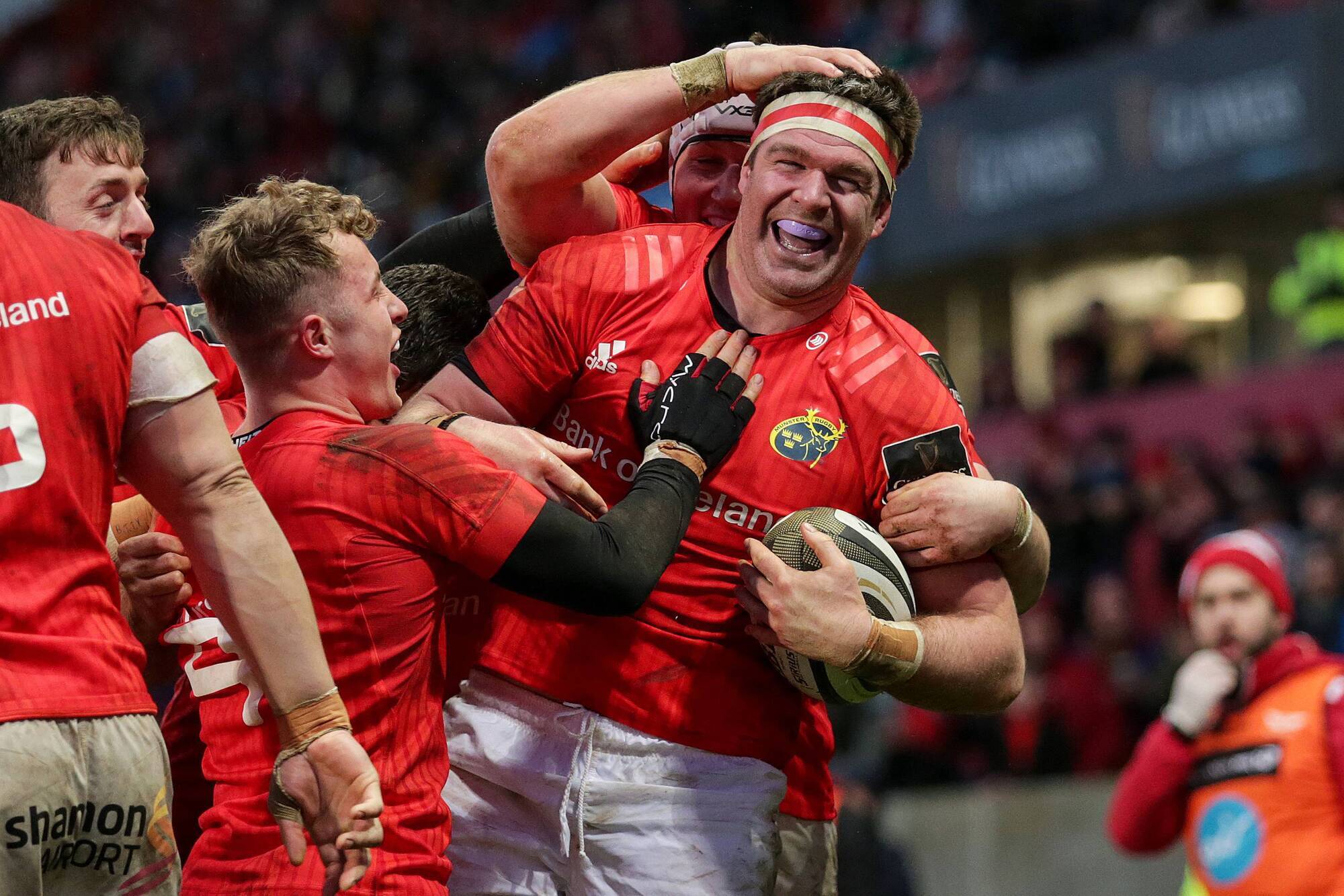
Billy Holland celebrates scoring a try against Scarlets earlier this year. Picture: INPHO/Laszlo Geczo

There have been few constants in a turbulent few seasons for Munster rugby, but lineout leader Billy Holland is one such. At 35 and with over 230 caps behind him, the Cork man is in the final stages of a blue-collar pro career – but he’s slow to walk away just yet with a reinvigorated playing group ready for lift-off.  He spoke to Donal Lenihan

It seemed entirely fitting that his 231st cap - leapfrogging Peter Stringer into third place on the all-time list of Munster appearances behind Ronan O’Gara (240) and Donncha O’Callaghan (268) - came on a wet and windy Monday night in Scotstoun, far away from the home comforts of Thomond Park.


Billy Holland has always been front of house when it comes to grinding out results on unglamorous nights in the depth of winter, when Munster’s stars are either spared the hassle or away on international duty.

Every squad is made up of high and low maintenance players. In the cold and clinical world of professional sport, Holland is the type of player loved by the CEO. In terms of minutes played over the years, the Cork man has more than paid his way. The exampla gratis of reliability, he’s the definition of a players’ player.

When he emerged from the Munster academy as a lock/back row in 2008, he was going head-to-head with Anthony Foley, Alan Quinlan, David Wallace, Denis Leamy, James Coughlan and John O’Sullivan. The second row was even more competitive, straining to make inroads against Paul O’Connell, Donncha O’Callaghan, Mick O’Driscoll and Donnacha Ryan every day at training.

That he’d accumulate 231 caps? Not a chance.

Battling against the odds.

Donal Lenihan: You made your competitive debut against Scarlets in September 2007. Given the level of competition you faced, getting any game time back then was an achievement in itself.

Billy Holland: At the time you were young and just delighted to be training with the quality players Munster had and to get some time on the pitch. In my last year in the academy, I got two caps. The following year, I got three or four. So it was it was a very slow, gradual build up. There weren't as many games back then and the team wasn't rotated as often. If you had said it to me then I’d get over 230 caps, that I’d pass some of the greatest players to play for Munster in terms of caps. I’d have laughed for sure.

DL: When Donnacha Ryan left, Munster were panicking about where they were going in terms of second row. They brought in Gerbrandt Grobler (6’7”), Jean Kleyn (6’8”), Tadhg Beirne (6’6”) and RG Snyman (6’9”). Yet, you’ve been virtually ever present, competing in the middle of the line out against giants.

BH: And don’t forget Mark Chisholm, another Wallaby international. I take an enormous sense of pride in that. Munster have clearly recruited hard in the second row department over the years. Yes, I'm still playing a lot of rugby. The good guys have stayed but the lads that left were decent as well. But I like to think that I battled against them and came out the good side of that fight. There’s a bit of inner steel in you that says, regardless of who they are, you’re not getting my jersey.

Now, I don’t need to tell you, but RG (Snyman) is going to be one of the best signings Munster ever made. He’s an outstanding player and one that I want to play with, not necessarily battle with. Some of the others, I was happy to battle with. He’s world class, whereas when guys like Chisholm and Grobler come in, you kind of think, ‘No, I'm better than them’. I can do a job on these fellows, so you knuckle down, you put your head to it and you fight.

Billy Holland of Munster steals an Exeter lineout from Sam Skinner of Exeter Chiefs in the Munster 22 late in the Champions Cup clash. Picture: Brendan Moran/Sportsfile

And that's the beauty of Munster, that the local guys will fight. And these guys, they're good guys to be fair, but you want to keep your place ahead of them. But then you also know that guys like RG and Damian De Allende, you need that level of world class quality to win Europe. You have to be smart enough to know you got to work with them. I was in RG’s pod throughout the pre-season lockdown, helping him with the line out and our systems. He was incredible. Then, unfortunately, he got injured in the first game.

I'm determined to win with Munster, and I believe in the squad we have now and the world class coaches we have now. The culture has developed and evolved, particularly in the last six months, to such a degree that I know this group will win something and I hope that I'll be around when that happens.

DL: If you were to put your finger on what has changed in the last six-month period, what would it be?

BH: We have top players and we've added two World Cup winners. We now have a coaching group that I would say is one of the best in the world. Over lockdown the leadership group within Munster had a good look at ourselves, we all had periods of self-reflection and decided that we weren't doing what we needed to do as a group.

We had great chats over Zoom and we actually disbanded that leadership group, came up with a different way of selecting a new group, voted in by the players, with different criteria. It wasn't just the obvious guys at the top, the international players, the most experienced. Everyone got a vote and it was all done involving varying criteria.

There were different questions as to what we felt were the characteristics required within the squad to bring us to the next level. We came up with a whole new group, three were kept on and three new guys came in. From that, having the whole squad including the academy with us, whether you’re Peter O’Mahony or the youngest fellow in the group, there's a real sense of equality. Everyone is much more aligned and more comfortable in each other's company.

The sense of purpose is a lot more obvious and it’s been driven from the top down and the bottom up.

There's been great growth in terms of mindset, in terms of training. Over the last two months, Munster have played some of their best rugby in a long time with names that a lot of people wouldn't have heard of six months ago.

I think it's also given the young fellas confidence to play, to drive on and get better. That in turn has put pressure on the older lads to perform and play better. There is a really good mix of youth and experience and there's a great buzz.

Look, 12 months ago, it wasn't bad, it just wasn't good enough. I think it was a really brave move by that leadership group to disband and start a new one. To be fair, Johann had a big part to play in that he had to stand back and it could have been five young fellas leading the group.

From that, there has been really positive developments. It also takes a while for the new coaches, Steve and Graham, to bed in. It doesn’t just happen overnight. You can see some shifts in our attacking game, some of our contact work with Graham Rowntree. I think it's beginning to pay off.

DL: In professional sport, to have players who grow up with a dream of playing for their local team has to make a difference. It has to mean more?

BH: We played Cardiff a couple of weeks back. Fourteen of the team were born in Munster and Mikey Haley, the odd man out, claims he's from Tralee. I'm always proud leading Munster out, but having 14 fellows who grew up in the province, it's achieving one of your dreams. I was very proud that day. It’s so important that those young guys are coming through because they have the hunger, they have the drive, they have my stubbornness. That mixed with guys who've come in from other provinces, the likes of Andrew Conway and others who’ve bought in so well, on top of the world class players from abroad, and you've got a really important mix.

But all of that is of no use if you don't have a really good team first ethic, a growth-minded culture within the club, player driven, everyone equal. I'm not trying to say we didn't have that previously, but, right now, it's as good as it has ever been.

EMMELINE.

Last January, Billy and his wife Lanlih captured the hearts of the nation after an appearance on The Late Late Show after deciding to speak about their daughter Emmeline’s all-too-short life and honour her with a fundraising effort designed to help other families in a similar situation. The response from the Irish public was astonishing.

BH: It’s putting it mildly to say it was an emotional rollercoaster of the best of your life with Emmeline being born, just pure joy and we were so, so happy. And then a couple of weeks later, you get news that Emmeline won’t live forever. She won't live a long life. It was just crushing.

I've never been able to verbalise it properly and I’ll never be able to. We just didn't know what to do as a family. The doctors couldn't tell us, they didn't have a prognosis so we didn't tell people what was going on.

It was felt that the best thing to do was to keep life as normal as possible, and not sit around and just wallow but give Emmeline all the smiles in the world that she deserved.

I struggled when I went back to rugby after that. I really did struggle.

I was living in Ronald McDonald House, next to Crumlin Children’s Hospital, in Dublin, driving down to Limerick for work. Leaving my two girls in hospital was incredibly difficult to do, particularly when the news was bad. But then, you know, coming back up after training or matches was just a joy. Getting to spend your time off up there was brilliant but I struggled from rugby point of view.

Then, in early January 2019, we got a diagnosis which was a game-changer in terms of Emmeline. She could have a long life. I was able to bounce down to Limerick, happier with that good news. We had our first Christmas, which was special. Our families were all together. It was all very different with both our families staying in a hotel in Dublin, having Christmas dinner together.

It’s hard to say why, with so much going on outside of rugby, obviously, but all of a sudden, I started to play some of the best rugby in my career. It’s very difficult to say why but, I think, you're playing for more than yourself. You're always playing for more than yourself, but you're playing for something a little bit more special, something that puts things in perspective. You know, it's only a game ultimately when your daughter and wife are up there in hospital. You’re doing it because it's a job, but when you know it's just a game, the pressure kind of comes off you.” 

I've always been conscious that there’s a life behind the professional sports person. They face the same trials and tribulations as everyone else but the vast majority of supporters don't think that way. That period was very difficult for Holland. On the bench for Heineken Champions Cup games, he came on early for Peter O’Mahony in Gloucester and had a significant impact, setting up a great try for Keith Earls. The following week Munster were trailing Exeter Chiefs 6-8 when he came on.

DL: Talk me through your week’s preparation to that point.

BH: Not like a normal professional player. Left Dublin at 6am on Monday morning. Did Tuesday’s gym session at 7am so I could leave for Dublin immediately after the pitch session. Another two hours on the road and back in the hospital by 4pm. Wednesday is our day off so I would be in early next morning, try and give Lanlih as much of a break as possible, and spend the entire day there with Emmeline. Leave again for Limerick at 6am Thursday morning and back in Dublin later that evening. Back on the road to Limerick by 1pm on Friday for the captains run that evening. Catch up on the analysis I would normally have done earlier in the week and then tried to grab as much sleep as possible. Far from ideal.

72mins. Exeter have a five metre attacking line out. The maul is their stock in trade. They score from there with more regularity than any other team. Holland wins the line out to lift the siege.

DL: That attacking Exeter line out, five metres out. The game has come down to this. You know what’s coming… BH: They hadn't thrown that exact movement before, but I just got a sense they were trying to drag me forward to win the ball in behind at the tail. I just saw a little bit of a poor dummy or just got a sense and stayed where I was. Jeremy Loughman threw me up in the air from behind and C.J. is lifting me by the kneecaps. It all happened so fast. Sometimes you visualise the ball from great analysis. We’ve taken Saracen's lineout apart a few times by doing a lot of really good analysis, but that one was just a little bit more instinct. I can't say I knew what was happening.

Three minutes later, Munster convert a penalty to win 9-8 and advance to an 18th Heineken Cup quarter final. Queue massive celebrations in the dressing room “Stand up and fight” booming out from the huddle. Three hours after the final whistle Holland is back in Crumlin Hospital with Emmeline in his arms.

DL: In the midst of the great turmoil in your life, for that two hours, how do you revert to being a professional rugby player?

BH: The way I looked at it, there was no point in me leaving my two girls and Dublin if I wasn't going to do a good job. When I was playing poorly in that December period, I just decided that if I was going to play, I had to do it right. I needed to perform. I was sacrificing some precious time with my family. But also I had to work. We didn't know how long Emmeline would live. There could have been all sorts of expenses and, as the parent of a sick child, you've got to continue working.

Somebody has to continue to work to bring in an income. As a professional player you’re absolutely no different. You know, you still have those same dilemmas.

Once I got my head around the fact that I'm going to do it, I've got to do it properly and be proud of what I'm doing. But you also can't just rock up in a Heineken Cup game shattered tired. Lanlih took on a savage workload, she slept in the hospital for 70 days straight. I couldn’t have done it without her.

Emmeline passed away on May 18, 2019.

DL: For two very private people and given that very few knew exactly what was going on in your lives, what motivated the decision to tell your story on the Late Late Show?

BH: When we decided that we wanted to fundraise and tell our story, there were three very clear reasons. We wanted to tell Emmeline’s story, how brave she was and how much of an impact she made in her life. We wanted to tell people all about her because she deserves to be known about. We had been very private with everyone at the time for good reason. We also wanted to fundraise for the hospitals and charities like Ronald McDonald, who were magnificent and helped us out so much, but rely so much on fundraising. So we wanted to give back to them because they've given so much to us.

Finally, we wanted to show solidarity with other parents out there who had gone through or were going through variations of what we experienced. Because I was a professional rugby player, the story probably got a little bit more publicity. We wanted to show solidarity with their families.

DL: The response from the public was phenomenal.

BH: Ryan Tubridy mentioned it on his radio show again the following Monday morning. That brought the fundraising to over €500k. Emmeline’s life has made a tangible difference. The impact it’s having on the families of sick children around Ireland makes us so proud to think that, because of her, some sick children are better off. That’s a really, really powerful legacy.

LIFE AFTER RUGBY.

“Living in the bubble of professional sport is a privilege. And one day it's going to burst. I bump into retired teammates all the time and their message is unanimous. The real world is not nearly as much fun” 

- Dylan Hartley: The Hurt.

DL: Your plans for life after rugby? Are you in any way frightened by the reality of the real world?

BH: I'm always thinking about that because the one certainty in the life of professional players is that it will end. I don't know what I'll do. When we're in a block of games like this, you're just focusing week on week and playing to the best of your ability. I feel good. I'm playing well. There’s such a great buzz in the squad at the moment. As I said earlier, it's different this season, it feels different. And obviously we’ve just won eight in a row. We’re unbeaten. I’m playing with guys who are 12 or 13 years younger than me. I get a great buzz from that, a great kick from it and it gives me huge energy.

DL: Suffice to say, if you have a choice, you want to play.

BH: No, I'm not saying that either. I haven't made my mind up because I want to go on my terms as well. I don't want to overstay my welcome just because there's an offer of a contract there that may or may not happen. I want to make a decision what's best for me, my family and for Munster. I’m determined to finish on my terms, playing well and being in contention for the European matchday squad.

I don't want to overstay my welcome. So as long as I feel like I'm contributing positively on the pitch to Munster but there's so much else that goes on in the background into making a decision like that.

I'll probably think a little bit harder and longer about it in the New Year. But I'm not just going to keep going until there is or isn't a contract anymore for me. I’ve too much respect for what I've done and for what Munster represents to stay on just for the sake of financial gain.

“I'm not frightened about it. I live in Cork. I travel up and down to work in Limerick. I'm away from my family a lot more than other people, more than the other lads who live in Limerick. That’s our decision to stay in Cork. 

Personally, I’m proud that I can do that because Munster represents six counties and it's great to walk around amongst your own and be at home. But I'm not afraid of finishing up. I’ll miss the adrenaline rush on match day. It will be very, very difficult to replicate the feeling of running out in Thomond Park on a Saturday night in the European game to that special roar.

Munster veteran Billy Holland with his wife Lanlih and son Matthew at home this week. Pic courtesy Holland family

Then there’s the joy in the dressing room after a game when you've won and you've beaten another team that you probably have no right to beat and played against world class players who are bigger, stronger, more talented yet we beat them.

“So that's going to be impossible to replicate outside of rugby. I’ll get to spend more time with my family and that's something positive. There’s a lot of stresses and strains with rugby, as there are with every job. I appreciate that. But in professional sports, you get reviewed publicly every week. There is pressure and the great thing with Munster is you’re expected to win every single week. And that will be gone. You know, I'll have a job somewhere and I'll be working, doing whatever I'm going to do. But I'm not going to get reviewed in public. Every week, whatever about the public review, the review within is always a lot tougher.

“That’s brilliant. It’s how you develop and learn. I'd like to think I can use some of my skills from rugby, in terms of leadership, teamwork, problem solving. It's such an enormous part of rugby, reviewing and growing analysis, that I'll be able to use that in my personal life. I have no fear about that. There just won't be the big adrenaline rush every week.

“Over the last couple of years, I've been able to go into some of these games, take a little bit of a moment to look around when the stadium is full and think, well, I'm lucky. How special is this? I haven't always been able to do that because you're so focused and, I suppose, anxious about the game. So, yeah, look, retiring, it doesn't faze me or hold any fears.” 

DL: I’m not surprised. Very few have been better prepared for the next chapter.

BH: “I qualified from UCC with a degree in civil engineering. I’ve a Masters in Accounting and Corporate Finance, a Higher Diploma in project management and a QFA (Qualified Financial Advisor). So yeah, I've lots of pieces of paper and certificates. I've kept myself busy with education over the years, which is really important. I think it's good for your rugby to have other distractions, whether it be education, or strategic interests.

Education is a great one for guys because professional rugby will end and very few players will be able to live off their earnings.

I don’t have any technical experience but, I do believe that I, along with lots of other players, hold a lot of skills, soft skills that are invaluable in the workplace.” DL: Do you see yourself coaching, or working outside of the game?

BH: I've always liked the idea of coaching, but I don't think I'm going to go into it because it's a massive upheaval for your family. You have to be prepared to move around every few years for the rest of your life, and that's not something I'm prepared to do. It’s important for my family and I want to be settled. Also, the strains and stresses of a player are amplified even more when you’re a coach and that's not something I’m keen on. I’d never say never, but it's not something I'm going to go into straight from rugby. Definitely not.” 

Epilogue: November 23, 2020: Glasgow 13 Munster 27.

When Billy Holland touched down after a trademark Munster maul, 11 minutes in, his smile lit up a depressing night. The reaction of his fellow players painted a thousand words. Given the night that was in it, they knew that try was special. Back home in Cork, his nine-month-old son Matthew is propped up on the couch, decked out in his Munster jersey, watching dad on television. On the night of his 231st cap, it was fitting that Holland should lead the way. 

After all, in his own understated way, it’s what he's been doing for well over a decade.

x

More in this section

Sport

Newsletter

Latest news from the world of sport, along with the best in opinion from our outstanding team of sports writers. and reporters

Cookie Policy Privacy Policy Brand Safety FAQ Help Contact Us Terms and Conditions

© Examiner Echo Group Limited