The Big Interview with Seán O'Brien: ‘I’m in a better place now than I was three years ago’
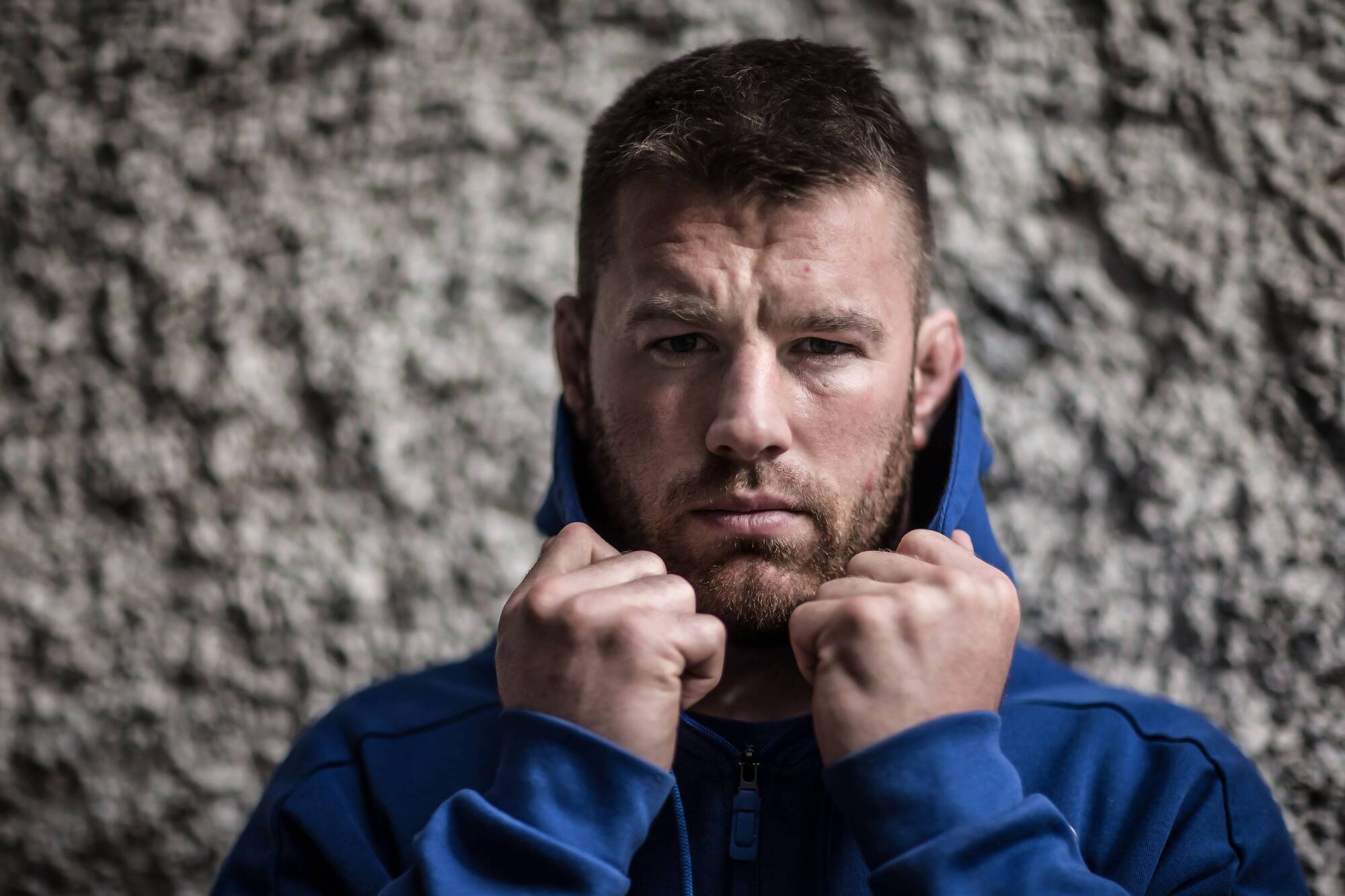
Seán O’Brien: ‘I was 12 when my parents were breaking up and I was about 27 when I first went to a psychologist to get my head around it and get to the root of the problem. I had felt all alone.’ Picture: INPHO/Dan Sheridan
Although with a book out he’s been doing a lot of looking back, Seán O’Brien is also doing a lot of looking forward.
Today he’ll be holed up in an apartment in London rather than a team hotel in Paris, having, by the look of it, opted to end his international career and go into self-imposed exile when choosing to sign with the Exiles under Declan Kidney — but be careful how you use the word ‘former’ around him.
While at this stage it’d be safe to describe him at 33 as an ex-Leinster player, that prefix is something that should be more cautiously applied in the case of the Lions, Ireland, and indeed Tullow. On some of those counts, it may be more of a goal and with others more of a dream but the long and short of it is that he has aspirations to play for all three again at some point.
The Lions would be the more immediate and tangible of the lot, as much of a stretch and a challenge as it is in its own right. Although he’s missed out on so much test rugby since he was smashing All Blacks all around him in the split series of 2017, he’s feeling and moving better than he was back then.
His autobiography, Fuel, begins with him describing the excruciating pain he was experiencing either side of the 2019 European Champions Cup final against Saracens. It was common for him to be awake two hours in the middle of the night, having to prop two pillows under his knee to try quell the torture.
Over a coffee, Joe Schmidt touted to him the idea of retirement, that being able to run around with his kids ten years later was a more important consideration than trying to squeeze more out of a career that had already been so fruitful.
But now after undergoing a hip resurfacing operation last year, he can sleep again easily at night, the two pillows cushioning only his head, secure in the knowledge that playing on hasn’t compromised his capacity to play with any future kids.
“I’m in a better place now than I was three years ago,” he tells you.
Even if you take sport out of it, I have a better way of life now. I’m able to walk around again without pain. I’m able to go for a run down the road again if I want, play soccer with the boys below in the park. All those things I couldn’t do.
“The thing was, the pain was all in the hip. The rest of my body was perfect in terms of being able to play but the pain in the hip was absolutely driving me demented. But the minute I woke up from the operation, the pain was gone. It’s gas, people said you must have been in pain for weeks afterwards but the truth of it was by four o’clock the next day I was on the bike, spinning, in the physio department.
“And the body is feeling great now. We’re three weeks back now training with London Irish and I’m flying. No issues.”
And so both club and player are feeling reborn with lofty goals for the upcoming season. In a move to further connect with their Irish roots in the city, the club are moving from Reading’s Madesjski Stadium to Brentford FC’s new Community Stadium, a heartland of the considerable Irish diaspora in London.
The squad have had several sitdowns outlining how they want to roll and what they want to do and if they go close to meeting them, O’Brien is hoping that it’ll go noticed by the Lions’ management. The way he sees it, as much time as Andy Farrell’s his kind of coach and he’s Andy Farrell’s kind of player, playing for Ireland again might be currently out of his control but playing for the Lions isn’t. If he can nail everything he can with London Irish, he could possibly nail down a spot for South Africa next year.
Then there’s Tullow. Towards the end of an early chapter by that title, he expresses his wish to someday again play bit of junior football with the local Fighting Cocks and a season or two with Tullow RFC. It’s where he started so it’s where he wants it to end.
If he had his way, he’d have kept playing for them all the way along up until this recent move to London. More than the IRFU’s unwritten rule to not select players playing overseas, he believes the “missing part in the Irish rugby pyramid” is that contracted players aren’t allowed to go back and play with their clubs.
“If you look at the New Zealand system, an All Black who is in the middle of an All Black campaign and still go back and play a game of club rugby in the middle of the week. And I don’t mean a Super 15 club, I mean the club they’re originally from. I don’t see the reason why we shouldn’t have the same sort of model in Ireland.
Can you imagine the buzz there’d be for everyone if a player with Ireland or one of the provinces was sometimes let back to play with their club?
“Right now the club scene is fading. I can say hand on heart a Towns Cup game between Carlow and Tullow would get a bigger crowd than an AIL game between a Cork Con and a Garryowen nowadays. There’s something wrong there when you have that.”

O’Brien can vouch for that because through most of his professional career he continued to go to his club’s games. Most of the time he was coaching them. He was loyal to a fault.
A pivotal scene in the book is when he sits down with the performance coach Enda McNulty on the eve of the 2016-17 season and expresses his desire to play for the Lions the following summer and be the best player in the world in his position. McNulty asked him to write out on the large whiteboard in front of them how O’Brien planned to go about it.
O’Brien’s ‘plan’ was too vague for McNulty’s liking, so much so McNulty said he was walking out and when he returned in half an hour he wanted O’Brien to have produced a more thorough plan. When he did, McNulty bluntly told him, “Seánie, it’s time to face the brutal truth. Your lifestyle is not good enough.” He had too many performance “derailers” draining his energy.
Farming was one; within a fortnight, he’d sold nearly 60 cows. And he’d also have to stop coaching the local club and everyone else who’d ask him to give them a hand.
“I suppose I’d never really thought about it before. It was just something I’d always done since I was 18, helping out with some aspect of preparing the club senior team once I left to join the Leinster academy. On a Tuesday we might be after a heavy’s day training with Leinster but I’d go down that night to help out with the club’s session and again on the Friday night.
“I could be playing a home European game with Leinster on the Saturday but I’d go down home on Friday for an hour, drive back up to Dublin that night and then after the game on the Saturday, drive home, sleep in my house and go coaching on the Sunday because Tullow would be playing.

“It was the same if my sister’s team wanted a hand out, or some charity at home; if they called me on a Tuesday we might be after a heavy’s day training with Leinster but I’d just hit the road and help out. But it wasn’t good for my body. You need to be recovering. I wasn’t saying ‘No’ to anything and saying ‘Yes’ to everything.
But after that [meeting], I had to make changes. And all the little things did add up. I wasn’t sitting in the car for an extended period of time. I wasn’t on my feet coaching for three hours because by the time you set up the session, run it and leave, that’s what it is. By lying on the couch you were going into training the next day fresh.”
Although cutting back on his time with the locality paid off for O’Brien with his exceptional displays for the Lions, it would still have been a wrench for him. Tullow is central to the book because it’s central to O’Brien. To get a feel for his subject and the place, ghostwriter Gerry Thornley often slept over there, familiarising himself with its haunts and streets, and even the twists and turns of the River Slaney that flows through it. He needed to: when O’Brien was about 20, he was near the Aghade Bridge when his friends roared that a girl had jumped into the river and had disappeared.
O’Brien jumped in and duly helped drag her out of the water. At first, she lay on her side, not a breath out of her, until she coughed up loads of water, sat up and then walked over to her car as if nothing had happened. “She never said boo to us!” laughs O’Brien. Nor a thanks either!
The episode in a way typifies O’Brien and his town: He’s a man of action with a selfless nature though he can sometimes be a bit unpolished. He took a bit of heat last weekend when in an extract of his book outlining how rugby helped him deal with the breakup of his parents’ marriage, it was perceived as a dig at soccer.
Some context was lost; his point was more nuanced than that. Just like the culture of one team within a sport might not be as healthy as another, the setup with his local soccer club wasn’t the most conducive one for him at the time. Whereas the Leinster academy was just what he needed at that point in his life with its emphasis on discipline. He needed to be reined in a bit at that moment in his life.
But he and Leinster also recognised that the province at that juncture, in his words, “needed rawer people”. Unlike a lot of rugby people from rural Leinster, including in his own club, O’Brien didn’t root for Munster while growing up in the early noughties when Munster were routinely reaching European semi-finals and finals. It was always Leinster he supported, watched, aspired to play for. But even then he could identify they were missing what he brought.
“When I first went into the senior squad, you could pick out players who wanted to be a Leinster rugby player but didn’t really want to win all the time or try to be consistent in what they were trying to do. But [Michael] Cheika weeded out all that. He brought that hard-nosed edge.”
How? Well, says O’Brien, the most obvious way was in his team selections. “He wouldn’t pick lads who he thought weren’t going to row in behind him and push Leinster to another place. If you have a bad egg in an environment, you simply don’t play him and eventually he’ll say, ‘Well, I don’t want to be here, good luck.’ That’s how ruthless Cheika was.”
But he also ingrained that steelier approach by cultivating and selecting hard-nosed players, such as O’Brien, previously dismissed as a ‘bogger’ when trying to break onto Leinster schools setups.
That was a primary motivation for writing a book.
“I thought I had a bit of story to tell in terms of coming through the non-traditional route in rugby and that it might strike a chord with people throughout Ireland, especially in rural Ireland. Youngsters who might think they can’t push on in sport, especially ours, because they might not have the same opportunity or coaching as you get in the schools system.”
He was mindful too that mightn’t be all a kid could be up against. From coaching kids and teams in Tullow, and not just in how to get off the line but by listening to them, hearing their stories and about their setup at home, he felt it could be beneficial if more people were aware of his as well.
For all the heat he got from that soccer reference in that extract last week, it was easily outweighed by the number of messages he got from people thanking him for opening up about his relationship with his parents. To encourage kids not to bottle up their feelings. To talk to someone. And to remind parents to talk to and empathise with those kids.
That didn’t happen in his case. Although his father was a sociable man, the one-line description of him as a full-back in Gaelic and a number eight in rugby might tell you a bit about his blunt nature. His mother was as fiery as she was kind and while she says she tried to talk to him O’Brien can’t remember that she did. It certainly didn’t resonate. The noise of when doves cried rang much louder.
I struggled with it for such a long time. I mean, I was 12 when my parents were breaking up and I was about 27 when I first went to a psychologist about it to get my head around it and get to the root of the problem.
“I had felt all alone with that whole situation. Other people might have handled it differently but it was just something that got out of control for me. I didn’t get help and even in my twenties it was still bugging me. I was constantly being snappy with them. You should want to go home and see your parents. But the minute I’d walk in the door I’d be agitated and want to go again. Because it instantly triggered bad memories. ‘Back to this again.’”
It’s better now. Although they are no longer a couple, O’Brien’s parents still live together under the one roof and are completely civil to one another, and their youngest son whenever he visits.
“Now I love going home and having chats with them. I’m way more relaxed about it. And that comes from finally talking to someone about it and then having a clear and open communication line with them.
“Because that’s another thing parents need to bear in mind: To make sure they’re checking in with their kids to help them through a time like that.”
Sometimes O’Brien might not say the right thing or it might not come out right. But the important thing he’s learned is to at least talk.
- Fuel: The Autobiography, is published by Penguin Sandycove is out now

Continue reading for €5
Unlock unlimited access and exclusive benefits
Already a subscriber? Sign in
Cancel anytime
CONNECT WITH US TODAY
Be the first to know the latest news and updates