Mick Fitzgibbon still staying a step ahead of the advance of professionalism
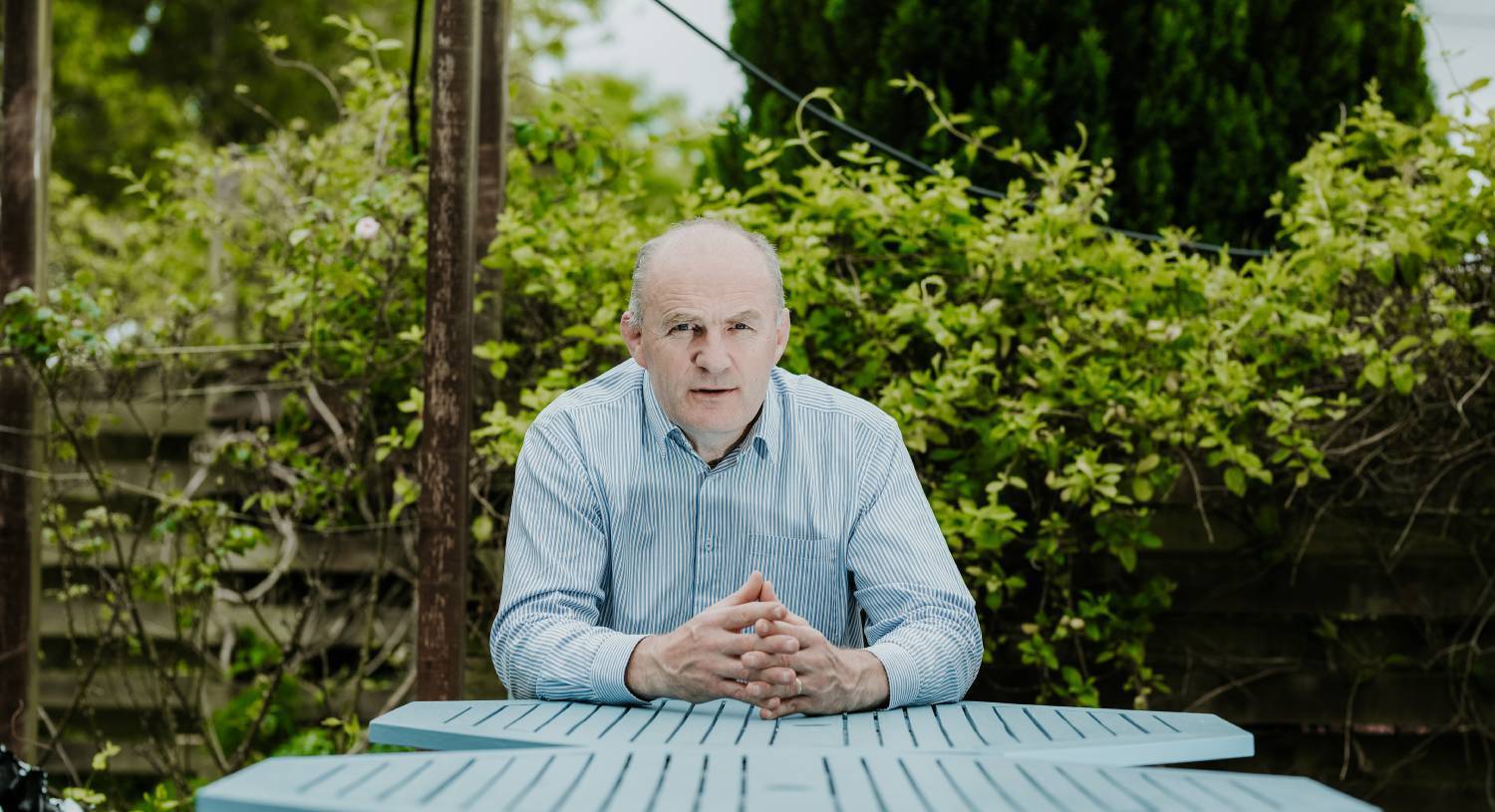

Like the hero in a disaster movie, trying to elude their nemesis, Mick Fitzgibbon has always tried to stay a step ahead from the advance of sporting professionalism.
Armed only with his Corinthian spirit and an innate athletic talent, the Limerickman’s crusade for camaraderie and collegiality in elite team sport has led Fitzgibbon on a remarkable cross-code journey that once saw him represent Ballysteen GAA club in a divisional county final in the same year he won six caps in the Ireland back row and almost beat the All Blacks in New Zealand.
From inter-county minor Gaelic football to playing his part in the first two of Shannon’s All Ireland League titles, coaching in both codes at underage level to helping set and run Crescent Hockey Club, Fitzgibbon’s rich sporting career is an odyssey that has taken him from Askeaton to Dunedin’s “House of Pain” and back again. That his playing days were in the 1980s and 90s before professionalism took its grip on rugby is solace rather than a source of regret for a 55-year-old who would now rather help the hockey club he helped found than revisit the grounds he graced as a tough-tackling flanker for Trinity College, Shannon, Connacht and Ireland.
That a son of Limerick who was capped by Munster at under-20 level should play for Connacht is due to his Roscommon-born mother and Fitzgibbon’s tale of having to work in Waterford on the morning of a game against Leinster in Dublin during a fascinating hour on the phone last week, provides the pretext for the first hint of his disdain for professionalism.
“I left work at 12:00 and got into the dressing room at Lansdowne Road at 2:15 for a 2:30 kick-off. That’s just the way it was at the time, a very different game and I wouldn’t have changed it,” Fitzgibbon told the Irish Examiner.
“I’d have left it as it was because we just loved playing. I find it very hard to watch at times now.
“I was never too fond of training, to be honest. I’d have played a match every day of the week rather than train once a week. That was just the kind of Corinthian way we did things at the time. It wasn’t about doing a job and I was glad because I wouldn’t have liked it being a job for me.”
For Fitzgibbon, there is not one favourite memory.
“It would be the camaraderie I had from my pals in school from Rockwell, which was a fantastic nursery for all sports, unbelievable and we just had a big bunch of us that spent all of our time together on and off the pitches. And then my years in college with my pals were fantastic as well and the same in Shannon, where I had great friends but we were never immersed in each other in the same way, it never could be the same as it was in college or school. I suppose for that reason if I was to go and watch games I’d prefer to go and see a schools’ game or even Trinity the very odd time I’d be in Dublin.”
He clearly cherishes his playing days, and 1992 was the perfect storm. Even a fading Ireland team stumbling to Five Nations whitewash could not dampen his enthusiasm.

“We were at a low that year, although there was a small bit of optimism after a good performance in the World Cup the previous autumn against Australia. But a lot of the side had been there a while and had possibly almost clocked out in their head a little bit. But it’s hard to walk away from a bunch of players, certainly in those days.
“People would say at times it was harder to get off the team than get onto it and it was actually hard to walk away from the spirit and camaraderie you would have had with those guys in the team.
“For me, though, everything was a buzz. It was just great and it was easy to come in fresh and everything was wonderful.
“By the time we went to New Zealand I think there were only about eight of the team that started that first game of the Five Nations. It was almost like a development team that went down there.”
“We were quite understrength when we went down there, probably a stronger team left at home than went out and we were facing into a fairly gruelling eight games in four weeks.
“It was tough going, we had a couple of mixed performances. Auckland absolutely ran riot on us (62-7) at Eden Park and then we lost a couple of players in a bruising win (22-7 over Poverty Bay-East Coast in Gisborne).
That Ireland would open a 12-0 lead in the first Test in Dunedin only to lose 24-21 would have got long odds before kick-off
“We felt we hadn’t done ourselves justice in the tour games and there was a feeling of quiet confidence that we had a lot more to show so we said we’d go out there and give it an almighty bash.
“Maybe we left it behind us a little bit, and possibly we did with the good start we got and just after half-time 18-12 in front only to get caught and pegged back. It was hard to take.”
The All Black backlash would not be a unique experience for an Ireland team and there was an air of inevitability about the 59-6 second-Test defeat at Wellington’s Athletic Park.
“So that was that. We went out the following midweek in Palmerston North with another thrown-together team and that was embarrassing (a 58-24 defeat to Manawatu). The second Test in Wellington was just a bridge too far for us, we were tired and bodies were broken. We were short of players to start with and just didn’t have the strength in depth to do what we had to do out there.”
Thankfully there were happier days to come back home first with Ballysteen later that summer when having played an AIL game he turned out for the parish at full forward the following day to help them beat St Senans in the Limerick West Junior A Final replay.
“That wasn’t unusual in those days. maybe a few years before that, Mick Galwey played for Kerry in Askeaton in a Munster Championship match against Limerick. Rugby was amateur then as well so there would have been some crossover, especially during the off-season.
“I had played football for Limerick, minors, under-21s, and a couple of challenge games at senior level when I was younger but I had been in Waterford for four years. I’d played in Dunhill GAA, just outside Waterford City, for three years but I hadn’t been playing the year I was capped.
“I moved back from Waterford for work and there was an opportunity when one of the lads in Ballysteen got injured. I suppose you could say I was parachuted in.”
More medals came, this time with Shannon, although Fitzgibbon had almost turned his back on what would become the first of four-in-a-row AIL titles, starting 25 years ago in 1995.
“I played for Shannon in 93 then stopped for the year after that. I got married to Rosaleen (O’Connor), a good Corkwoman, I was busy with work and I found I just didn’t have the drive to go through another season of rugby.
“At that stage (Eddie) Halvey and (Alan) Quinlan were coming through in a back row with Anthony Foley - that would be an international back row in a couple of years, so there was plenty of talent there.
“But after 12 months I got the call from the Three Wise Men, as we called them, Brian O’Brien, Niall O’Donovan and Pat Murray. Would I come back and give it a go for 94-95, so I said I would. Even then, though, I’d stopped really liking it, professionalism was coming in and I didn’t have the same grá for it as I’d had before.
“By the following year when we won the second one, I was just 30 but I’d stopped training completely and I said I’d just sit on the bench and come on for 20 minutes here and there. I ended up playing the cup but I’d lost interest, not in the team but with the way the game was going.
“I played a little bit of football after that but not a huge amount. My son was born then and I turned away from sports for a few years. He took to football when he was seven and so I got involved with coaching at the local club and I did five to six years’ coaching up to the underage Limerick (inter-county) teams, 14s, 15s, 16s.”
There was still time for one more change of sport and again it was family-driven.
“About 11 years ago, my daughter was young and wanted to play hockey but there were waiting lists in the two clubs in Limerick and it would have been some time before she’d be able to get onto it. Phil Oakley, a Limerick man down in Cork, ran a course for hockey in Limerick one holiday and asked the parents afterwards would we set up a new club.
“Phil’s dad was a Shannon man. I didn’t know Phil but he knew me and he collared me into starting it up. That was 11 years ago and Crescent Hockey Club has gone from strength to strength so hockey is practically all my sport now.
“I was chairperson for the first six years of it and I’m the one and only life member in the club! But I’ve been the senior team coach for the last six years. We’ve about 250 girls and our Under-16s retained the Munster League title this year, which was phenomenal and our top Ladies team has won Division Four and are moving up so it’s all good.”

CONNECT WITH US TODAY



Be the first to know the latest news and updates