Niall Woods: Enforced shutdown the perfect opportunity to prepare for life after rugby
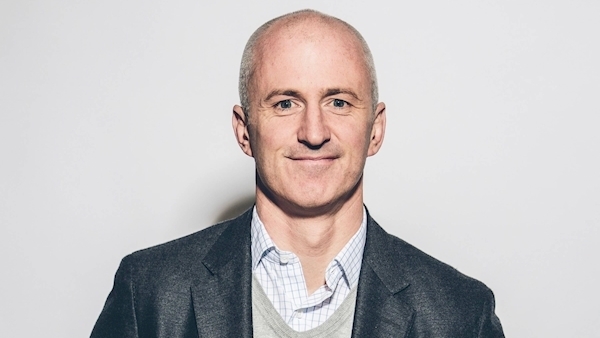
Whether representing them as a collective or now as an agent, Niall Woods has always encouraged players to prepare for life after rugby and there could be no better opportunity than the present lockdown.
The former Ireland international wing ticks a lot of boxes when it comes to advising his clients, who include Garry Ringrose, Jordi Murphy (his first client) and Andrew Conway.

His 30 years in the game saw him straddle the amateur and professional eras as a player at home and in England, serve 10 years as an administrator on both sides of the water, including guiding the Irish Rugby Union Players Association (IRUPA) through its first decade in existence, and since 2011 as the managing director of the Dublin-based Navy Blue Sports agency.
Now, during this Covid-19-induced shutdown, the players he represents across all four provinces, and with clubs in England, France, South Africa and Italy, can lean on their man to help them through potentially troubled waters.
âWage deferrals, pay cuts, contract suspensions across everything I do, not just rugby and in many different countries. Itâs definitely interesting and different, put it that way,â Woods told the Irish Examiner.
âWeâve not had challenges like this before. In the last recession, sport wasnât really affected from a playerâs point of view. There were no talks of player salaries being cut or anything like that, even though the rest of the economy came to a halt outside of sports.
âWith this one, the players are seeing how severe it is and they realise sport is no different and if the clubs arenât going to get any money in, from TV monies or gates, thereâs a knock-on effect and they canât pay or their ability to pay them is reduced. So they realise the seriousness of it, which helps.
âI donât know of any players complaining, they just get it. They understand it and some of them have big wage cuts coming or deferrals so we just have to react but like anyone theyâre availing of payment breaks, whether its loans, mortgages, business loans, everyone has to do it just to try and get through.â
That also includes the aforementioned post-rugby planning. Rugby Players Ireland, the current incarnation of IRUPA, has stressed the importance of players using the enforced break to futureproof themselves and Woods wants to reinforced that message.
He was forced into early retirement in 2001 due to a chronic knee injury while at Harlequins and he said: âIâve been there, done it as an ex-player but Iâve also had a career-ending injury, and the symptoms are the same. Guys retiring at 33, 34 when they donât really want to, they know they have to, but dealing with it: The same issues of missing out on the team, not being part of it, feeling like youâre an outsider when you meet the boys three or four months later. I just stopped going out with them. They didnât think I was any different but I did.

âA lot of that is still the same but there are a lot more supports there now to deal with it and over here you have the sportspersonâs special tax relief so thereâs an element of a pension you get when you retire, which helps players. They donât have to rush in and get a job.
âBetween myself, other agents, the players association, weâre encouraging players all the time to get themselves ready for when it finishes.â
Woods has clients, male and female, spanning a wide breadth of experience in a variety of disciplines from rugby to broadcasting via a variety of other sports. First to sign on the dotted line when he left IRUPA in 2011 to found Navy Blue was then Leinster academy back-rower Murphy, now an experienced international playing for Ulster.
A lot has changed for Woods also.
âJordi was 29 (last week) and I was saying: âJeepers, you were only 19 when I met you and your dadâ. The time is flying. So a relationship of almost 10 years with him, since January 2011, itâs natural that we know each other inside out.
âAt the start it was a matter of trying to get clients and I was very much of the view âletâs try and grow it organicallyâ. I was talking to somebody the other day, they were saying âeveryone when they start says they only want to sign a few playersâ or they donât want to get too many players, which I would have said, I think. Ideally youâd have about 20 but the more players you have, the more market knowledge you have, and that goes across into broadcasting and other areas as well. A lot of it for me is word of mouth. Thatâs how it grew over the years. So Marty Moore rang, said: âJordi Murphy said you did a good job for him, can I meet you?â
âConversely, you do a bad job, the word will spread as well!
Experience has taught Woods, 48, to be a good judge of character when taking on clients but would he have taken on his younger self when he was playing in England with London Irish, Harlequins and Ireland?
âDefinitely. A bit chippy, used to be a scrum-half. I was a points machine so definitely. My place-kicking stats in my last year were 87% so thereâs not too many who are that in the modern game.
âSo from a revenue-generation point of view, definitely! And when I look back at me as a player in the mid-90s when I went pro and I went to England, I got an agent, Simon Cohen, who is now CEO at Leicester Tigers and he was a solicitor at the time in Manchester, looking after a lot of guys, including Martin Johnson, Wilko (Jonny Wilkinson), a load of boys.
âI knew at that stage, even though I was playing for Ireland, I wasnât going to get any sponsorship deals in England. Back here I might have but not a huge amount, Keith Wood got most of it, but I wasnât looking for it. I was realistic to know I wouldnât be getting any, a Paddy in London, so I had my boot deal with adidas, Simon did my contract and always maximised my value and probably exceeded it a couple of times off the back of my goal-kicking.
âConor OâSheaâs a client of mine, and Simon looked after myself and Conor. He said Conor would just agree too easily whereas he said âif Conor had your stubbornness and was willing to stick it out, Iâd get him paid a lot more moneyâ.
âIâd always be pushing for more so I donât know, is that ironic that ultimately I end up doing it?
âIronically, Simon asked me to go in with him in 2001 when I stopped playing through injury but I didnât want to at that stage.
âThen when I was looking to leave IRUPA, I talked to three or four people, Conor being one and Simon being another and he again, said âwhy donât you just do the agency side? I said this to you 10 years ago! You know everyone, youâre well respected, why wouldnât you do it?â
âSo I thought about it, planned things and went into it. Maybe he had a good sense of judgement of people, which I have now.â
Woods did not have the earning potential of the players he now represents yet his envy for the present generation is more to do with conditioning than cash.
âYeah, the moneyâs great but thatâs not really a factor. I would have liked to have played in it now with all the prep work and having your body in as near pristine condition with all the science.
âI did athletics and developed plyometrics and all that stuff in my late teens because I got very quick in school, I was around 10.82 (for 100 metres) in school, so I was interested in the science of it. Because I was quite small (6ft) and skinny I would have thought in this day and age I would have been able to put bulk on properly and to see what Iâd be like then. From that point of view, Iâd have loved to have.
âI played half my career as a pro, half as an amateur and Iâd have loved to go and practise whenever I wanted, plus all the analysis work, I would love to play now. Thereâs the physicality of it.
âMedically, things have advanced from years ago, the treatment and the medics they have, but the damage may be worse, Iâm not so sure on that. Their bodies are so looked after and theyâre much better than my body was years ago, theyâre so much more ready to do what they do now. So theyâre bigger and the hits are harder but theyâre more capable of taking it.
âIâve noticed, when you talk to a player six months after theyâve retired and you ask them are they glad theyâve stopped playing, they all say âI canât believe I played that, itâs ferocious. Did I play that?â
âI retired in August, 01 and just five years on it was a different game to what I played. Thereâs no comparison now. But Iâd love to (play in this era).â