Munster stint the making of South Africa boss Erasmus
If the Springboks go on to make the Rugby World Cup final, or… gasp… win the title for a third time next weekend, then they should probably ask for an extra medal or two to be sent to Munster.
Heck, just by making it to the semi-finals of RWC 2019 the South African Rugby Union should consider sending gifts, possibly comprising some more big-boned Springboks on long-term contracts, to say thank you to the club.
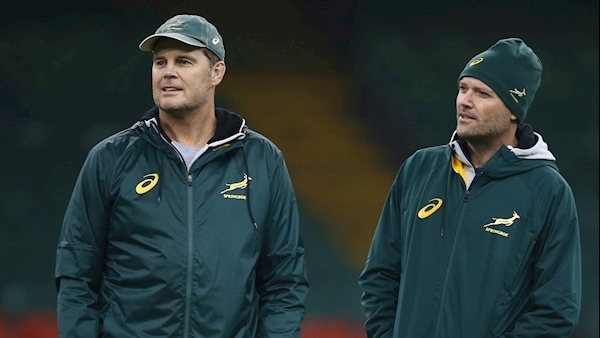
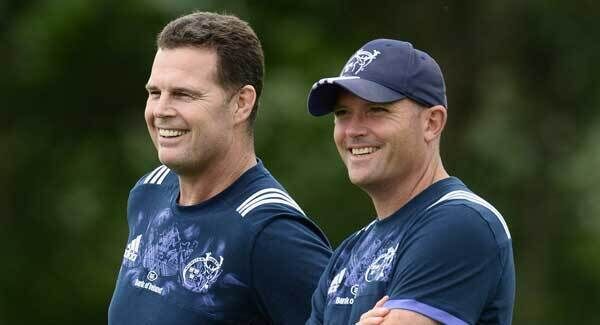
The two seasons Rassie Erasmus and Jacques Nienaber spent at Munster appear to have been transformative in the best possible way.
Since being appointed Springbok coach in April 2018, Erasmus has positively transformed the image of the position while Nienaber has become a media favourite with his public discourses on defence.
Erasmus left South Africa to take up the Irish role as something of a mysterious genius. He was always considered a good coach but he was media shy, and at times, plain hostile towards the media. He was defensive and didn’t like to be challenged.
Nienaber too, was a mystery. We all knew he was a defensive genius and when you met him socially he was happy to talk about tackling and rush defences and drift defences and rucks and pods and myriad other things. But officially Erasmus never let him off the leash to say anything to be used in print, or on TV. He was a media ghost.
But since the pair returned from their stint in Ireland, they have not only grown as rugby coaches, but they appear to have had personality makeovers too.
Suddenly Nienaber is jousting with journalists in press conferences and Erasmus is recording messages on his mobile phone to send to fans from Japan.
The Springbok rugby team is happy and there seems to be a genuinely warm camaraderie among the players.
The entire setup screams transparency and honesty, which must have had some of its beginnings in the more liberal and cosmopolitan Irish establishment.
Munster played a huge role in that because Erasmus now leverages good publicity well, and in turn it has positively changed the perception of the team.
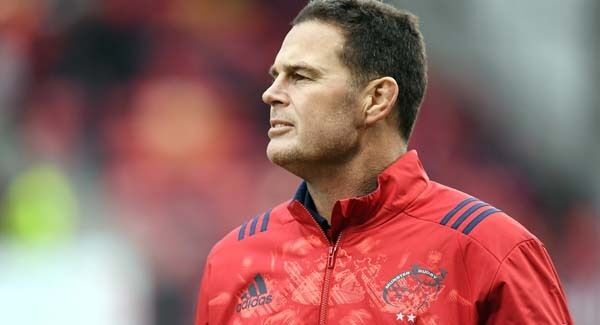
The Boks are seen as warm and engaging and that stems from the top, where Erasmus learnt from his mistakes in South Africa.
His stint in Ireland appears to have allowed him to break the shackles of his conservative upbringing and the more conservative South African rugby establishment. That in turn has given Nienaber licence to show his genuinely warm personality in a more public way.
Erasmus and Nienaber have been long-time friends, meeting when they conscripted to do their national service in the late 1980s.
Nienaber was a trained physio when he started working with Erasmus at the Cheetahs in the mid noughties. Being a cash-strapped union there wasn’t budget for specialist coaches at that time so Erasmus made it Nienaber’s job to learn about defence.
Fortunately the outgoing Nienaber loved the idea and worked tirelessly to learn everything there was to know.
“We met a long time ago, when we were in the army together,” said Nienaber.
“In the army, you get fairly tight. Then we went to university together. He was much better in the army than I was. He was a very good tactician, as you can see.
“Then we met up again when I was the physio and he was the captain of the university team. We have been friends for a long time, but as we always say, whenever there is a rugby decision that needs to be discussed, sometimes we disagree and we get angry at each other.
“But it’s never personal. It’s always to make the team better. We’ve got a good relationship in terms of that. We are friends on the one side, but Rassie is my boss. We can have a drink together, but when we have to make decisions about rugby, we don’t have egos of accepting the route we want to take.”
Erasmus said their conversations about rugby tactics had grown as Erasmus was on the physio’s table. With Nienaber moving into strength and conditioning and then developing into a full-time defence expert.
“I became a coach as soon as I stopped playing,” he said.
“I brought Jacques in as a conditioning coach right away. His passion, knowledge and work ethic around defence was evident even back then. He’s very good with people and in terms of communicating what he wants. He gets the message across brilliantly.”
Sunday’s second semi-final in Yokohama pits two of the best defences in the world against each other as well as two of the best sets of forwards.
Considering where the Boks were two years ago — losing 57-0 to the All Blacks and 38-3 to Ireland — the fact that they have reached this stage of RWC 2019 is more than anyone could have hoped for a short time ago.
But now that they are here — with all the credit going to Erasmus — and are the team with the best winning record in world this calendar year (80%), there is reasonable expectation that the journey shouldn’t end yet.
Wales have meticulously built to this point and seeing them in the semis is a surprise to no one. Warren Gatland has crafted several iterations of his ideal team in a 12-year stint in charge. Losing to a Bok team Wales have beaten four times in a row, would be seen as a failure.
Erasmus’ Boks are dangerous and capable of winning the whole shindig. But Gatland would’ve bitten your hand off if you offered him the Boks in the last four instead of England or the All Blacks. The fact that the match suddenly looms as a 50/50 battle is testament to Erasmus and his staff.
It’s testament to the direction and honesty he has brought to the Bok camp – whether it’s about the issue of racial transformation or team selection. His door is open. Players are allowed to sit in on selection meetings and hear why they were omitted. They can even question why.
Despite all this transparency and camaraderie though, Erasmus is very much the boss. He is the alpha in a pack of many alphas.
But he is now a leader with heart; a doer, an innovator, good communicator and a motivator. He always had those traits inside him, but it took a stint at Munster to allow Erasmus an understanding of how to use those skills in a more constructive way.


CONNECT WITH US TODAY



Be the first to know the latest news and updates