Letter from Japan: Resilience makes the most indelible impression of all
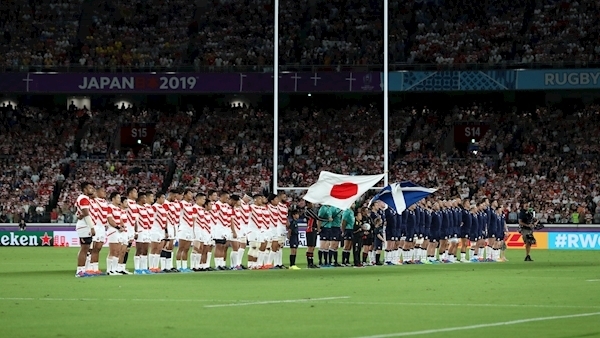
Hagibis has moved on, and the world's attention with it, but the consequences of the deadly storm are still being felt across a broad sweep of Japan. Almost four dozen people were confirmed dead by yesterday and others were still missing after a storm rated as the worst to hit the country in 60 years struck at the weekend.
Very little of which was evident in the capital yesterday.
Tokyo continued on continuing on, as it does. The skyline come evening was dotted by a billion lights from apartments and offices and neon advertisements. The floodlights from local ball parks shone bright and Tokyo Tower sparkled in multicolour. People who had been in the city for the full day hadn't professed to seeing an iota of damage.
To witness the consequences you had to scroll through newspapers or the internet or turn on the TV news for pictures of houses, bullet trains, street signs and bridges almost totally submerged by water. Flooding and landslides have caused the majority of the mess and there was the always aching sight of residents pointing to mud lines in their houses where the waters had been.
The disruption caused to parts of the country has been widespread. Postal and delivery services have been halted in the Kanto region, amusement parks shut on what was a three-day national holiday, the Tokyo Skytree and other tourist attractions have also had to shut their doors and the manufacturing and retail industries have been winded too.
Pictures of convenience stores offering little besides empty shelves have been proliferating on Twitter since before the storm hit, all of which speaks volumes for the local authorities in Yokahama who succeeded in staging Japan's crucial Pool A game against Scotland on Sunday evening despite flooding issues around the International Stadium.
This isn't the first time a 'Letter from Japan' has touched on the determination of the people here to overcome whatever disasters may come their way, whether they be of the natural or man-made variety.
A trip to Hiroshima, which is now a vibrant city of over 1.1 million people, late last week had already reinforced that understanding.
There is a set of stone steps from a branch of the Sumitomo Bank that rests in the Hiroshima Peace Memorial Museum and it gives frightening witness to the horror visited here on the morning of August 6th, 1945 when an American bomber dropped the 'Little Boy' atomic bomb from a height of 31,000 feet.
The time was 8.15am. Thousands of citizens were on the move at the start of the day. More again were already engaged in demolishing buildings to act as fire breaks in case of large-scale bombing, which the city had largely escaped until then. They wondered why at the time but the person on those steps, a woman in her forties apparently, never had the chance to find out why.
The bomb that detonated approximately 250 metres away released the equivalent energy of 16 kilotons of TNT. The woman, waiting for the bank to open, was vaporised. All that was left was a dark silhouette of her form on the steps which stood out all the more for the fact that the stone around her was bleached white by the blast.
There are thousands of horrific images and poignant artefacts in the museum to speak eloquently for the suffering that the first atomic attack in human history inflicted. There are corridors and rooms lined with photographs and videos and testimonies, charred and torn clothing and twisted metals. It's almost impossible to digest.
Emerging into the lobby afterwards, it was surreal to see people eating ice cream in the museum cafe. The nearby A-bomb Dome, one of the few buildings to be left standing near the epicentre and now a world heritage site, is surrounded by the peace park and modern high-rises. There's a mile-long shopping mall a few hundred feet away.
Life goes on.
Hiroshima is a city and an event that exists in our minds in black-and-white but it is still a very modern and relevant tragedy that continues to filter through the lives and the medical histories of people still alive today. Among the victims named in the Hall of Remembrance is Makoto Mikami who only passed away on September 11th of last year.
It's unlikely that many Europeans could picture the Hiroshima memorial if asked. That's understandable given the geographic and historical distance but it was encouraging to see the sprinkling of Irish and other westerners – some of them identified by their rugby wear - among the hundreds of Japanese visitors, so many of whom were schoolchildren.
This World Cup has opened Japan up to hundreds of thousands of visitors and the country has not disappointed. For all the beauty and the tradition and the craic and the brilliance of the Brave Blossoms on the park, it is the resilience of the population here that has made the most indelible impression of all.


CONNECT WITH US TODAY



Be the first to know the latest news and updates