Eye on New Zealand: Restructures reduce All Black vulnerabilities
The All Blacks, it seems, are not quite as vulnerable as everybody at this World Cup had hoped.
They didn't exactly look frail in Yokohama in their opening game. Big bad South Africa were supposedly going to huff and puff and blow the All Blacks house down, but it didn't happen quite like that.
It didn't happen at all. The Boks huffed and puffed a bit when they chased the game early in the second half and a few straw bales blew off their axis a bit.
But the damage was minimal, superficial at most and reports of the All Blacks demise are greatly exaggerated.
Their performance in beating the Boks illustrated what those who have been sniffing around their camp suspected all along – that they have been furiously beavering away at refining an attack game that first surfaced in Dublin last year.
The performance in Yokohama was a long time coming and the first truly convincing 80-minute shift the All Blacks have given since Ireland beat them last November.
And it was a performance that came at the end of what has been a long and at times troubled road for the All Blacks.
Troubled because the process of rebuilding their attacking structures has not been easy. It has not been without its dramas, most notably the loss in Dublin where the All Blacks were confused and ponderous as they tried to make sense of what they were being asked to do.
But they have also lost to Australia and drawn with South Africa since then – a relatively catastrophic run of results for a team that can often go the better part of a year without a defeat.
Troubled because it has taken them longer than anticipated to bed in a new style of play that has seen them move away from their favoured pod system in the middle of the field and also try to incorporate twin playmakers Richie Mo'unga and Beauden Barrett.
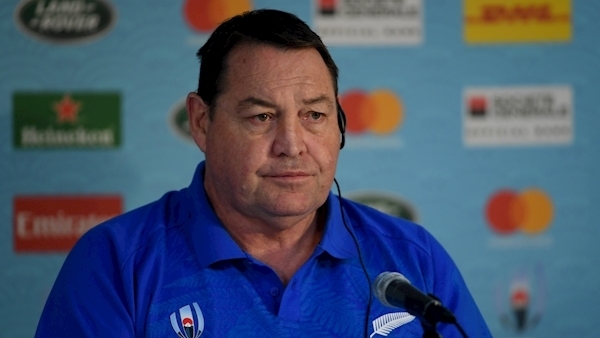
But All Blacks coach Steve Hansen has always said that the restructure was necessary.
That, in his view, after seven seasons of playing the same way, the All Blacks had become predictable.
They had become vulnerable against teams who brought defensive linespeed and accurate box-kicking from scrum-half.
So a year out from the World Cup they had to begin the process of change. They brought Kieran Read in from the touchline where he had been deployed in previous years to great effect and asked him to be the first forward receiver from ruck ball.
Read, is maybe not the athlete he once was, but he has great hands as befits a man whose initial sporting love was cricket.
He has become their key distributor and decision-maker in close quarter work, while the quite brilliant Ardie Savea has taken over the roaming commission to float out wide and use his pace and agility to stress defences on the outside channels.
The use of Mo'unga and Barrett in tandem has given them continuity of decision-making in phase play and while everyone talks about the system being set up to give the All Blacks options at either side of the ruck, that's not actually what happened against the Boks.
Barrett, in creating the try for George Bridge attacked the ball from the inside centre position and that's what this whole business is really about – having the two play-makers work directly with each other: side by side, running off one another.
It's obviously still not flawless, but the attacking potential of the All Blacks was there for all to see.
They were willing to run from everywhere and were one pass away from scoring what would have been an early candidate for try of the tournament when Barrett launched a counter attack from inside his own deadball area, only for brother Scott to throw the ball to Steph du Toit rather than Bridge who would have been gone had it arrived in his hands.
They were hardly helped either by a job's worth World Rugby official who wouldn't let openside flanker Sam Cane back on the field after he passed a head injury assessment.
He said it had taken too long – more than the allowed 10 minutes - something which incensed the All Blacks as Cane had been in the changing room for five minutes before he was even told he needed to do an assessment and was then dragged to the other side of the stadium for it to be done.
The upshot was that World Rugby have agreed to only start the clock in future when the player actually arrives in the medical room, which didn't change the fact the All Blacks, as Hansen said, had to play the second half without one of their best players.
It was no wonder, then, Ireland set about destroying Scotland as quickly as they could in their pool clash.
The stakes were obviously high – as a quarter-final against the All Blacks isn't unwinnable, but no one wants to be asked to prove that.
The worrying thing of course being that the All Blacks are almost certainly going to get better from an impressively high starting point.
They came to Japan a week early to hold a training camp in Kashiwa that not only netted them an estimated two million euros, but gave them the time they needed to work out how all the various parts of their revamped game fit together.
All that time and hard work slogging away in the heat has given them a jump start and they intend to spend the next 10 days tucked away training in the hot spring resort of Beppu before they play Canada.
With yet more training time, the expectation is that the All Blacks will take their game up another level – not in their next three pool games – but in the quarter-final when they will look to unleash yet more of what they have been working on.
If they are vulnerable, it's hard to see in what way.


CONNECT WITH US TODAY



Be the first to know the latest news and updates