How All Black culture is helping Munster evolve
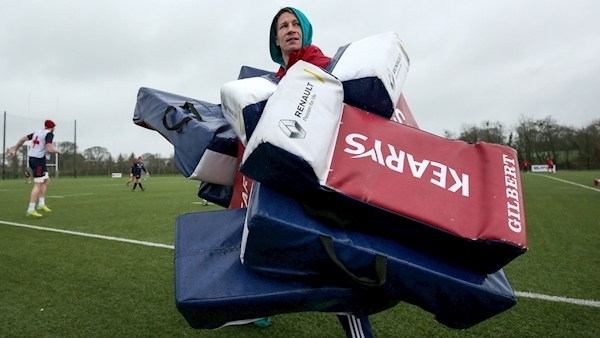
Take a former Test player with an evolving philosophy about what it means to be a coach, send him on a mission to absorb the best a champion Super Rugby side can offer and then bring it back to an enabling environment with players just as eager to embrace anything that can help them develop their game.
It sounds quite the recipe for improvement and Jerry Flannery believes he is beginning to see the rewards in what may just be a quiet revolution taking place at Munster.
Forwards coach Flannery and attack coach Felix Jones were both dispatched to New Zealand last summer as the province they served with distinction as players sought fresh impetus to take the next step towards a return to Europe’s top table.
With Jones spending his close season in Wellington with the Hurricanes and Flannery pitching up in Christchurch to work with the Crusaders, Johann van Graan’s assistants returned with eyes opened as to the way to take Munster to the next level following a 2017-18 campaign that saw the province come up short in two semi-finals.
Tomorrow’s Heineken Champions Cup quarter-final against Edinburgh at Murrayfield may not see the culmination of their efforts but Flannery’s firm beliefs in player ownership and a commitment to consistent work on rugby’s fundamentals, all of which were confirmed during his spell with former team-mate Ronan O’Gara and the Crusaders, are beginning to blossom and the collective seems set to benefit from its individuals’ progress.
“I can see the players are taking real ownership here by stepping up as leaders,” Flannery told the Irish Examiner this week.
“The more you see guys piping up at meetings and putting their stamp on things the more you feel you’re doing your job well.
“I see my job as a coach to facilitate and we’ve got some outstanding players here and rather than me standing there talking at the front of the room, it’s more them that’s actually driving it.
“When I played that’s what I thought… you don’t know until you step away from it but that was something that was really special. We felt like we were the ones in control and the players here now are really stepping up.
“To see guys improving, to see young players coming through, that’s all very rewarding. When I first went into coaching I didn’t have a lot of experience. All I wanted to do was win so that people thought I was in some way good but that’s not actually, it’s so outcome based that it’s a tough way to be going to work every day.
“Now I get so many little wins every day just seeing really motivated players wanting to get better and trying to work with them and help them do that. And when I see them play well at the weekend, when I see them get recognition for it at international level, and for young lads coming through getting selected for the team, that’s my buzz here now.”
And so that spell in Canterbury on the South Island, the province that gave Munster, for a spell, a head coach in Rob Penney. Flannery’s time with the Crusaders last summer saw him quickly tailor his methods of inquiry.
“You’re always looking for answers in rugby and you’re always thinking, what this crowd is doing, that’s what we should be doing. It’s what’s right for Munster and it’s going to other clubs and it was a really good learning experience for me to go over to New Zealand, see what they were doing and go ‘wow, that is really impressive’.
“The tricky part then is to see what would transfer back here, what would get reward back here and I think Rob Penney when he initially came over, it was impressive. He just tried to transplant the Crusaders culture into Munster Rugby and there’s still some of those things that are still going on here and they’re really good but it’s working out where the group is at that time and seeing what is the best for them.
“The Crusaders, when I was there, there was Sam Whitelock and basically an All Black pack. So you’re looking at a real high level but the game is slightly different down there as well so it’s not just ‘I’ll take what they’re doing’, there’s elements of what they do and technically how they’re looking to develop the players, to just constantly make the players better which is something we may not have had as much of a focus on.
We might have been more systems based whereas if you’ve got technically better players it doesn’t matter what gameplan you have the players are equipped to have the tools and that’s something we really worked on.
“I felt like we were good but a team that was probably a bit predictable and we just spent a huge amount of time creating an environment where players were just technically going to get better all the time.
“I went over there initially talking about, you know, ‘tell me your shapes when you’re looking to get out of your own half’ and they said ‘we’ve got these shapes’ and they weren’t any different to ours but they just consistently get their players to improve.
“I was reading one of Alex Ferguson’s books and he said a lot of the players there in United, when they started whinging about training being boring he just said that’s because we’re doing the same drills and they haven’t mastered the drills. So when they’ve mastered them they can complain but other than that it’s just coming in and repeatedly improving your touch.
“I see it a lot clearer now. You don’t know until you go there. Someone could tell you but you don’t know and I saw just how much time they spend on their catch-pass skills, the fundamentals and after that, then you can adapt, you know, if the laws of the game are favouring a kicking team then they can work on that.
"If they’re favouring the pass because the conditions are dry, it sounds so simple it’s almost embarrassing when you say it to someone but when you’re so close to something and you’re working so hard on it you can get so fixated on certain things, particularly me.”
What Flannery learned at the Crusaders, Jones was also gleaning from the Hurricanes and it made an interesting debrief on their return to Limerick and a head coach in his first pre-season already committed to upskilling his players following a narrow but error-strewn Guinness PRO14 semi-final defeat at Leinster the previous May.
“Felix went to the Hurricanes as well so when we came back we bounced things off each other and it was good to be able to compare the two, compare the cultures and what we both took from it.
“When we came back and reported to Johann, we said ‘a fundamental part of your week has to be just improving the players’ technical skills all of the time’ and really, really mindfully doing it, not just putting it into the programme. Then the players take ownership.
"So it’s been a big thing for us this year, the culture over strategy thing and getting the players to step up and take more (ownership) and they have been doing that, to be fair to them. When you look at the likes of Peter O’Mahony, he’s playing the best rugby I’ve ever seen him play and Killer (Dave Kilcoyne) is playing fantastically well.”
It is put to Flannery that an all-Munster front row coming off the Ireland bench to boss a French pack during the Six Nations and a lineout maul that produced four of the province’s five tries against Zebre last weekend are job-affirming moments for a forwards coach.
“They’re all the little things that give you that baseline enjoyment from your job and if we win something then that’s obviously going to be the cherry on the cake. But beforehand it was literally win or else you’re miserable, which is a pretty shit way to go to work.
“I have a responsibility that those things have to work but it’s more about like when I see our props out in midfield and they’re throwing really effective sweep passes.
Don’t get me wrong, I get a buzz off seeing our set-piece function and that is my job but that’s always been the case for the last three or four years. You’re going to have ups and downs but it’s always been a staple of everything.
"But now, when Dave Kilcoyne gets the ball now there’s a chance he might be throwing a sweep pass as opposed to just tucking the ball and carrying all the time.
"And that’s where our game is evolving all the time so that we’re constantly challenging teams rather than just challenging them in a way that they’d analyse and say ‘well, Munster are going to do this.’ We can do things off the cuff a little bit as well.
“I’m not sure we’ll see as much of that in Edinburgh because we’re going to be away from home and it’s playing against a team that’s so kicking-focused but I think it’s definitely been a major step forward for us as a squad.”