The harsh lessons of last season have been taken on board by Leinster
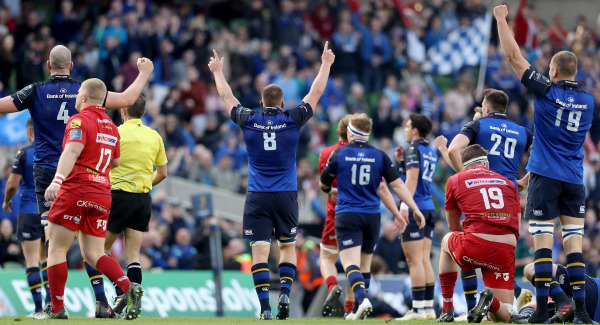
Scarlets are a very good side but they were made look decidedly ordinary on this occasion. Leinster have the capacity to do that to teams.
They strangled the life out of the visitors, continually forcing them into error through the quality of their defensive press during the rare periods when Scarlets were in possession and were utterly devastating with the power of their set piece and attacking game when they had the ball.
At this stage last season, Leinster fell at the penultimate hurdle in both the Guinness Pro12 and the Champions Cup. The harsh lessons experienced against Clermont Auvergne in Europe and a 14-man Scarlets in the RDS, when Steff Evans was sent off after only 37 minutes, have been ruthlessly absorbed. That collapse was never going to happen again and Scarlets never got a sniff.
Even their players carried a strained look of resignation with them as they stumbled wearily down the tunnel towards the dressing room at the break as they attempted to come to terms with what had just hit them.
Scarlets travelled to Dublin with a huge belief that they could repeat last season’s result in this game. Rarely has a Champions Cup semi-final been so one-sided. In fact, there were shades of the Leinster of old, at their peak, when they won their third Heineken Cup in four years after dismantling Ulster 42-14 in the 2012 final at Twickenham.
With 65% possession - it was 35 minutes before Scarlets fed their second line out of the game -and a staggering 80% territory, Leinster were three tries and 24-9 to the good on the 40 minute mark.
The full time stats at 60% possession and 66% territory in Leinster’s favour just served to highlight that there was never going to be a route back into the game for Scarlets. They had to wait until the 76th minute before Tadhg Beirne, who fought valiantly throughout, registered Scarlets first points of the second half with their only try of the match.
Leinster were outstanding. So much of Scarlets’ game revolves around dominating the breakdown and winning turnovers that once they met a side that could better them in that department, they were doomed to struggle.
Not only that but when they did manage to put a few rare phases of continuity together, such was the intensity and sheer pace of Leinster’s defensive line speed, Scarlets were completely stifled.
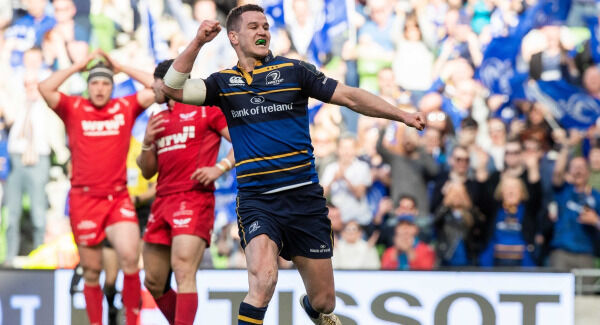
Leinster’s ruck dominance, with 125 to 87 for the Scarlets, laid the platform and Johnny Sexton directed operations with absolute authority from out half. Whether running, kicking or passing, every time he was in possession something positive was likely to happen.
From the outset, Leinster decided that, come what may, their line wasn’t going to be breached. On three separate occasions in that opening period they were content to give away the penalty, despite the inevitable consequences that would result from the metronomic boot of Leigh Halfpenny, rather than have their line threatened.
In any event such was the dominance of the Leinster set piece, Scarlets were happy to take any sniff of points when they were on offer. In contrast, Leinster’s attacking game was in rude health. Despite their clear dominance up front they negated the opportunity to impose themselves off line out mauls, opting instead for quick ball off the top. It worked a treat.
With Sexton attacking the gain line and Robbie Henshaw running some brilliant holding lines, Leinster continually managed to get around the Scarlets defense and exposed them in the wide channels.
Fergus McFadden set up field position for an attacking scrum, enabling the highly impressive James Ryan - who recorded his 20th win from his 20th game as a professional rugby player - to score Leinster’s opening try with a brilliant carry and drive.
Whether using the power of the forwards to pick and drive or going wide off lightning quick ruck ball, Leinster were in total control.
Fitting that the multi capped Wallaby Scott Fardy, who has been switched to his international position in the back row as a consequence of the injuries to Sean O’Brien, Rhys Ruddock and Josh Van Der Flier and the rapid progress of Ryan in the second row, capped a man of the match performance with Leinster’s fourth try.
When Leinster finally made the breakthrough in Europe in 2009, another Wallaby wearing the No 6 jersey in Rocky Elsom was their key performer. Leinster have so many outstanding players in their squad at present it appears that, regardless of who takes the field, they have what it takes to win. This Champions Cup looks very much like theirs to lose.

CONNECT WITH US TODAY



Be the first to know the latest news and updates