IRFU not taken with idea of Friday night lights at Aviva
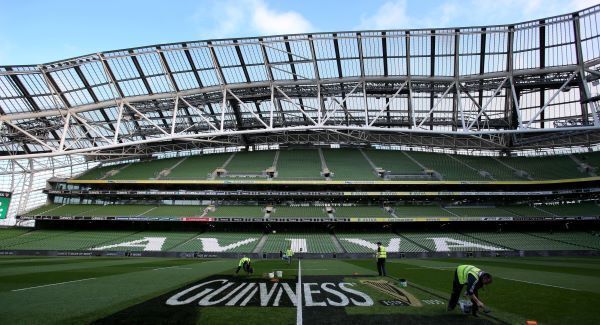
This week’s Principality Stadium fixture marks Ireland’s first ever Friday outing in the competition but the concept is eight years old.
Six of the seven Friday games played since 2009 have taken place in the Welsh capital with the other incorporating a Welsh trip to Paris.
Welsh Rugby Union chairman Gareth Davies said last year Friday and, indeed, Sunday fixtures are “here to stay” given it is the TV companies who are increasingly calling the shots and he warned that other nations would have to “bear the load”.
However, the IRFU, in a statement to the Irish Examiner yesterday, made it clear they would not be first in that queue.
“When Friday night matches were tabled a number of years ago the IRFU declined and we remain of the opinion that our games are better played on a Saturday or Sunday.”
Travel issues and a feared impact on the numbers of bums on seats in the stadiums are two reasons that have been cited against by the various unions in recent years but the hosting of Friday evening World Cup games in Twickenham in 2015 has diluted that argument.
Twickenham is notorious for logistical problems, even on a Saturday afternoon, and anyone who has suffered the misfortune of queuing outside the main train station in Cardiff after a big game can verify the Principality’s central location offers no quick escape from that type of logjam. Six Nations CEO John Feehan referenced Twickenham’s World Cup experiences in an interview when the Friday debate was raised last year and, though he said then he expected more candidate venues for the fixture, he was more circumspect when talking to the Irish Examiner last month.
“Television-wise, it’s not very different to a Saturday. We get very good audiences on a Friday night. Wales have done it in the past but have had a few logistical difficulties. In England, they are concerned about their supporters who had have to come down from the north and west.
“There are many reasons why you can’t do it and many reasons to do it. One of the things is when a team does a Friday night, they are unlikely to have a Sunday game.
“That is an incentive in its own right for teams. Sunday suits certain countries more than others and you can’t have all the games on the same day.
“You can’t do Super Saturday every round because you have to develop your audience over the entire championship.”
TV’s influence has been obvious across the schedule this year with Saturday games wrapping up by seven o’clock and thereby allowing key prime time shows to be aired as usual. The use of seemingly arbitrary 2.25pm and 4.50pm kick-offs hasn’t gone unnoticed either.
“They are odd times, I agree with you,” said Feehan. “The reason behind that is to try and get the maximum amount of time between the games in so far as TV companies need time to build up a game and analyse a game afterwards.
“You’ve also got the issue in the grounds in that people are hanging around in pubs to see the ends of games before taking their seats. Those two small changes have given us an extra 15 minutes. That might not sound like a lot but it makes a difference and aids the flow and ease of people getting to their seats.”