Getting to grips with new tackling rules
What has changed?

Getting to grips with new tackling rules

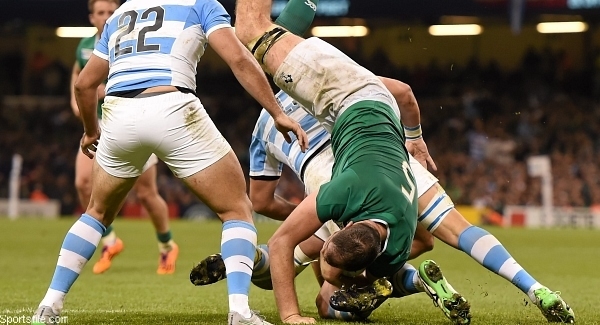
A high tackle is still a high tackle, with the threshold for that being the line of the shoulders, however World Rugby has now implemented two new categories - “reckless” and “accidental”.

These have both ramped up the punishments for a high tackle, with the “reckless” infringement enforcing a minimum sanction of a yellow card and a maximum of a red, and the “accidental” directive containing a minimum punishment of a penalty.

A “reckless” infringement falls under the category of a player making contact with the head, when he “knew, or should have known, that there was a risk of making contact with the head of an opponent, but did so anyway.”

In contrast, the “accidental” law punishes a player who, during a tackle or during other phases of the game, “makes accidental contact with an opponent’s head, either directly or where the contact starts below the line of the shoulders.”

These “reckless” and “accidental” infringements have been punished in principle in the past, but what is new is the severity of the sanctions.

Why are they doing it?

The key reason for the law changes is player welfare. Concussion in rugby remains a problem area for the sport and the increased media attention on it has ramped up scrutiny on World Rugby.

Players now are arguably quicker and stronger than they have ever been, making impact in the tackle more powerful and, int hat regard, more dangerous.

World Rugby cannot be seen to be simply standing by and not addressing the matter, so their hope will be that the new law changes decrease head injuries.

The stronger sanctions aim to put a stop to players going high in the tackle or using a swinging arm.

This was, of course, not legal before — but the harsher punishment is aimed at stamping it out completely.

What will the effect be?

This is perhaps the hardest question of all to answer and we will find out over the coming weeks and months exactly what the impact will be.

The hope is that the tightening of the laws will force players to tackle lower and this, in turn, could lead to more offloads and even more tries.

Players have already been revealing how they have been working to tweak their tackle technique, while defence coaches will also have to make some serious changes to their patterns of play.

There will undoubtedly be a teething process with the new laws and, as the likes of England coach Eddie Jones have already warned, it may take time for coaches and players to adapt.

One particular area of difficulty could come in relation to the “reckless” high tackle, which applies “even if the tackle starts below the line of the shoulders.”

Such an infringement comes with a minimum sanction of a yellow card and could cause a plethora of sin binnings in the months ahead.

x

More in this section

Sport

Newsletter

Latest news from the world of sport, along with the best in opinion from our outstanding team of sports writers. and reporters

Cookie Policy Privacy Policy Brand Safety FAQ Help Contact Us Terms and Conditions

© Examiner Echo Group Limited