Togetherness helps Munster with pain of losing Anthony Foley

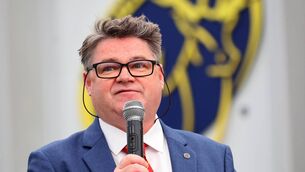
Leading sports psychologist Dr Kate Kirby offers a professional viewpoint. “I’m not working with Munster, just looking at this situation from afar,” she says.
“But in a group environment like that, the greatest comfort is in being together — just having company, not even in a particularly structured way in the early stages but just having a shared experience. If some players want to talk about their experiences, fine, and if they don’t want to talk, that’s fine too. I think people find comfort in that rather than being at home and being isolated.
“In the case of Munster, because what happened occurred in the team environment, then getting them back together quickly is a comfort to those involved as well. I don’t think there’s a particular protocol, but having clear supports in place, having people know how to access those, that’s important. So is making them aware that grief can hit people differently.
“That can hit some people immediately and it might be later for others, so it’s important to stress that there are no limits on the time they have to access counselling or other resources that are in place — that doesn’t have to happen in a particular timeframe.
“In the weeks and months after an event like this, people like to reminisce about the person, to joke about them, and you saw a lot of that with regards to Axel, people telling funny anecdotes involving him. Some people may feel, ‘God, I shouldn’t be talking like that or telling those stories’, but that kind of humour can be a way of getting through the grief as well.”
Kirby, head of performance psychology at the Irish Institute of Sport, said modern players are in a better position to deal with such challenges.
“It’s no different to people who lose a friend in an office, in any workplace.
“It’s the social loss that impacts on any group, so the working relationship is part of it but the bigger loss is the social element of the friendship.
“But the current crop of players are probably in a more advantageous position than previous generations would have been because so many sports people have come out in public to speak about the importance of looking after one’s mental health.
“The GPA (Gaelic Players Association) have run strong campaigns along those lines, IRUPA (Irish Rugby Union Players Association) have run the Tackle Your Feelings campaign and used their players as ambassadors, so I don’t think the same stigma may exist for the current generation of players when it comes to discussing mental health and seeking help — they have the scope to say they’re not OK if they don’t feel OK. There are better supports in place for players now — phonelines, counselling, staff within organisations who have the qualifications and skills to deal with situations like these if players are in a difficult place emotionally.”
The Irish tradition of wakes and funerals may also assist players in this situation. “I think it does help, though I think how that functions is by getting people together rather than leaving them isolated. The wake, the removal, the funeral, going for food after the funeral — those are all ways for people to maintain social contact and to support each other. In the days following a bereavement that provides a structure to people in terms of their time.”
Many people have commented on the improvement in Munster’s performances since Foley. “Some people have asked if they’re preparing for every game by saying they’ll ‘do it for Axel’,” says Kirby.
“To me, I don’t think you can go to the well like that too often. I think this tragedy has probably given the team a kind of shared identity — their predecessors won the Heineken Cup so the current team may have struggled to escape from their shadow.
“Having shared a strong emotional experience like this, I think something like that can really bring a team together. Their bond may be much stronger having gone through this, as nobody outside the team knows exactly what it was like to go through the experience of waking up to the news in Paris, coming home, the funeral, all of that.
“I think that has the potential to have a very strong performance impact, even though it’s not intentional, and it differentiates them from past Munster teams as well.”


CONNECT WITH US TODAY



Be the first to know the latest news and updates