Anthony Foley: ‘You were everything I wanted to be’
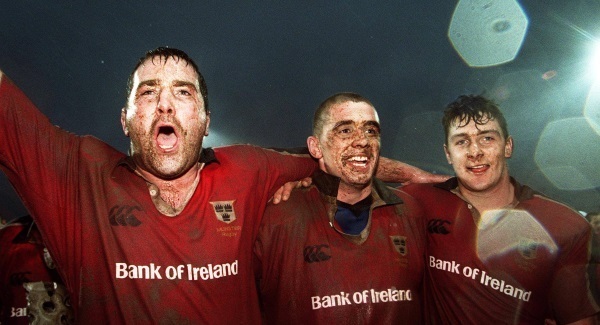
Maybe it was the genetics passed down to him by his father Brendan, who had himself enjoyed a distinguished career in the Munster and Ireland jersey, but Foley’s commitment to the cause never wavered, be for his club, Shannon, his province or his country.
“Fierce and uncompromising,” was the description of Martin Corry, a great back-row adversary with Leicester and England, “but afterwards would always find you for a beer”.
Foley exemplified the Munster ethos that possession of that red shirt was not only an honour but a great responsibility.
“It’s in our DNA in and around here to make sure that the jersey is the most important thing and we represent it,” Foley said last January after his side had rebounded from their away thumping by Stade Francais to exact revenge on home soil a week later.
Munster was his passion and he gave everything to it, never backing down from a challenge, and taking that same spirit into Test rugby, doubling his efforts in the face of adversity when he lost his place in the Ireland side to reclaim his rightful place.
Donal Lenihan this week recalled Foley had kept playing through an ankle injury “in order not to let Shannon down. That was Anthony in a nutshell. He gave everything to the cause.”
That very commitment meant he would miss only one European game between Munster’s Heineken Cup debut in 1995 and the crowning moment when the tophy was finally won in 2006, and it was only fitting he would be the captain that day in Cardiff to lift it.
From all of those who knew him best as a team-mate and colleague, as they shared their treasured memories and assessed Foley’s career in their own time of grief, there was the acknowledgement that their friend chose to lead by example rather than word, but when he did speak it was always worth listening to.
“During his playing days, Anthony was always one of those you wanted around your squad and a key figure throughout my time as Ireland coach,” wrote Eddie O’Sullivan this week. “He never backed down from a challenge and he played a big part in the leadership of that team.”
Foley captained Ireland three times and led them for much longer during his decade in green between 1995 and 2005 and it was the same at Munster, where he had to bide his time in support of then skipper Jim Williams but was for Declan Kidney the natural successor to the Australian in 2005.
His personality and performance levels were such that younger players felt the need to impress him and Foley, probably unwittingly, inspired successive waves of native Munster representatives.
“You were everything I wanted to be,” tweeted his playing and coaching Munster comrade Jerry Flannery while former team-mate, now Leinster assistant coach John Fogarty said earlier this week: “He wouldn’t say a whole lot. It would have been more ‘you’re going well’ and that was enough.”
Foley’s overriding asset to the teams he played for has been universally recognised as his rugby brain and no-one summed it up better than his friend Keith Wood, when he said: “He was never the fittest or fastest guy, but he was the smartest guy I played on a field with. He was invariably wherever the ball was.”
Former Ireland coach Eddie O’Sullivan picked out a moment that typified for him exactly what that meant when he recalled the 2004 victory over South Africa, the first over the Springboks in 39 years. Ireland were defending a five-point lead with time running out with the Boks laying siege to the Irish line.
“Anthony had this innate understanding of where he needed to be to get the job done. When the ball spilled loose, Foley dived on it, drove us upfield and Peter Stringer kicked the ball out.”
That instinct for the game of rugby carried him naturally into coaching where his vast intellectual property was a huge resource for Munster.
“At his age, the rugby knowledge he had was amazing,” Rassie Erasmus said on Wednesday. “A lot of coaches hit their peak at 60, his knowledge about the game; me being here four months, he never missed anything.
No-one valued the benefits of hard work more than Anthony Foley. It went hand in hand with his commitment to the teams he played for and the competitive edge he brought to every game.
Giving everything for 80 minutes meant you were a team man and showed the player on your shoulder you were in it together.
In his view, it lifted the performances of those around you. It was how he wanted his teams to play.
A heartbroken Peter O’Mahony recalled this week when thinking back to his first game played under coach Foley: “We won it 3-0 and that suited ‘Axel’ as good as if we’d won it by 60 or 70 points. “He was a man who wanted any Munster jersey to win at any cost.”
As Munster chief executive Garrett Fitzgerald said in paying tribute to his friend: “My earliest memory of Axel is when he was playing number 8 for St Munchin’s in his teens and his hunger and passion was evident to all.
“Never a man to back down from a challenge, Anthony’s determination on the field was mirrored by his actions off it, always honest in everything he did. His legacy will live on in the next generation and beyond.”

CONNECT WITH US TODAY



Be the first to know the latest news and updates