Confusion about Stuart Lancaster's role but Leo Cullen stays the boss
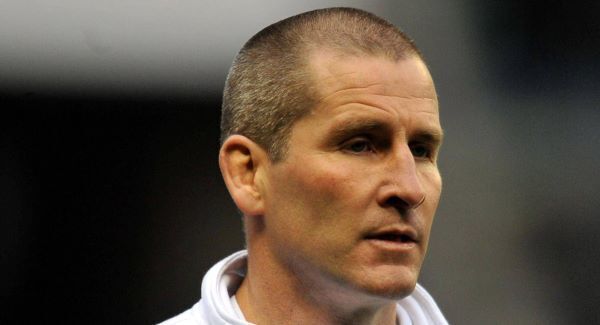
The question arose with the club’s press release which announced Lancaster’s one-year appointment as a ‘senior coach’ rather than as the like-for-like replacement for defence coach Kurt McQuilkin who has this week moved home to New Zealand.
Cullen was straight up in declaring Lancaster’s primacy on that side of the ball for the season ahead, but then the new man went on to expound about a broad church of interests that extends to an attacking brief and his background in elite player development.
How it all gels with the existing staff will make for interesting viewing though the 46-year-old Englishman seemed almost relieved the ultimate authority for overall matters such as team selection – and media duties – rest with Cullen. “Leo knows this club far, far better than me,” he explained. “I’ve still yet to meet the players properly individually, I don’t know them all and I don’t understand the club and the culture, so I’m 100% happy with the role I’ve got.”
Culture was a key pillar during Lancaster’s four-year term with England. He targeted indiscipline and arrogance as vices that needed eradicating and Jonathan Sexton had a very public swipe at what he seems to think is Leinster’s fading culture last season.
It seems an obvious area for the new arrival’s attention.
Lancaster’s could well be a very wide brief indeed though questions remain as to his defensive chops given he has never held such a post before. It may be an idea to tread lightly with a Leinster defence that was the PRO12’s meanest last term.
He has at least worked with some of the department’s best minds - Andy Farrell whom he chatted to about the Leinster approach, Paul Gustard and Mike Ford – and he is only three weeks removed from such a brief with Counties Manukau in New Zealand.
Then he took a call from Cullen.
It is only two weeks since they first spoke but Lancaster has already gorged himself on DVDs stretching back to Leinster’s days as Europe’s kingpins and is adamant the club can be a “dominant force” on the continent again.
“Obviously, it is a very difficult competition to win. I know a lot about the English Premiership and I know a lot about Saracens, for example. I know a lot of the fundamentals that underpin that club. Leinster have got all the foundations in place. Why not?
“You look at the quality of the team, the coaching environment they’ve got. I have to appreciate how the players sometimes have to work between club and country. That is something I need to understand better.”
There is little enough time to get up to speed in that regard, what with the season already underway and a Glasgow side high on their evisceration of Connacht in Glasgow looming large on the weekend’s horizon, but this is his opportunity for a fresh start after England.
The young coach was a refreshingly new broom after the 2011 World Cup debacle under Martin Johnson and he went about fashioning a new, young England team before the turmoil that was their early exit from the 2015 global tournament in their own back yard.
It has, he admitted, been a “tough” nine months though he played down the obvious redemption theory.
“I don’t think it’s about me, I don’t think it’s about me getting a trophy. It’s about me helping the team become successful. So from my point of view it isn’t about me. It isn’t about me trying to right the wrongs of something that happened.
“I look back with a lot of pride with what we achieved with England.
“I think people get drawn into the 15 minutes of rugby (against Wales) or whatever, but there were a lot of good things we did along the way and I’m just looking forward to getting coaching again.”
It’s a smart move for him. Few clubs are as well established on and off the field as Leinster and the 45-minute flight time from Leeds- Bradford Airport has avoided the need to uproot his young family while allowing him re-assimilate into the coaching scene at a remove from the English press.
It will be intriguing to see how his talents are used.
CONNECT WITH US TODAY



Be the first to know the latest news and updates