IRFU medic: Concussion not just a rugby issue
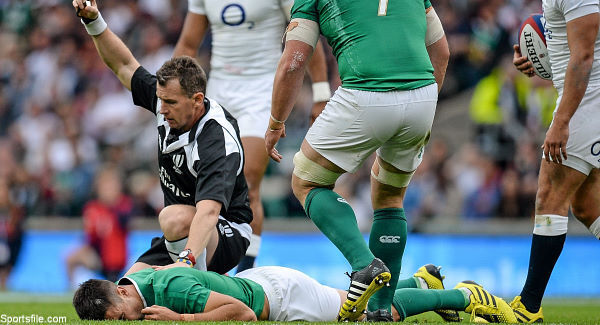
McLoughlin was speaking at the Web Summit yesterday and said rugby had tried to introduce a change to the culture of the game to address the issue of concussion.
“At the moment people may believe that the only place concussion happens is in rugby,” said McLoughlin. “But that can happen on any sports field. People have to understand that.
“We have to accept the reality of the game, that we have a higher rate of concussion.
“But if you run into someone on a rugby field, even if there isn’t head-to-head contact but someone staggers afterwards, then in rugby you’re taken off.
“That’s not the case with other sports. It’s interesting to watch the media looking out for concussions during a rugby match, but they watch other sports and the issue of concussion doesn’t cross their minds.”
McLoughlin pointed to events at the recent Rugby World Cup which proved a change in the sport’s culture.
“Three or four years ago the crowd would clap when someone who might have suffered a concussion went back onto the field. But that doesn’t happen any more.
“People have said to me since the Rugby World Cup final last weekend that they were happy (Australia’s) Matt Giteau didn’t go back onto the field in that game (Giteau was substituted with suspected concussion).
“We have to cut down instances of concussion, and one thing at the Rugby World Cup was the focus on any tackle being made close to the neck, which might cause concussion.
“So we’re looking at potential rule changes to help prevent these things happening as well as diagnosing it when it does occur.
“For some years, too, medical staff have been judged by what TV can show, but often medical staff can’t see that. If you’re on one side of the pitch you can’t see the far side.
“But in the Rugby World Cup there were potentially 18 different views available which could be used to help evaluate incidents, and a similar facility is available in the Aviva Stadium as well, though it might not offer as many as 18 views.”
McLoughlin was discussing comments by Cindy Parlow Cone, the former US women’s soccer star, who outlined the details of her own concussion while playing soccer.
He referred to potential changes to the laws of the game to deal with concussion: “There are two parts to that, the application of the laws and the adequacy of the laws.
“Because of the potential for concussion, the focus on the high tackle law has had an effect. We’ve had a lot of talk about lowering the height of the tackle, but concussion also occurs when players tackle low and get a knee in the head. We don’t want to change the height of the tackle and find instances of concussion increasing.”
The medical officer also stressed that if children abandoned rugby now they would face different health challenges later in life.
“The coach’s culture is about performance and winning, though we hope that’s changing. We want to effect culture change, but a lot of rugby is about enjoyment.
“There’s a lot of fear and concern about concussion but if you have people giving up sports because of a not-yet-defined risk, people will have other health risks later in life.
“There’s talk about the obesity crisis in America, but we’re in the middle of an obesity crisis (in Ireland) too.
“If people say ‘we’ll stop our child doing that, they’ll be healthier,’ that’s not necessarily true - they may be subject to different health risks.
“Concussion needs to be managed but while there’s a lot of focus on the issue, a lot of the media coverage is inappropriate. The vast majority of children will go through a season without concussion, but the way the media covers it, it’s as though someone is getting concussed in every game.”