Did Joe Schmidt manage better than anyone else?
Around the country, out there on the quiet fields, the small halls, in swimming pools before the crack of dawn, there are coaches that you’ll never hear of doing a masterful job.
For Paudie Butler, who even without a title or job from Croke Park these days is still spreading the hurling gospel across the land, the best coaches – any coach –overseeing youngsters should be governed by one constant question: “What does little Mary or John need from me today?”
Very little of it concerns trying to win the U10 championship. A lot of it is having a word of encouragement or instruction to make sure Mary or Johnny hangs around for the U12 championship, that they can strike off both sides when you hand them over to their U12 manager/coach, that they’re physically literate in the fundamental movements like sprinting, decelerating, jumping off one foot, then two, so they’re still playing and then excelling into their 20s and 30s. So forget about being consumed about winning that underage competition.
“There’s too much [else] to do!”
At that level and age, laying the foundations, not installing the roof, is winning. That is coaching and managing.
At the elite level, it is different. So much of it centres around winning. But in a way so much of it is the same as so much of it is dictated by the same question: what does this player and what do these players need from me now?
You look at the candidates for the manager of the year and that’s something so many of them excelled at.
Think of Eamonn Fitzmaurice back in February. For a second consecutive year Kerry lose their opening three games of the league. Colm Cooper goes down injured playing for Dr Crokes. He’s gone for the year and everyone else thinks Kerry are as well. How does Fitzmaurice respond? With compassion and strength. He stays overnight to offer moral support for the hospitalised Cooper awaiting surgery. Yet he ensures Kerry’s internal expectation levels are maintained. He makes it clear publicly as well as privately that they’re still all about playing in and winning All-Irelands. As much as it might be tempting to play the poor mouth and the underdog card so many others like to do, Fitzmaurice rightly calculates that his players – his little Mary and John – do not need an out; that subliminally they could be swayed by the talk on the street if the manager were to talk the same way too.
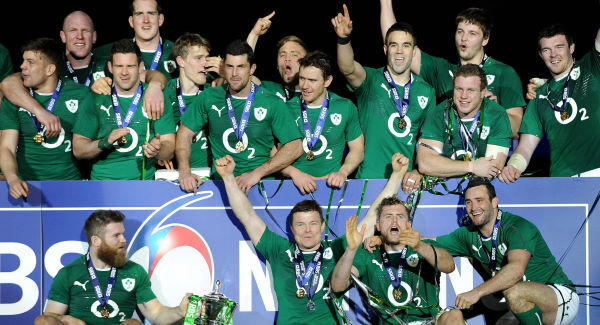
Or think of Joe Schmidt a few weeks later after Ireland are beaten in Twickenham. The Triple Crown is gone. On television George Hook is subdued and so is much of the nation. Then Schmidt comes on and highlights the positives of the performance, reminding his team and the public that Ireland are still on course to win the championship. It sets the tone for the rest of the championship and of course Ireland go on to win it.
“Joe would be an unbelievable poker player,” Brian O’Driscoll would remark in his autobiography. “He projects with such positivity that it’s hard to know if he believes all of it but everyone buys into what he says.”
Jim McGuinness for the same reasons would also be some player at that table. Fitzmaurice – by virtue of also winning the All-Ireland Colleges Cup with Pobalscoil Chorca Duibhne – shades him as football manager of the year, but McGuinness in 2014 would show why he’s the football manager of the decade.
Sure, he lost the All-Ireland final and was inadvertently a contributor to the defeat, overheating and hotelling-out his players with a second five-day camp in less than a month. But who honestly this time last year envisaged Donegal getting back to another All Ireland? Or when they were well beaten by Monaghan in the Division Two league final and Mark McHugh left the panel days later? Even after they’d avenge that defeat in the Ulster final and make it past Armagh in
the All Ireland quarter-final, who genuinely saw Donegal taking down Dublin?
But that’s where McGuinness and his Schmidt-like poker face came into play, throwing a dossier on the dressing room table immediately after the Armagh game saying in there was how they were going to beat the supposedly unbeatable. If ever one win and performance in 2014 belonged to one manager, it was how McGuinness tripped up Jim Gavin’s corps and deflated their esprit de corps.
A good friend of both McGuinness and Dublin would also prove to be an inspired leader in 2014. Paul McGinley is not our coach/manager of the year – one fixture or weekend is not enough for such an honour in such a competitive year and category, nor was it like he was taking over a losing team or programme; given Europe’s domination of the Ryder Cup, you could say his job was to not get in the way (a la a Faldo 2008) and reinvent the wheel. But what he did do was diligently and masterfully refine and polish that wheel, build on and extend that winning tradition and programme.
Would Europe still have won the Ryder Cup without the blue and yellow fish, the Alex Ferguson team talk and all the other nit-bits that will keep McGinley himself on the motivational speaking circuit for years now? Perhaps (and are we alone or cynical in thinking McGinley might have an eye on that scene beforehand?) But a coach’s job isn’t about whether you win; it’s about whether you gave your athlete the best chance to win and compete; to have, as the late great John Wooden used say, that “peace of mind” that you gave it everything. By wrecking his head in advance of Gleneagles on the kind of little details Tom Watson hardly bothered with – from carefully cultivating a partner for Victor Dubuisson to even consulting a performance coach such as McGuinness – McGinley made sure that he had that peace of mind afterwards.
Brian Cody and Eamonn Ryan continue to win and amaze. That’s 10 All-Irelands for Cody while only the nine for Ryan – though he’s only been over the Cork ladies footballers since 2005 and is still only 73. Their triumphs in 2014 were particularly special. Just like Fitzmaurice won the big one without Gooch (and Galvin, and Tomás), and Schmidt won big games in the autumn internationals without BOD and virtually every other starter from the 2009 Grand Slam team/Golden Generation, Cody won this one pretty much without Henry and Tommy, while this time Ryan without Juliet. All those players have claim to be the player of their generation and while their teams’ triumphs in 2014 were a testament to their legacy, real credit belongs to the managers who maximised it.
Sometimes what Mary and John need, or Henry and Tommy, or Marc or Kieran, and above all, their team, is for them to be challenged, even dropped. You look at Kerry’s five All Stars. Three of them – Peter Crowley, Kieran Donaghy, David Moran – weren’t even starting for the All-Ireland quarter-final. Veterans, leaders, winners were benched one day, critical the next. They might not have got out of Ennis only for the leadership and accuracy of Bryan Sheehan, a sub in the last three games of the year. Declan O’Sullivan was similarly influential against Clare and even more so in the Munster final; again a sub in Croke Park. Marc Ó Sé didn’t start in Limerick.
To win, you have to adjust.
That was probably the winning of the hurling All Ireland as well. In 2003 when reflecting on a campaign in which Tyrone would win two replays en route to claiming their first ever All-Ireland, Mickey Harte wrote in Kicking Down Heaven’s Door: “The secret between a draw and a replay is having something new. You must have a new script. People’s minds tend to stay in the drawn game and capture what went on there but you must make the point to your player that’s it’s a new game.” And for him that made changing things up.
Tipperary didn’t; by sticking with the same players in the same positions – resisting even throwing in Michael Cahill from the start – it was as if they were trying to recreate and recapture the splendour of the drawn game. Cody in contrast followed the script of his old friend from Tyrone and consequently won even greater respect from an old rival from Clarecastle.
“Sure how does he flippin’ do it?” Anthony Daly would smile, shaking his head in a recent conversation with us. “Like the three changes for the replay, isn’t he something else? Kieran Joyce: how do you go from not getting a game to next thing you’re centre back, on the Bonner [Maher], Tipp’s key man, and you end up Man of the Match?! He [Cody] must feel at this stage he could walk on water. That must be some feeling, to know ‘This is what I’m good at.’”
It’s called mastery (as opposed to perfection) and there are very few in this country who have attained it.
There was some terrific coaching this year by people who the recent RTE Sports Awards — understandably — would never have thought of nominating or inviting but who deserve a mention in any manager-of-the-year debate presided by us here.
Mick McCarthy probably doesn’t qualify as Irish manager of the year for not coaching a team in Ireland but how he has transformed Ipswich Town from relegation candidates to promotion candidates on a modest transfer budget shows just why he’s the only current manager in England to have either worked in its two top divisions or as an international manager for the last 22 years pretty much without stop.
Tommy Conroy of St Vincent’s has done a remarkable job: winning back-to-back county titles in the most competitive county club championship in the country, winning back-to-back Leinster titles and now only two games from retaining the All-Ireland.
The way Joe McGrath and Colm Collins collaborated to see Cratloe winning a historic double in Clare epitomised the spirit of what Paudie Butler speaks about: all along they’re governed by what it’s in the interest of not so much Mary and John as Conor and Podge, their own sons, something they did too when coaching them on the club field well over a decade ago (Collins also had a very impressive first season with the Clare senior footballers, guiding them out of the lowest division for the first time in 10 years). There’s a genius in being able to work like that at the local.
The international level though is where our manager of the year award ultimately has to go. And in Joe Schmidt, Ireland have someone who operates at another level again – world-class. It’s in his attention to detail, both in his language (“What EXACTLY are you doing and why are you doing it?” he’ll ask his players, according to Brian O’Driscoll in his book. “What’s YOUR role in this?”) and his technical and tactical demands.
“I think what defines him is the way he coaches attack,” Johnny Sexton would say in his own book last year. “There are times when you might think you have the linebreak executed to perfection but he’ll insist that it’s not precise enough to break the team we’re up against next. Just when you think we’ve nailed it, he spots that the blindside winger wasn’t ‘animating’, or drawing attention to himself...So we go back and do it again. How many times? Until we get it right.”
Because at this stage that’s what little Johnny needs.

CONNECT WITH US TODAY



Be the first to know the latest news and updates