Tigers know how to win in lion’s den
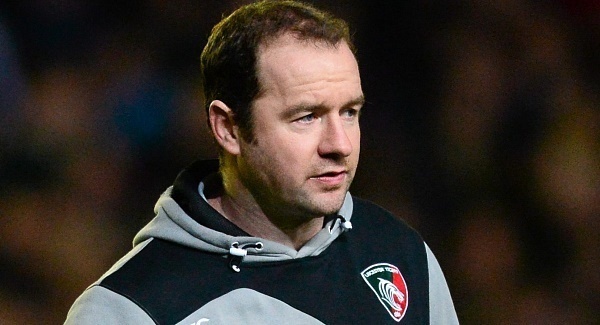
GEORDAN Murphy remembers the Munster official’s words clearly: “Before the match we were asked to leave the field quickly at full-time so Munster could have their fireworks display,” smiles the 35-year-old as he remembers Leicester’s trip to Thomond Park in 2007.
“That stirred the pot a little bit. Munster hadn’t lost at home in the European Cup since it had started (a run of 26 games). People told us we couldn’t do it, we couldn’t go there and win.
“But the sheer bloody mindedness of Leicester means that if someone tells us we can’t do something we redouble our efforts.”
Munster supporters will not need reminding that Leicester won 13-6 that day, with Murphy scoring the opening try.
And that story, regaled in a club house opposite Leicester’s training ground, demonstrates just why Murphy could prove as outstanding in his new role as assistant backs coach as he was a player.
He retired last summer after a 16-year career with the Tigers, while he also managed to clock up 74 appearances for Ireland.
That allows him the perspective to see quite how far Ireland have progressed under Joe Schmidt, but it also means he could go a long way in his new profession once — as his Director of Rugby, Richard Cockerill, puts it – ‘he gets used to staying at work past two-thirty in the afternoon’.
Cockerill is a fine starting point, but Murphy is keen to pick Schmidt’s brains at some point too — particularly after the way he ensured old friend Brian O’Driscoll ended his career in the best possible way.
First, though, he has to get his head round the idea of beating Clermont Auvergne and ending their 74-game unbeaten run at the Stade Marcel Michelin in tomorrow’s Heineken Cup quarter-final.
To do so he will tell the players about his experiences, and that trip to Munster will feature heavily. Maybe, just maybe, Leicester can pull off another surprise.
“Becoming a coach has been a big challenge and it has been tough,” he says. “I guess the workload and the behind-the-scenes graft has been most surprising. As a player you can switch off, but as a coach you get home late and then wonder what you can do to make the next day better. It consumes your life.
“As a player you can be a little more selfish as you worry about yourself and your own performance. Now the performance as a team is key. When I played I found I was nervous until the whistle blew and then all that would dissipate. As a coach those nerves don’t dissipate at all.
“I can’t lie to you, I’d rather be playing. It’s a completely new trade and I have to keep learning. Do I have any specific ambitions as a coach? It’s far too soon for that. People ask me that all the time and like anything it would be great to be successful as a coach. That would be a huge thrill for me, but it is too early to set any long-term goals. I have to see if I am any good first!”
Yet if Murphy shows the same potential as a coach that he did as a player he will have a fine career in the dugout.
He intends to learn from the best, and that includes Schmidt. Murphy still has a number of friends on the Irish team after bringing down the curtain on his international career in 2011, and he has clearly heard good things.
“I’d be interested in sitting down with Joe at some stage in my career and picking his brains as he has a really good template for making teams successful early in his career (with them),” he explains.
“He has the X-Factor about him. He spots the right players, gives them opportunities and the guys respond to him. He’s been great for Ireland and I’m sure he’ll be going for a Grand Slam with Ireland next year and then on to greater things (the World Cup).
“If Ireland can have a great showing in the World Cup that would be great. The fact it’s just across the pond here in England means I hope there’s a big turn-out for the Ireland games. The northern hemisphere sides can definitely take it to the southern hemisphere in the World Cup.
“What we have seen is that there are things behind that generation (of O’Driscoll and Paul O’Connell). There is a lot of strength in depth through the system, the academies do a great job and there are a lot of talented young players in schools and clubs.
“I go home now to my local club and I watch the amount of kids playing and we are very hopeful that some of them will come through and Ireland will get more powerful as a rugby country.”
That said, youngsters will have to find a new idol with O’Driscoll having departed stage left after one final hurrah in Paris. Murphy first played against his old sparring partner in schools rugby, and reports that even some of the Englishmen on the Leicester side were pleased he could leave international rugby with a Six Nations title tucked under his arm.
“I consider Brian to be a friend more than anything,” he smiles. “I find it amazing somebody who has achieved everything that what he can and is probably the greatest player that has ever lived can be so humble and such a good person.”
But finally, what next for Murphy and Leicester? The simple answer is that he will keep learning, and Leicester will keep trying to bloody noses and remember the lessons of Thomond Park when they head to Clermont.
“If we can keep ourselves in contention for 60 minutes then with the threats we have behind the scrum and up front we have a chance.”
Murphy knows how to do it and it would be wise not to write off Leicester just yet.
CONNECT WITH US TODAY



Be the first to know the latest news and updates