Only players can save Kidney
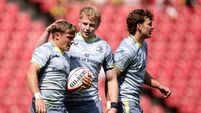
The linebreak from Sean O’Brien was all power, the phases that followed stretched Scotland to breaking point and when the home defence finally creaked, Irish patience in the build-up was rewarded by a clinical finish from Craig Gilroy.

Only players can save Kidney

It was textbook rugby from Ireland, perfectly prepared and ruthlessly executed against inferior opposition. Yet that try early in the second half stood in splendid isolation, the only five-pointer of an afternoon at Murrayfield that will long be remembered for the other 78 minutes of Irish profligacy, impatience and lack of joined-up thinking.

Ireland beat themselves on Sunday and saw their chances of a Six Nations championship disappear in a 12-8 defeat to a limited Scotland side that could scarcely believe its luck to have emerged victorious from a game to which they had barely contributed.

And now, as Scotland focus on the next leg of their unlikely title tilt, Ireland must regroup and figure out a way to stop themselves from drifting into irrelevancy.

That task will not be made easy on March 9 when they welcome to Dublin a winless France team that surely turned a corner in their narrow defeat to England at Twickenham last Saturday. The French may be all at sea but they are paddling furiously towards land. Can we honestly say the same about Ireland? The knives for head coach Declan Kidney were unsheathed very quickly on Sunday evening after his side had slumped to its second consecutive defeat in the championship, a first back-to-back loss since 2008, when reverses against Wales and England spelled the end of his predecessor, Eddie O’Sullivan.

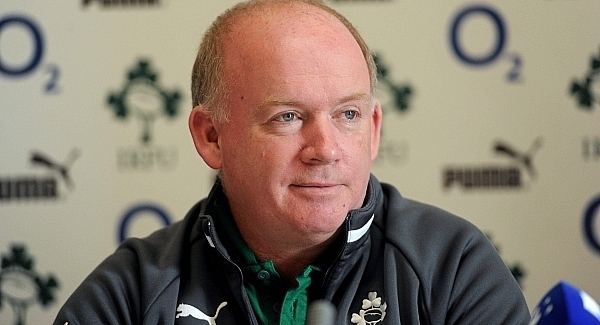
Kidney’s contract expires this summer and the 2009 Grand Slam winner may well follow the same exit route as O’Sullivan but there is very little in these last two defeats to suggest any fault lying at the door of the coaches.

For the second game in succession, Ireland enjoyed the majority of possession and ended up on the losing side. Against England, defeat came because of the players’ failure to manage the game and the conditions appropriately.

Against the Scots, Ireland enjoyed 71% possession and 77% territory, made 310 metres, four line breaks and only 44 tackles.

There were no systems failures in Edinburgh, not in the slightest. If anything, the systems worked well and the game-plan was the right one. A team could not enjoy that much of the ball and not be implementing its game-plan correctly.

Rather, this was a game that should have every Irish coach throwing away his laptop, ripping up the play book and stats sheets and forming a queue to see newly-installed team sports psychologist Enda McNulty because the performance of Ireland’s players was enough to send anyone into a dark room for a long lie down.

Possession, as Ireland so admirably exhibited at Murrayfield, is meaningless if you don’t turn it into points and Ireland managed not to do so in a number of creative ways.

The home side defended manfully at times, it is true, but Ireland let them off the hook so many times and in so many different ways that the Scots could barely pat themselves on the back for the victory.

Ireland have to rediscover the cutting edge that proved so effective with three tries in the first 40 or so minutes against Wales on the opening day of the championship. They are also in desperate need of effective leadership because for all the profligacy that saw at least three tries go a-begging in the first half against Scotland, the refusal to take three points when presented with kickable penalty shots at goal was a departure from all known rugby wisdom.

Maybe captain Jamie Heaslip’s reluctance to go for goal during a first half played almost entirely in the opponents’ half against a side which conceded 10 penalties in that opening period betrayed a lack of trust in his kicker, fly-half Paddy Jackson.

Maybe if Jackson had had an early shot at goal — Heaslip pointing to the corner as early as the eighth minute — rather than teeing it up for the first time a quarter of an hour in, then his return of one successful kick from four attempts may have been better.

Heaslip denied not trusting his fly-half and Kidney insisted it had not been a pre-ordained part of the game-plan to go for the corner at every opportunity but if the first rule of Test rugby is to always take your points then the rookie captain committed a cardinal error.

Heaslip at times appears detached from the decision-making process, happy to let more senior players such as his predecessor Brian O’Driscoll take charge and it underlines the No.8’s inexperience as a Test captain.

After all, he lead Ireland for the first time only five Tests ago.

Kidney should give Heaslip more time to grow into the role as those with short memories might forget that as recently as last November, Chris Robshaw was England’s public enemy number one following a series of questionable decisions that cost his side Test matches against South Africa and Australia.

Less than four months on and the Harlequins flanker is one of the leading contenders to captain the Lions this summer.

Heaslip is most decidedly not but like the players in his side, he and they all seem in need of a pick-me-up, a boost to the confidence that is in danger of folding in on itself with two weeks of soul-searching before the French game.

If ever there is a time for team shrink McNulty to earn his keep it is now because Ireland’s players need to get their heads back in the right place and get their act back together.

Their coach’s job is in their hands.

More in this section

Sport

Newsletter

Latest news from the world of sport, along with the best in opinion from our outstanding team of sports writers. and reporters

Cookie Policy Privacy Policy Brand Safety FAQ Help Contact Us Terms and Conditions

© Examiner Echo Group Limited