Carter: tries after half-time were crucial
Last week, day after day, the All Blacks spoke respectfully about an opponent that had never beaten them in a century, one they had hit for 66 when the sides last met in New Plymouth five short months ago.
That’s just how they roll. They speak softly before rampaging Mongol-like through the hopes and dreams of those that dare stand in their path. When it’s over they revert to deferential choir-boys.
They are rugby’s smiling assassins and Dan Carter is their poster boy. Possessed of billboard looks, the out-half is a humble icon. He is poise personified as he stands in the cramped whitewashed walkway underneath the Aviva Stadium’s West Stand, spraying compliments about the Irish in a pitch-perfect black suit and tie and immaculately starched white shirt.
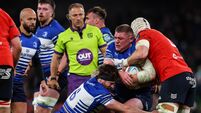
“The Irish really turned up to play,” he begins admiringly. “They were really physical and they probably out-physicalled us (sic) in that first-half when they defended pretty well. However we managed to keep the scoreboard ticking over which was good.
“The try just before half-time and the couple of quick ones just after half-time really helped us and, credit to our guys, we stuck at our work and managed to come away with a good win.”
If there were two words that summed up the All Blacks on Saturday they were patience and opportunism. Ireland presented them with a different defensive code to crack in Dublin but the tourists never doubted their ability to find the combination.
“They weren’t sending that many numbers to the breakdown,” said Mils Muliaina who, along with Richie McCaw, made his 93rd appearance to break Sean Fitzpatrick‘s record as the most capped Kiwi of all time.
“They were probably fanning out a little bit and we probably went a little bit too wide and didn’t attack the fringes quite as much as we wanted to. We talked a bit about that at half-time.
“A lot of it was them just holding and then someone would just fly out of the line so it got a little bit frustrating. The boys just needed to be a bit patient and once we got a few messages at half-time we came out and scored a couple of quick tries.”
That’s the All Blacks. Where other teams panic they plot. Muliania admitted that there was an uncomfortable hush when they gathered under the goalposts after Stephen Ferris’ try and yet they were in front less than ten minutes later.
“We pride ourselves on our fitness,” Carter explained, “and I guess when teams are defending for a long time it does take a lot out of them and it is only a matter of time before you break them. We just had to work on not getting frustrated about not getting the rewards immediately and just staying patient.”
One wonders how much these November games means to them. The fear of being on the first All Black side to lose to Ireland or Scotland is an obvious motivator but is the clean sweep of Britain and Ireland still the carrot it used to be.
Kieran Read, their double try-scoring number eight, claims it is and points to the fact that the Grand Slam has only been achieved three times before but the feeling persists that the tourists are playing a very different brand of rugby.
If there was one moment more shocking for the home side than any other two days ago it was the sight of a three-man overlap building on the left of the Irish line with less than a minute on the clock.
Entire Six Nations games can pass without that happening and Graham Henry reasoned afterwards:
“The type of football we play underneath international rugby in the summer probably helps us,” said the former Wales manager who celebrated his 100th Test win as a head coach in Ballsbridge.
CONNECT WITH US TODAY



Be the first to know the latest news and updates