RTÉ deal ‘good for league’s exposure’
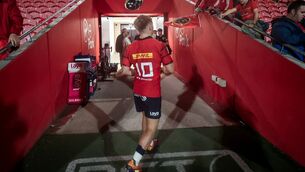
Leinster’s trip to face the Glasgow Warriors will be the opening gambit for the broadcaster which takes over from Setanta having struck a deal with Celtic Rugby alongside five other public service broadcasters.
“It is something of a ground- breaking deal in the way it is structured,” said RTÉ Group Head of Sport Ryle Nugent.
“We have six free-to-air broadcasters involved – ourselves, TG4, BBC Northern Ireland, S4C, BBC (Cymru) Wales, BBC Alba in Scotland and now Dahlia Television which is a pay operator in Italy.
“What it means is that the Irish public is going to see the provinces on a week-in and week-out basis on free-to-air television. It is good for us and it is good for the competition’s exposure.”
RTÉ will screen three all-Irish fixtures up to and including New Year’s Day although the highly-anticipated Leinster-Munster clash at the Aviva Stadium on October 2 will be carried by its Irish language cousin.
The confirmation of so many free-to-air partners is clearly a boon for the Magners League which has taken significant steps forward in recent years through the addition of end-of-season play-offs and increasing attendance figures.
“I think there is room for growth,” said Nugent of the league’s potential. “The Italians coming into the competition means it is growing. Being on a platform where more people can tune into it means that the potential is huge.
“It has grown from strength to strength over the years and this is the next chapter for it. We are hoping that the Irish provinces keep playing well and that they are in the mix for the semi-finals and the final.”
RTÉ’s acquisition of Magners League rights adds to the broadcaster’s already significant live output which included 40 GAA Championship fixtures and 18 Airtricity League games – which will increase to 27, one per week, by 2014.
Add in less mainstream sports such as boxing and athletics and the national broadcaster has committed to an extensive – and expensive – sports portfolio in what continues to be a difficult financial environment.
Has it all reached saturation point?
“Too much sport on TV? It depends on how much you like sport. Some would say that there is too much and yet I answer letters on a regular basis from people asking why aren’t we showing X, Y or Z.
“It isn’t just a singularly RTÉ thing either. It is across all broadcasters. When you look at the top ten programmes that RTÉ broadcast every year, four or five of them are regularly sport. You have the two GAA All-Ireland finals, major European or World Cup soccer qualifiers, Ireland against England or France in the Six Nations, they are always there so it is core to what RTÉ do.
“If people continue to watch in those sorts of numbers you would have to say that it is what they want. There used to be a feeling ten, 15 and more years ago that live games on TV would kill sports.
“There was a time when Six Nations games were played simultaneously which is unheard of now.
“All the organisations recognise that the greater exposure enhances their product.”
Yet there remains a body of opinion that there can be too much of a good thing where live sport on TV is concerned. GAA Director General Páraic Duffy has gone on record to state that the Association may row back in that sense.
A total of 84 games will have been played in the chase for the Sam Maguire and Liam MacCarthy Cups this summer, 50 of which will have been screened by RTÉ or TV3.
The three-year deal agreed by the GAA with both stations ends after next month’s All-Ireland SFC final but Nugent was reluctant to go into detail about the latest tenders.
“I am careful about what I say because the process has begun for all broadcasters.
“The GAA have concerns and they are legitimate concerns that they have for their games and we recognise that. What I would say is that we have been a terrific broadcast partner for the GAA and for the national games and we will be looking to continue that relationship. There is a long way to go in the process. It has only just begun.”

CONNECT WITH US TODAY



Be the first to know the latest news and updates