An era where the strong grow stronger...
On the eve of what promises to be another action packed rugby season, the tenth anniversary of the decision to convert to professional status offers a time for reflection. When the International Rugby Board announced its decision in Paris ten years ago this weekend, the nature of the game changed utterly.
Inevitably, the final catalyst for change was forced upon the sport’s governing body by outside commercial interests. When Australian media mogul Kerry Packer lost the television rights to Rupert Murdoch for Australian rugby league, he looked to rugby union as a means of compensation. A group known as the Rugby World Corporation, with substantial financial backing from Packer, approached all the top international rugby squads during the world cup, with a blueprint for a professional game. The frame-work for a professional league of rugby union on a global basis had been established and was within weeks of happening.
Sensing his opportunity, Murdoch’s News Corporation approached the rugby unions of New Zealand, South Africa and Australia and signed a 10-year television deal worth in excess of $500 million. As a result, the IRB was left with no viable alternative than to accept the end of the amateur era.
Understandably, given the introduction of professionalism almost overnight, it took several years for the game to come to terms with what that status actually meant. Paying a player does not make him professional. Many of the players who transcended that era could not believe their luck. It was a question of being in the right place at the right time.
Without question, the quality of the modern game is far superior to that which existed even 10 years ago. Yet, it is fair to say that administrators, coaches and players all struggled in the initial phase.
In Ireland, it was even more difficult. Unlike our southern hemisphere counterparts or those in the UK, no professional model for team sports existed in this country. Given that nobody knew the value of a full-time professional rugby player, it was inevitable that those with the deepest pockets secured the best players.
As a result, the majority of Irish players fled to the lucrative market of the English Premiership. It was no coincidence that the improvement of Ireland’s performances at provincial and national level coincided with the policy decision taken by the IRFU to attract players home in the late 1990s.
It is clear from the recent Lions test series and in particular this year’s Tri-Nations campaign that the current model of rugby union offers vast entertainment value. The pace and intensity of the game is at an all time high. For the modern player, the amateur era is an issue of no consequence.
As a result of full-time training, the modern player is bigger, stronger and faster than ever before. The collisions are now at an unprecedented level. When Schalk Burger and Jerry Collins clashed recently in Cape Town, they showed no respect for their bodies.
One wonders how long it will be before a major fatality occurs on the international arena.
If the Lions tour confirmed anything, it is that players in the home countries, while becoming supreme athletes, are lacking the skill levels of their Southern Hemisphere counterparts. It will be interesting to see how this lesson will be taken onboard in the coming season.
The other major change facilitated by the professional era has been the introduction of competitions like the Heineken Cup and Super 12 (soon to be Super 14) at provincial level. The Heineken Cup in particular has been a remarkable success. From a slow beginning, it now rivals the Six Nations championship in terms of passion and support.
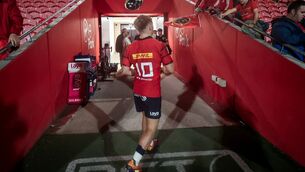
The atmosphere in Munster’s most recent European outing in San Sebastian was remarkable. What made it even more striking was that it was infinitely superior to the fare offered in the same stadium 24 hours earlier for the local derby clash of Real Sociedad and Osasuna in the Spanish La Liga. One couldn’t help but think that the potential for the game is massive. Nowhere is this more obvious than in England where the support base has increased for all the Premiership clubs on an annual basis.
There was a time when the highlight for a Munster player was the opportunity to lock horns against a touring side from New Zealand or Australia. Little did we think that one day Munster’s rugby pedigree on the world stage would attract outstanding international performers such as Jim Williams and Christian Cullen.
As in all walks of life, progress has come at a cost. In this instance, professionalism has had a detrimental effect on the club game in Ireland. Clubs synonymous with the development of the game in this country have fallen by the wayside. Quite how that will affect the supply line for the professional squads will become apparent over the next few seasons.
The other major casualty has been the deterioration of teams from the second and third tier nations who have contributed so much to the game for so long. In the World Cup campaigns of 1991, 1995 and 1999, countries like Western Samoa, Fiji and Canada made a major impact. Today without the financial clout to compete against the top six nations, they are struggling to such a degree that they are barely competitive.
Overall, despite the teething problems of the first few years, the popularity of rugby union has never been higher. It will be fascinating to observe its continued growth over the next decade.
CONNECT WITH US TODAY



Be the first to know the latest news and updates