Fairytales can happen but the possibility of new Grand National folklore slimmer than ever
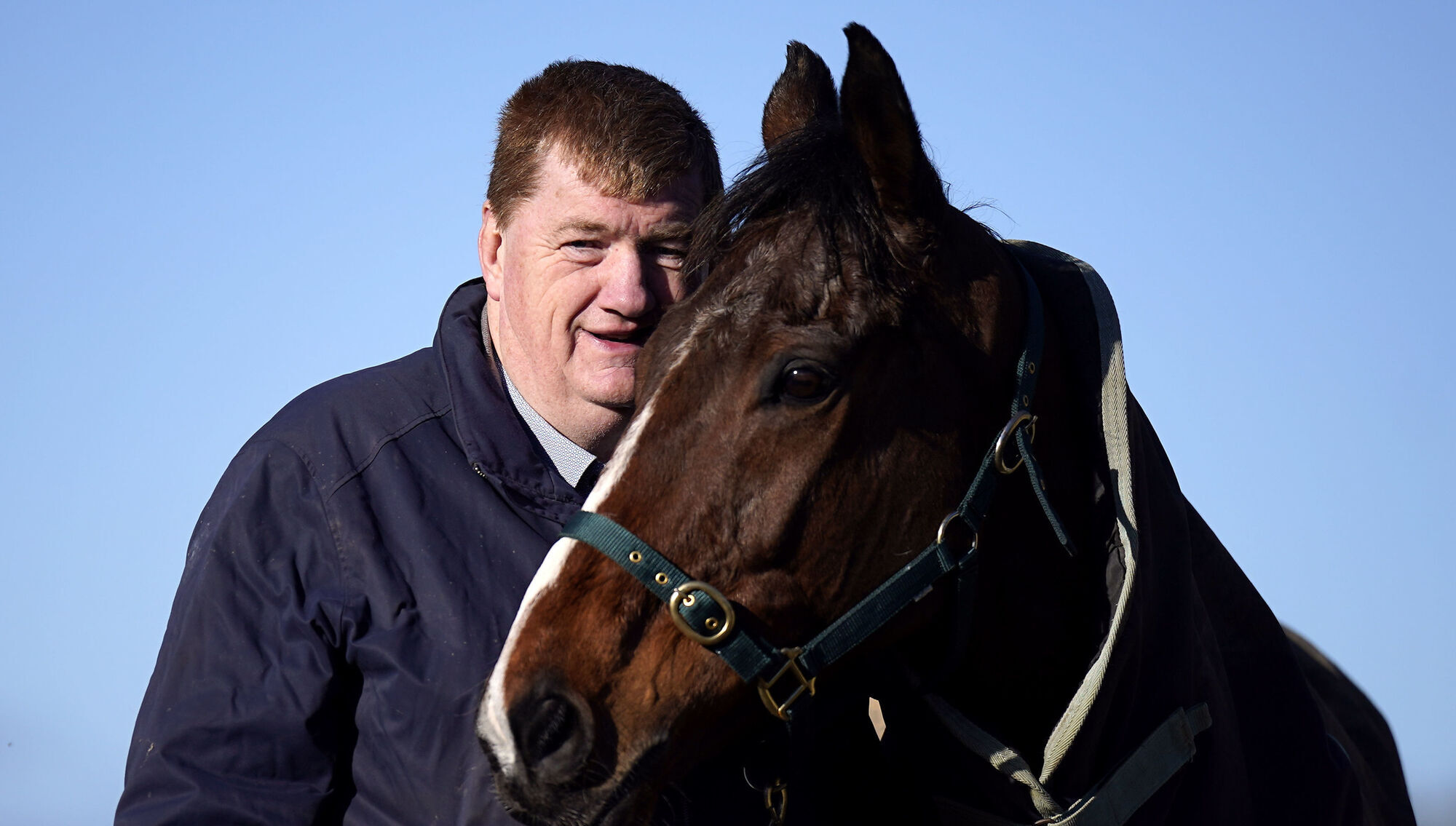
PEOPLE'S FAVOURITE: Hewick with trainer John "Shark" Hanlon. Hewick has been one of the real fairytale stories of the last few years - and now the horse that cost just €850 could spark scenes of unbridled delight in the hallowed Aintree winner's circle. Pic: Niall Carson/PA Wire.
Captain Martin Becher wouldn’t have known it at the time, but when he sought shelter from thundering hooves in the brook near Liverpool that still bears his name, his adventures in the first Grand National in 1839 would form an important part of the story of what became known as the ‘people’s race.’ The more sanitised contest at Aintree this afternoon (4p) is very different to the one that Becher experienced. The National is now barely clinging to its ‘people's’ title and remains in clear and present danger of descending into just another high value handicap chase with an additional novelty of spruce topped fences.
The recent safety initiatives, including fewer runners, safer obstacles, reduced race distance, compressed weights and carefully managed ground conditions have changed the nature of the race, both visually and structurally.
But it’s the threat to the folklore and fairy tales that the race has thrown up for a couple of centuries that could prove the gravest of all challenges to ‘brand’ National - the (purely metaphoric) possibility of a winner from the tiny farming stable that returns home to pull his milk cart the following Monday morning. Or the legendary surprises of 100/1 winners such as Tipperary Tim who finished alone in 1928, Caughoo who emerged from the fog to win in 1947, and Foinavon 20 years later who only won because he was too slow to be involved a melee that stopped the rest of the field.
The possibility of new folklore being made today is slim but still alive. The difficulty is the new normal in national hunt racing – an oligarchy of dominant stables entering their better horses and thereby squeezing out the smaller yards and their dreams of life-changing glory. The highest profile casualty this time around is Mr Vango, one of just six horses trained by the popular Sara Bradstock who sent out Coneygree to win the Cheltenham Gold Cup 10 years ago. Mr Vango is an improving chaser who came up a pound short in the ratings when the handicap was framed and despite being raised nine pounds for winning the Midlands National at Uttoxeter since then, he is not going to get a run due to an absence of slots in a new maximum field size of 34.
The big Irish stables of Mullins, Elliott, Cromwell and DeBromhead saddle 17, or half the field between them and another seven are shared between Nicky Henderson and Paul Nicholls. This leaves just 10 places for everybody else. Seven of these are priced at 50/1 or higher and although miracles do happen there are three smaller operations with more realistic hopes of adding to the canon of fairytales. Step forward Intense Raffles, Iroko and Hewick.
Intense Raffles (12/1) is trained by Tom Gibney at Capranny Stud, just west of Trim in County Meath, from where a then largely unknown young trainer named Gordon Elliot sent Silver Birch to Aintree to win in 2007. Gibney has already won two Irish Nationals with Lion Na Bearnai in 2012 and Intense Raffles last year, and his talented grey seven-year-old has been targeted at today’s race ever since.
He had a couple of ‘sighters’ over hurdles early in the winter before running an excellent second to Nick Rockett in the Bobbyjo chase at Fairyhouse in February, the race won by I Am Maximus en route to glory last year. This performance put Intense Raffles five pounds well in at the weights today and the national is usually won by a well-handicapped horse.
Iroko is handled by the dual trainer combination of Oliver Greenall and Josh Guerriero at Stockton Hall stable in a quiet corner of Cheshire. Joint licences are becoming an increasingly common occurrence in British racing, but they are normally shared among family members, which makes this alliance different. Greenall’s father, 'Lord Daresbury', is a former chairman of Aintree who has part of a grandstand named after him at the course, while Guerriero was born in Italy and came to England when his dad opened a restaurant in Penrith. They separate their roles with equal clarity. Greenall takes care of the cash-flow and the people within the operation, while Guerriero specialises in preparing the horses. Their business model of nourishing carefully constructed ownership syndicates is proving increasingly successful, but Jagwar, who won at Cheltenham last month and Iroko are clearly their two ‘galacticos.’ Iroko has been a long planned Grand National project. Having won the Martin Pipe Hurdle in 2023, injury interrupted his novice chasing season, but he has been gaining plenty of experience through the winter and ran a fine trial for today when second to Grey Dawning at Kelso in March.
While Intense Raffles and Iroko are handled by relatively unexposed trainers, the same can’t be said for their owners who invest millions of euros annually in the sport. Iroko is one of five of JP McManus’ runners today and Raffles is owned by the increasingly prominent investors in expensive bloodstock, Simon Munir and Isacc Souede.
So, if it’s the absolutely purest of fairytales you seek today at Aintree, look no further than Hewick, who famously cost his owner TJ McDonald less than a grand, then embarked on a series of international conquests that has already garnished almost a million euro in prizemoney and earned him the affectionate title of ‘the people's horse.’ And like all good fairytales it has a flawed hero who overcomes severe adversity before going on to live happily ever after. Shark Hanlon, Hewick’s trainer, is slowly re-emerging from a year of personal loss and professional mayhem following the well-publicised suspension of his licence. If the people’s horse can somehow triumph, then the people’s race will be stronger for it.