From Kentucky to the Curragh and back, The Kid who became The Man is still getting it right
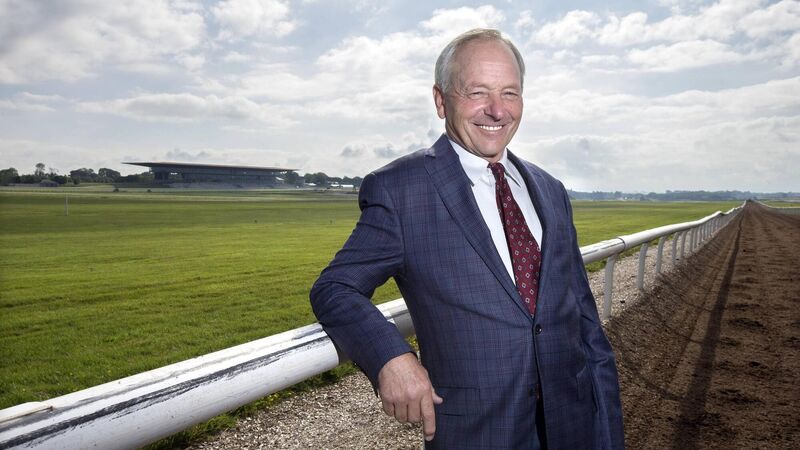
The old stomping ground: Steve Cauthen at the Old Vic Gallop on the Curragh Racecourse grounds. Photo: Tony Gavin Photography
There isn’t a story like it in the world of sport. A 16-year-old arrives in a man’s world, inauspiciously finishing last on his first ride as a jockey at Churchill Downs. The initial winner arrives the next week.
Within a year, he becomes the first jockey in the history of horse racing to accumulate €6m in prize money in one season, breaking Angel Cordero Jr’s record while booting home 487 winners. He is the US champion and garners two Eclipse awards – the overall gong as top jockey as well as the prize for leading apprentice.
Just 12 months after that, he assures himself of sporting immortality when guiding Affirmed to the Holy Grail that is the Triple Crown – victories in the Kentucky Derby, Preakness Stakes and Belmont Stakes. In the subsequent 44 years, it has only been repeated twice.
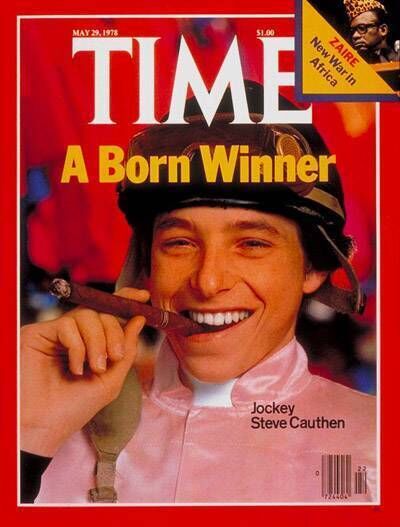
He is Sports Illustrated Sportsman of the Year and on the cover of Time, placing him in a category along with Gandhi, MLK, Ali and Marilyn, along with some rather less salubrious individuals, it must be said.
The kid is big time, and he becomes – The Kentucky Kid. Stevie Wonder and The Six Million Dollar Man are other soubriquets that follow the teenager around.
Making weight is already a challenge however, and within six months, he is on a bad losing spell. He knows people are saying he is washed up.
So when an opportunity presents itself to move to the other side of the world via colourful owner, Robert Sangster, he jumps at it. The chance to escape the suffocating attention is almost every bit as much an attraction as the higher weights in Britain.
One month into his new job, the boy from Covington makes light of the jaundiced view many on this side of the Atlantic Ocean have of the American style of pace judgement and balance over what might euphemistically be described as strength in the saddle. Despite the alien climate and tracks that are completely different to anything he has encountered before, he rockets from the gate and wins his first British Classic, the 2000 Guineas, on Tap On Wood for his new boss, Barry Hills. It is four days after his 19th birthday.
He could retire there and then and still be one of the all-time greats. When he finally determines that he can beat the scales no more, or at least that his mind and body can no longer deal with the consequences of doing so, he is only 32, an age when most Flat jockeys have their best years ahead of them. It isn’t quite John Cleese and Connie Booth pulling the plug on Fawlty Towers after two seasons of just 12 episodes but does leave us wanting more.
He has done it all, having linked up with Henry Cecil and been champion jockey three times – the first American to scale that particular summit in 71 years in 1984. He breaks this particular young fan’s heart when coming out on top after a prolonged, punishing battle with the late Pat Eddery for his third crown in 1987, prevailing 197 winners to 195.
He finishes with a total of nine English Classics, including two Derbies won in trademark front-running style and the fillies’ Triple Crown with Oh So Sharp. In Ireland, he plunders four Classics.
Last Tuesday, he is back at The Curragh, helping to launch the Dubai Duty Free Irish Derby Festival, which takes place from June 24-26, with the Irish Derby, which he won on Old Vic in 1989, taking place on Saturday, the 25th.
Just a little over a month after his 62nd birthday, there are of course a few more wrinkles but he is fit looking and tanned, armed with a ready smile. If ever a sexagenarian can pull off being called The Kid, it’s Steve Cauthen.
***
He has taken the opportunity of an invite to the Queen Elizabeth II’s Jubilee celebrations to do some work but also to renew old acquaintances.
“My main focus was to see all my friends,” says Cauthen. “Because, you know, we’re all getting old.” The most recent reminder of that was the death of Lester Piggott on May 29. Piggott was 86 and so, when the flash American child sauntered into the weigh room in 1979, he was already a grizzled veteran of countless championships and Classics.
After Piggott’s passing, another ex-champion, Clare native Kieren Fallon remarked that he called him ‘sir’ in the stalls, an indication of respect but also of being intimidated, which wouldn’t have been accidental. One can only imagine the welcome Cauthen got.
“He wasn’t very welcoming to me at all, to be quite honest! I’d met him a couple of times in America. And actually, he came over to ride Exceller and I beat him both times. I won the DC International and I won, at the time it was called the Turf Classic. That’s the only two times I’d met him before.
“So then I came over here. He never said much to anybody but he said very little to me. But as time went on, and I started to get where I was competing with him on a regular basis, we gained a respect for each other. And then later on we became friends. I started to understand. He’s a hard guy to understand! He’s different. He’s just so focussed on winning. But he’s a funny guy. He was a very smart guy. He’s just different. He was one of a kind.”
How Piggott dealt with his own weight issues were a case in point of how different he was to Cauthen, who was always convivial and enjoyed a party or two.
“He was battling it but he had learned to deal with it. He could not eat. He wasn’t worried about socialising. I liked being out with people and talking but when you’re out with people and talking, usually you’re drinking and eating and that wasn’t very good for me. But for him, he could be out and he didn’t really wanna be out that much but he’d learned how to do it for himself. But not everybody could live like him. He lived on coffee, a cigar and a piece of chocolate every day. Just a different sort of deal.”
The aforementioned Eddery, born about a Derby distance away from where we are sitting at Curragh Racecourse, is no longer around either. The Newbridge legend died in 2015, aged just 63, having struggled with alcohol for much of his adult life.
“One of the best I ever rode against... He was just a natural horseman. I don’t even think he could tell you what he was doing half the time but he just naturally, was just a great rider.
“I feel blessed, ‘cos I was kinda, when you talk about drinking and whatever, walking away from that… Luckily, I didn’t have a very long career, so it was easier, but it was sad at the end (for Pat) because he was a guy who coulda been a good trainer, coulda had so much more to live for. It’s hard and so unfortunate.
“But as a rider and as a guy, he was the greatest. He was a lovely man. I couldn’t say enough good things about him.” Thankfully, many of the sparring partners are hale and hearty and flourishing; Charlie Murless, Mick Kinane, Johnny Murtagh and Christy Roche to name just a few on this side of the Irish Sea.
The Minstrel and Alleged were the first horses that brought Vincent O’Brien to his attention and when Sangster, who owned the dual Derby and dual Prix de l’Arc winners, got in touch about coming to Europe, he initially thought it would be for the master of Ballydoyle he would work. It was only when he accepted the offer that he learned he was bound for Lambourn.
It seems an incredibly ballsy decision by an 18-year-old but the timing felt right. After a period where racing had suffered from a perception of race-fixing, the Affirmed Triple Crown and battles with Alydar resuscitated the sport. Cauthen was at the forefront of the hype and that was a lot to take.
“I was ready to get away from all that stuff, to get a break from it. That was enough. Just let me be a jockey for a while. Let me not be on the cover of Time magazine or Sports Illustrated. Just let me live a life. You feel like (you’re in) a fishbowl, you know? You wonder how, you know, the Royal Family survive living (that way). I guess they don’t read anything and don’t care. But that’s how you have to almost be. You can’t really care what people are saying about you. Otherwise you’re constantly saying, ‘Am I doing this right?’ ‘Should I be doing something different?’ It’s not a great way of living.”
Imagine what it would be like now, in the world of social media? “God no. Not only that, but they’ve got proof of what you did or didn’t do. God almighty! Before it was just hearsay.”
He landed at his feet at South Bank Stables.
“The good thing was I was with great people. Barry and Penny Hills were great and luckily, they put me with Jimmy Lindley, to help me try to learn the courses. ‘If it’s soft, you probably want to go the stand side here,’ this and that, jockey things you want to know. It still took me three years before I felt I was on a level playing field with the other guys ‘cos it takes time to learn that stuff. Forty-odd tracks in England and a bunch over here. It takes a while. But after three years I felt I was playing on a level playing field.” In 1983 and with Hills’s string neutralised by a virus, he nearly joined Dermot Weld, who had a major American backer in Bert Firestone.
“It was pretty close to happening but in the end, it was more the fact of living here full time. I had been (in England) four years. It was moving again to a totally new sort of atmosphere. And I love Irish people, that’s not the thing, it’s just how many times can you adjust and change? It was just being more comfortable where I was that kept me from doing that.” Instead, Cauthen linked up with Cecil in 1984.
“It killed me to leave Barry. It was one of the hardest decisions of my life but I couldn’t not accept it because of the great horses I knew I had to ride. And I wanted to win. I not only wanted to win the championship, I wanted to win Classic races.” He did just that, often deploying front-running tactics that were not the customary tactic, certainly not for winning Derbies. Both his Epsom triumphs, on Slip Anchor and Reference Point were from the gun. So too his Irish Derby on Old Vic in 1989.
And yet all three were different. He stole a march on the opposition on Slip Anchor, kept enough in the tank to repel allcomers on Reference Point and played with the opposition on Old Vic.
“If Steve sets off in front and you’re behind, you’ve got to be worried,” said Joe Mercer of Cauthen’s inner clock. It was an advantage he knew he had over his fellow riders, a product of the absolute emphasis on time when training in America, light years ahead of sectionals being heard over here.
“When you’re on the best horse, and you know it, and you know how to pace the race, it’s not really that hard,” he says matter-of-factly.
The earlier reference to Eddery not really knowing how he did things is interesting. That is how it often goes with prodigiously-gifted creative talents and artists. How do you explain what seems so easy?
Could Maradona offer an insight into just how he left half of England in his wake and then be so utterly peaceful in mind and body after that lung-bursting effort, to draw Peter Shilton and slide the ball to the net in the ’86 World Cup? How did Michelangelo conceive and complete the Sistine Chapel ceiling? Did Jimmy Barry-Murphy have any thought in his mind as he doubled on that John Fenton Exocet in the All-Ireland hurling semi-final against Galway in 1983, when the sliotar was barely visible even in slow motion replay?
Cauthen does a decent job of putting words on why he liked to get to the front. Less traffic for starters, but it only works if the horse isn’t travelling outside its comfort zone. Basically, he knew he had an advantage over his fellow jockeys when he did it.
But why? How? Like Maradona, Michelangelo and Barry-Murphy, it was instinctive. But like so much of what becomes instinctive, it came from repetition of good practice, years of hard work.
“At the time, probably Lester maybe, but I was one of the few people that was confident enough to go do it. I did it when I had the right horse. I loved to ride from behind too. I rode Triptych, In The Groove. When it was the right way to ride, I was happy to do that.
“But when I had the right horse and I knew that I could control the race from the front, I always wanted to do that because I felt like I had an advantage doing that.
“When I was growing up, my dad made an emphasis on that. I could work 10 or 15 horses in a morning and be within two-fifths of a second of how fast they were. I knew it. I focussed on it and understood… I was pretty good at it. I was good at it over there and I was good over here because nobody else was trying to do it.” He guffaws at the truth of it. He set the right fractions and in time, jockeys faced a dilemma. Take him on and you were going too fast. Let him go and you wouldn’t catch him."
Genius.
***
It isn’t just the facilities at Curragh Racecourse that have improved dramatically. The Old Vic gallop, named after Cauthen’s Irish Derby winner, is as good as there is in the world. But that’s not all.
“The roads! There weren’t any roads like this when I was coming down here.” He considers the track among the best in the world, comparing it to York for its fairness and general propensity for the best horses scoring.
As much as he has fond recollections of the triumphs on the track, the fun times riding for the likes of Mick O’Toole, a brilliantly successful trainer who was just as outstanding a bon viveur, are as memorable. In that era, racing was inundated with such characters, who didn’t just know how to have a good time, they insisted upon doing so, and on bringing as many as possible along for the ride.
“There’s a caricature of all the people at the Phoenix Park in the paddock. Billy McDonald is hanging off some railing or something. Charles Benson and all that crew. You remember the people and it makes you remember all the different experiences you had with them at different times.
“They were a great crew. I used to go down to Barbados and play golf in the winter with Sangster and John Magnier, at the tournament they had every year. It was a crazy time, a lot of fun. I got to meet a lot of the pros, Christy O’Connor and all those guys. They work hard but they know how to have fun too.”
It is 30 years now since he hung up the riding boots and saddle. He got married to Amy the same year and they have three daughters: Katelyn, Karlie and Kelsey. He runs his own stud and helps a few others out with some other farms. He couldn’t be happier.
“I wish I could have ridden till I was 50, because I loved what I did. And I was good at it. That’s the hard thing about quitting. When you quit something and you know you’ll never be as good at anything else in your life as you were at that, it’s hard to leave it. But at the same time, I’ve had a great life. I’ve got a lovely family.
“Your career is a big part of your life, your job. But it should never be bigger than your family and all that.”
The Kid, who became The Man, gets it right, once again.
*The Dubai Duty Free Irish Derby festival takes place at Curragh Racecourse from June 24-26. Tickets available on www.curragh.ie.