New HRI chief executive Suzanne Eade tackling racing's hurdles, one by one
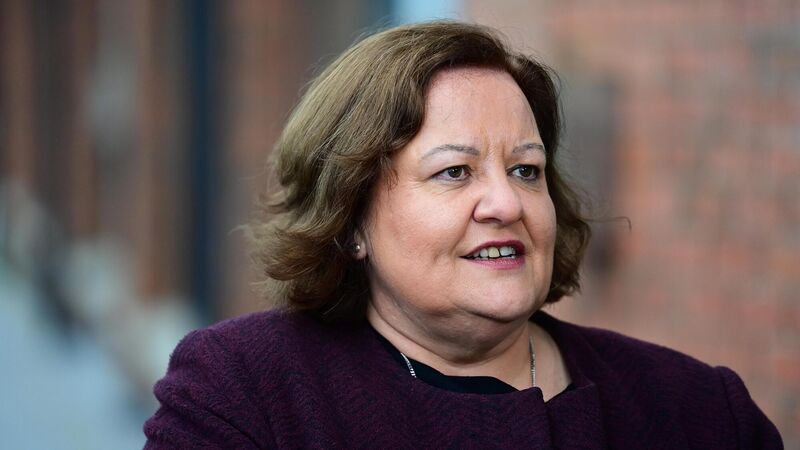
Suzanne Eade, the CEO at Horse Racing Ireland. Picture: Healy Racing
Suzanne Eade, recently appointed as new CEO at Horse Racing Ireland (HRI), considers the question carefully, taking longer than expected to offer an answer. It can’t be that hard to name your favourite racehorse?
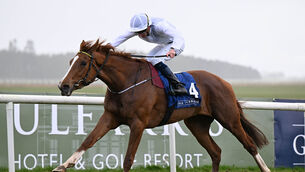
Yet another moment passes, then, “It’s Sea the Stars definitely, go with Sea the Stars.”
Final answer.
This need for precision is unsurprising. Eade is a qualified accountant and has spent much of her working life generating profit statements and finessing balance sheets. What is surprising is that the next answer takes only a nanosecond.
“Favourite ever horse race meeting?”
“Pat Smullen’s charity event,” she responds instantly.
“Not for the race, but for the spirit that day. I watched those jockeys coming back in, mud-spattered, the weather was atrocious, but there was nobody without a smile on their face. A band of brothers. If you look at the picture of AP hugging Pat afterwards it is so emotional, a joy. It made me say to myself that this really is an industry I want to be part of.”
Eade (54) is sitting in a conference room at HRI offices at the edge of the Curragh, close to Ballymany Stud, where Shergar was last sighted thirty-nine years ago this spring. The walls are heavily lined with old racing books, the type experts don white cotton gloves to examine on posh BBC antique shows.
Among the books sits a framed print charting the Epsom Derby winners since the race was first run in 1780. All that history was made by horses but only because the sport has been nourished for centuries by skilled and passionate administrators. Now it’s Suzanne Eade’s turn at the wheel. Is she daunted to now hold one of the most important positions in global racing?
“No, not really. I’ve always I loved organising.” she explains. “I captained the UCD Women’s Golf team even though I was the worst golfer on the panel. The rest were really good and I got to play with some great golfers but I was only captain because I was able to go out and get a bit of funding for the sport. At college you get small grants, but I went out and knocked on the doors of some companies and got sponsorship.”
Her handicap paid the price of her inclination to prioritise administration over practice.
“I could have got a lot lower if I’d put more time into it,” she contends, “but then I moved to England and I thought – ‘right, you better start working harder now, focus on your career, so I stopped the golf. I had no real desire to be an accountant, but it was a means to an end.’
The move to England was to work for Gillette and her decision was soon rewarded with increasingly influential positions in London and Geneva. She returned home after eight years to take up senior commercial positions with Oral B, Procter and Gamble, then Boots but was keen to test herself in a major domestic business. When an opportunity arose to head up the finance decision at HRI in 2016 she jumped at the chance, even though she was only a casual racegoer.
“Racing came to me later,” she explains. “The way the sport was portrayed to me on TV when I was younger was that unless you really understood it you didn’t get value out of it. I could watch racing but not get as excited as I would be about other sports such as golf, rugby, even cricket. That’s why a lot of our focus here now in terms of marketing is education on ‘behind the scenes’ understanding the characters, understanding what makes that horse so brilliant, what makes it stand out from another horse. I think you could study horse racing all your life and still not get it all.”
After six years as Chief Financial Officer she was chosen to succeed Brian Kavanagh when he stepped down as CEO late last year. The public nature of the position and the spotlight that comes with it was the only wobble in her decision to say ‘yes’ to the offer.
“You see, up until this point in my career I have always been a private person, but now I know I have to represent the industry,” she says. “It’s different. News of my new role leaked out before it was publicly announced, I went for a walk and somebody congratulated me who wasn’t in my racing circle, how did they know that? Then you google yourself, big mistake! Mother of Jesus, I thought, what’s happened here. It was the one thing I worried about, ‘do I want to bring this on myself?’ I thought long and hard about that, but now I’m in it, I’m fine with it.”
Eade is speaking during the gap week between the publication of two highly promoted articles in the Sunday Independent on the general theme of ‘Racing’s Dirty Secrets.’ They’re latest in a string of front-page stories denouncing her sport for bullying, misogyny, collusion, dangerous riding, alcohol abuse and drug-taking - and that’s just the two-legged participants. Allegations of systemic doping of Irish trained horses stubbornly refuse to go away. Is this unceasing drip feed of negativity a morale buster within her team?
“Yeah, they do get hurt but it doesn’t derail them. Look,” she emphasises, “We know that our testing is at the same strength as our international competitors. We know that our horses are tested here, tested wherever they travel. Do I find (the allegations) upsetting? Yeah, of course. My job is to promote the sport so anything that looks like it is a challenge to the integrity of the sport is not good.“
One of her key roles with HRI is to fund the Irish Horseracing Regularity Board (IHRB) which polices the integrity of the sport in Ireland but the management structures are entirely separate. She is adamant that this is not an impediment to greater efficiency.
“Those that are involved in racing know the reality, they love their horses, love to care for them. I just want to get the right policies and procedures in place that say, look, ‘if you cheat you are not going to be successful.’ My message is that there is no tolerance of doping, absolutely zero. What I need to ensure is that IHRB have the funding to continue to put the proper processes in place.”
Another immediate issue to be faced is the noise in the relationship with the British horse racing industry. Brexit has made travel and transactions more cumbersome and there has been a mini migration of horses from English to Irish stables recently, seeking both better prizemoney and more skilful trainers. Some British-based trainers are beginning to complain that the Irish are plundering all their treasure.
Eade is relaxed about the situation. “Ireland needs a good British racing model and that we work as colleagues. We both need each other to be successful. That doesn’t mean that we don’t want to get more winners than them but want them to be successful too because that’s where a lot of our horses go. They are big purchasers of our thoroughbreds.”
Neither does she believe that the appointment of another woman, Julie Harrington, to head the British Horseracing Authority (BHA) is relevant to the cohesion between the two bodies.
“Because I don’t originally come from the industry, I don’t have any pre-judgments, I can work with people at face value to progress an issue. I wouldn’t like to stereotype a woman’s approach against men but maybe it’s got a few people thinking that this is a bit more inclusive than we thought, women being trusted with the roles.”
Newly appointed CEOs of large organisations usually begin their tenure with an operational review which then crystallises into a strategic plan. Americans obsess with the ‘first hundred days,’ but Suzanne Eade is playing a longer game and nurses expansive ambitions for her seven-year term.
“I’d like the industry to be still thriving and still building on all the recent successes,” she says. “It’s a global industry and I want Ireland to be on top of the globe. I’d love to see us growing bigger in America, for instance. There is a huge opportunity both for the horses we breed as well as on the racetrack given their tendency now to race more on turf. I see ITM (Irish Thoroughbred Marketing) as a ‘mini-IDA’ for our industry. They go out and get buyers into Ireland.”
To accommodate the continued growth, she plans to sharpen the focus on the skillsets and career pathways at all levels in the labour force by investing heavily in education and training. High on her agenda also is to drive the completion of a second all-weather track at Tipperary, desperately needed to cater for the growing horse population.
Her overriding priority, however, remains funding. She is acutely aware that her performance in the job will be judged on how much money she attracts to the sport and the efficiency of its distribution. Just like her days on the UCD golf squad, she will need to knock hard on the doors of commercial sponsorship and persuasively influence the number announced by the finance minister on budget day each October.
“It’s very hard to have to justify yourself every year when you know what you and HRI are delivering, she says. ”But it is exchequer funding and we need to be more transparent. Funding is always on my mind. Our product is really attractive, the industry is in a good place, what I need to do is keep the prizemoney growing. I am always wondering how do get more funding, more commercial income, how do I tell the story better?”
‘The story’ she is anxious to tell is the politically awkward one - that state funding to the thoroughbred industry has an estimated multiplier of thirty in terms of economic benefit and the bigger the investment, the greater the return to Ireland Inc. Despite employment levels expected to grow to 35,000 in the coming years it’s always a hard sell given the relentless competition for government money.
“The funding this year is less than last year because we had extra covid money so we did some stuff last year and I know it’s working, but I’m sweating, wondering how am I going to keep that going? I hate starting things that I cannot continue, that’s what keeps me awake at night.
One of the more controversial decisions made by HRI in recent years was the 2017 decision to sell broadcasting rights to Racing TV (from Sky) in a deal worth up to €40 million a year. The downside was that it placed Irish racing behind a paywall and impacted the terrestrial television audience. The deal runs until the end of 2023 and negotiations for the renewal have opened and several interested parties are rumoured to be in a developing bidding war. Is this the trickiest decision she’ll face in 2022?
“We got a lot of new fans when racing was the only sport on TV. People engaged with it and we have retained a lot of that,” she says. "I know the switch to Racing TV was a very emotive issue for some people but I think they have invested a lot in the product and the quality of presentation has been brilliant. They have done what they committed to do and I think they’ve done a really nice job.”
So, the price for the TV rights should increase substantially this time around? She considers the question carefully, searching again for precision. “That’s commercially sensitive at this point, I can’t say much. What it has proven is that the Irish product is very desired and media rights are very important to us and we have to go with what’s best for Irish racing.”
Come on, Suzanne, surely the price will be higher than last time?
“Hopefully, that would be the plan, yeah.”
Final answer.