Remembering Pat Smullen: ‘At the time it was a weird feeling that he was so much at peace’
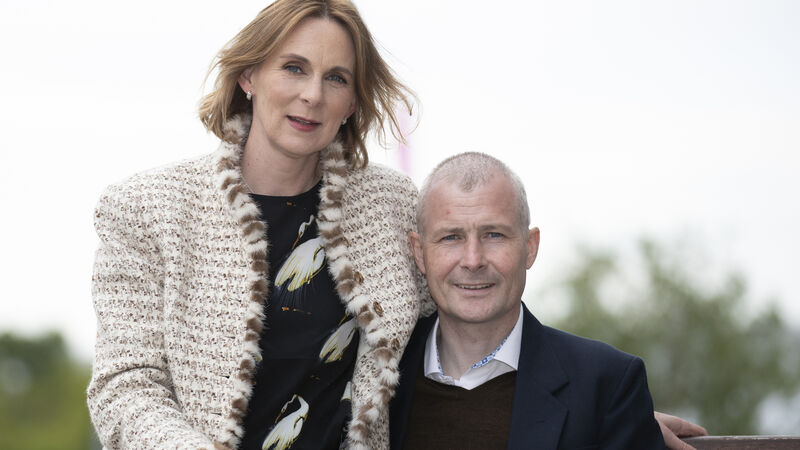
INSPIRED BY DOUBT: Frances Crowley with her husband Pat Smullen at Leopardstown in May 2019. Frances believes Pat’s insecurity was a key part of what made him such a successful jockey. ‘I think most sports people feel like they’re not good enough, they always feel like they have to keep improving just to keep up with everybody else,’ she says. Picture: Healy Racing
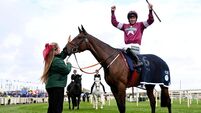
It’s fitting that Pat Smullen’s memoir opens with a superb account of the sweetest moment of a stellar career that saw him crowned Ireland’s champion Flat jockey on nine occasions.
Harzand’s 2016 Epsom Derby success was the fulfilment of a lifetime ambition, a moment of joy so pure that the reality exceeded the fantasy.
“I didn’t think that it would mean as much to me as it did in the end,” he later writes. “Of course, you start riding as a young fellow, you have all your dreams. What race would you most like to win? The Derby. Always the Derby. But then, when I did actually win it, it meant even more to me in reality than it did in my childhood dreams.”
Frances Crowley wasn’t at Epsom that famous June day. She watched her husband’s finest professional hour from the comfort of their home in Rhode, Co Offaly in the company of their three children, Hannah, Paddy, and Sarah.
“I’ll never forget it,” she recalls now. “It was a great day and I think watching on the telly with the kids was actually almost better than being over there because we got to see everything that was happening, which you might not see at the races.”
Did the kids fully appreciate the significance of what their Dad had just achieved?
When they saw me crying hysterically after the race, they got an idea of the significance of it! Sarah’s 11 now so she was quite young at the time, she was only six. If I wasn’t there, it would probably have passed them by a little bit.”
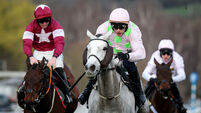
Three weeks later, Harzand and Smullen would complete a Derby double, the horse digging deep to thwart Idaho in an epic struggle at the Curragh.
However, Smullen would soon face a far more serious battle when, in March 2018, he was diagnosed with pancreatic cancer. Tragically, this was one fight he wouldn’t win but his courage, humility, and fundraising efforts inspired and helped so many before his death, aged just 43, in September 2020.
His recently-released memoir, aptly named Champion, was written with the assistance of Donn McClean in the months before Pat’s death and completed by Frances.
“It was brilliant for Pat to be able to relive all the big races and I suppose sitting down with somebody and talking through your whole life has got to be of great benefit,” Frances says.
“He got to remember things he maybe hadn’t thought about for a while so I think it was really good for him.
“I was watching the Frankie Dettori documentary the other night and he was talking about how quickly success happened for him and you don’t get to appreciate it and enjoy it at the time so I think going back over it was an opportunity for Pat to do that a little bit.”
Champion is a fascinating insight into the life of an extraordinarily driven individual, albeit one tortured by his own insecurity.
“I lacked confidence,” Pat writes. “I was riddled with self-doubt throughout my career. There was the fear of failure, and that was massive. That was always there.”
Asked if that insecurity was a key part of what made Pat such a successful jockey, Frances’ reply is emphatic.
“Absolutely. You’d probably find that most really successful sportspeople have that. He was always trying to improve himself, seeing if there was anything he could be doing better and his sheer dedication, commitment, and work-ethic helped in that.
“But I think most sports people feel like they’re not good enough, they always feel like they have to keep improving just to keep up with everybody else. Confidence is such a huge part of being a sports person and particularly a jockey because you transmit that confidence to the horse.
“When I was watching the Frankie Dettori documentary, I was just nodding my head and thinking, they’re all the same.”
Frances was always likely to be able to understand Pat. A daughter of greatly respected trainer and breeder Joe Crowley, three of her five sisters ended up working in racing, most notably Annemarie, the wife of Aidan O’Brien, who was herself Ireland’s champion National Hunt trainer in 1992/93.
Not to be outdone, Frances became the first woman to claim the amateur riders’ title in 1995, an award she shared with Willie Mullins a year later.
Her first memory of encountering Pat was a race in Tramore in 1997 where her future husband had the audacity to finish a head in front of her — hardly the best first impression! “I remember pretending to strangle him over it,” she recalls with a laugh.
Grade One success as a trainer followed and in 2005, Frances became the first licensed woman to saddle a Classic winner in Ireland when Saoire clung on by a short head under Mick Kinane to claim the Irish 1,000 Guineas.
She and Pat had married four years earlier but the strain of their careers would ultimately put their relationship under pressure.
“I know that I didn’t support Frances’s training. Not properly,” Pat writes candidly of that testing period.
I had my own issues to deal with. I wasn’t able to give Frances the support that she needed. I think a lesser woman would have packed her bags and left. Seriously. I wasn’t a nice person to live with at that time.”
By 2008, something had to give. It would be Frances’ training career.
“It was a difficult time,” she says. “Pat was quite difficult to live with (at the time) and he really could not cope with the disappointments and stresses that were involved in my job as well. That’s not surprising and I absolutely do not blame him for that one bit.
“So I did remove him from that situation and I would not share any of the problems or anything that happened in the yard I really tried to keep to myself and that was a huge pressure.
“And to be honest, me going out every day and trying to do that job on my own and be a mother and be a wife, I wasn’t doing any of those jobs properly. Ultimately, me giving up training was the right thing to do. Training is the kind of job that unless you’re 100% absorbed in it and unless you have great support behind you, it’s not a job you’re going to do properly. It was a difficult decision but it was really the only decision I could come to at the time.”
Like most jockeys, keeping control of his weight was a constant challenge for Pat. “It was mental torture,” he writes.
“It’s such a difficult life and I hope people appreciate that after reading the book,” Frances says. It’s the same for 90% of Flat and National Hunt jockeys, it’s something that’s in the back of your mind the whole time. You can never turn it off, it’s always there.
“It would be a difficult enough job as it is without the weight factor but that just raises it to a whole new level. The mental effect of being hungry all the time and constantly thinking about food and often being dehydrated as well and the exhausting regime of just having to perform, it’s such a difficult life.
“To be honest, it’s surprising that there’s not more mental health difficulties and more people in crisis. I don’t think anybody realises and when you see the hardship they get on social media and from punters, if they only knew what these guys have to go through, they’d be in total awe of them.”
Pat’s cancer diagnosis came as a terrible blow but strangely the worst of times were in some ways the best of times.
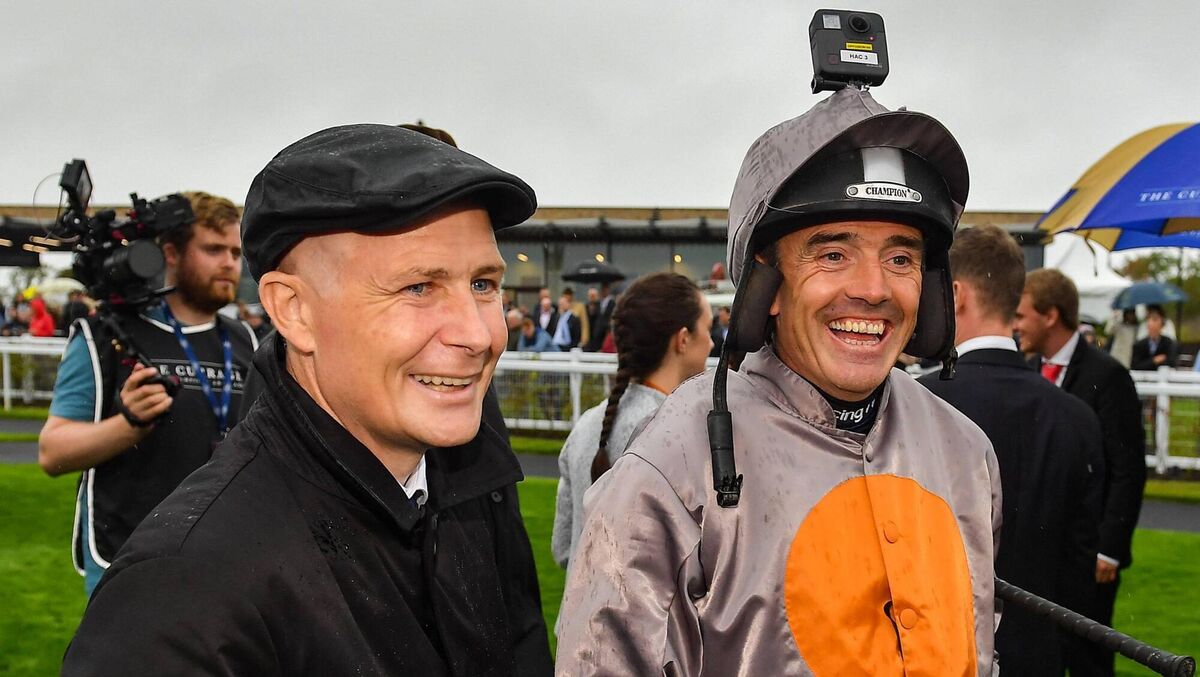
“My sickness changed me, no question,” writes Pat. “I was a much better husband after I got sick than I was before I got sick. I was a better father. A better person.”
Frances concurs.
“Initially when he got sick, you would think it would be a very miserable time but it did remove all the pressures of being a jockey.
“He had to stop riding, there was no choice in the matter so he had nothing to torment himself about in terms of whether he should or shouldn’t be doing it. He had to do it. That was it so he did, in a way, get to relax completely and we did see a different person at that time.
It was a time where we all got to live a different life, he got the chance to live like a normal person even though he was sick. So, although you would think it was a terrible time, it was a lovely time as well.”
After undergoing chemotherapy, there were signs of hope after the second of two operations and Pat was put on a new medication, a PARP inhibitor. He knew his race-riding days were over but he threw himself into a new project, organising a charity race in aid of Cancer Trials Ireland, a contest for retired champion jockeys that would raise a remarkable €2.6m for pancreatic cancer research.
But aside from the money, the Pat Smullen Champions Race for Cancer Trials Ireland on Irish Champions Weekend 2019 was supposed to give him the opportunity to ride in a race one last time. Sadly, it wasn’t to be as in the run-up to the race Pat learned the PARP inhibitor was no longer doing its job. It was a devastating blow with Pat writing that the realisation that he would never ride in any race ever again “hit me like a hammer”.
“The race did give him something to focus on but it was a very difficult time around that period,” Frances confirms. “It put a dampener on it but the day itself was amazing. It was a big milestone for him. I think the fact he died exactly a year later — I know that sounds strange because he obviously had no control over that — was meaningful.”
The final chapter of Champion, written by Frances, details Pat’s final days and hours and some of the strange events that took place in the aftermath of his death.
It makes for heartbreaking but deeply moving reading.
Recalling the moments after he drew his final breath, Frances writes: “It was a moment not just of immense sadness, but also absolute peace, and that was the feeling that enveloped the room. For the longest time afterwards, I sat staring into his gorgeous blue eyes, knowing that I would never get the opportunity again. It felt like I could see right into his soul and I never wanted it to end.”
In the days and weeks that followed, several odd things happened. ‘Butterflies’, the title of the chapter, became an ever-present fixture in the family’s life while lights that hadn’t worked in the past occasionally flickered into life with others going off without any logical explanation.
Reflecting on these strange happenings, Frances explains she was unaware that the butterfly is symbolic of rebirth and resurrection after death.
“To be honest, it wasn’t something I knew was a thing that could happen but afterwards all these things kept happening. I was like: Why did nobody ever mention this? Why is it not known that these things can happen? It was a total shock.
“I mentioned the butterflies and lights coming on or going off and it always happened when you’d be thinking about Pat at the time. For instance, on Christmas morning when the kids were opening their presents, we heard this tapping on the window and here was this bird actually trying to get in. We were like: Woah!
It’s great for the kids to be able to think in those terms that he’s still around. There were so many things and when you’re thinking about him little things happen and you think: ‘That was him.’ It gives me great comfort. Absolutely, it does.
“I remember at the time it was a weird feeling that he was so much at peace. I mentioned in the book that when I asked him if he was at peace, the lights just went off. A few weeks later, I said to him I really think you’re at peace, I know you are and a light popped on at that very second.
“When Hannah and myself were talking about him in the car and we were agreeing that he was at peace and the next thing Hannah said to me: ‘Are you doing that to the radio?’ The volume had started changing on its own. We really felt it was him.
“I know it’s something you can’t explain but it is a huge comfort, so much so that people used to be coming to me and commiserating and I’d almost be saying: ‘No, he’s great, he’s at peace. Don’t be sorry.’ I don’t feel so much like that anymore. In fact it’s almost a sadder time because you feel a little bit disconnected from that feeling but, at the time, that was the amazing feeling I was getting.”
Amazing would also be a good description of both Pat Smullen and Frances Crowley.
Theirs is a remarkable story, brilliantly told in this inspiring memoir.
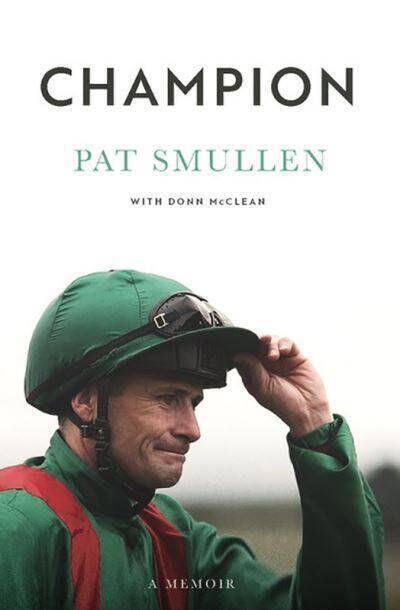
- Champion: Pat Smullen with Donn McClean is published by Gill Books.


Cancel anytime