Colm Greaves: Final closing of Harold's Cross is an intangible loss
There’s a poignant scene in the musical version of Les Miserables when one of the main protagonists, Marius, returns to the café where he and his friends had planned their failed revolution.
He is the only one to have survived the uprising and guiltily laments his lost colleagues in one of the show’s big set piece songs, Empty Chairs at Empty Tables. Even though the scene measures about eight and a half on the soppiness scale, it does convey the sense of sadness for places and times now gone and the memories buried with them.
Harold’s Cross Greyhound Stadium is a bit like Marius’ café these days. The gates are padlocked, the stands deserted, soon to be fodder for invasive weeds, creeping decline and then eventual destruction.
The closure was announced by the Irish Greyhound Board [IGB] last month and although many of the track’s supporters have been prominently opposing the move it is difficult to see how it can be reversed.
This is a money decision and money decisions tend to stay made. IGB is trying reduce the massive debt it incurred during the construction of Limerick greyhound stadium 10 years ago, which they assert “necessitates the sale of Harold’s Cross and the realisation of its asset value.”
In short: dog racing at Harold’s Cross, which has continued since 1928, has been sacrificed to sustain the viability of the sport in Limerick. So the land will be sold, planning permission will be sought and the wrecking balls will come.
Just like they did to Baldoyle and Phoenix Park Racecourses and to Shamrock Rovers fabled old ground at Milltown.
When the Harold’s Cross first staged dog racing it was the third track on the island to do so in the space of a year, following hot on the heels of Celtic Park in Belfast and Shelbourne Park.
It opened ambitiously, advertising a capacity for 40,000 and the management were soon busily promoting a showpiece race they framed for their new track that they called the ‘National Derby.’
This move ignited another of the many robust disagreements that characterised the early competition between the two Dublin tracks, with both clamouring to host the biggest races. Harold’s Cross clung jealously to their Derby until the classic programme was formally codified in 1932.
A compromise was reached where the two tracks staged the race in alternate years, an arrangement that continued until 1968 when it moved exclusively at the Ringsend venue.
The list of great dogs whose career included a spin around Harold’s Cross Stadium is long and rich. The greatest of them all, Mick The Miller, won the Spring Cup there in 1929 before heading to England to win two Derbies and break multiple world records in front of crowds of up to 70,000.
The bitch, Nancy Gooseberg, won 37 of her 38 races there in the late 40s and Spanish Battleship won two of his three Irish Derbies at the track in 1953 and 1955. But to characterise Harold’s Cross as ‘just’ a dog racing stadium would be to undervalue its importance to the cadence of Dublin sport over the last eight decades.
It was certainly more than that to Pat O’Donovan who will feel its loss more keenly than most. An emigre to Dublin from North Cork in the early 1960s, he built a career producing sport on RTÉ Radio until 1998 when he succumbed to the famously persuasive powers of Paschal Taggart, then Chairman of IGB, and took over operational management at the track.
The people he met now have far more prominence in his mind’s eye than the greyhounds. “The stadium was very run down when I first came,” he remembers. “and we had to find a way to revive it or it was dead.
We sold some of the land and used the money to rebuild they place.” Rebuild they did and the fruit of their labours enabled new memories to be created there for another 20 years.
Memories like the ‘what happened next moment’ when the winner of a big televised race lost patience during a delayed interview on the presentation podium and leapt back onto the track to join the next race. He finished seventh.
Or the night when there was a carryover pool reaching tens of thousands on the Tote ‘Pick Six’ and with one race remaining the whole pot rested on one ticket and a single dog.
“When it became clear during the race the chosen dog had no chance of winning,” laughs O’Donovan, “a couple of black bags were mysteriously thrown onto the track. The race was voided, meaning the payout was settled on the first five races only and the holder of the ticket collected it all.
"Some cynical people thought at the time that the bags might not have got there by accident.”
There was the night during the Ryder Cup week in 2006 when the great Arnold Palmer came along and shook every offered hand. Or when the all- conquering All Blacks arrived one evening in 2005, all 51 of them. O’Donovan recalls how it was arranged.
“The scrum-half at the time was Byron Kelleher who had strong Cork connections and we used those to get in touch with him and invite them over. My lasting memory is the effect their visit had on some of our lady racegoers, who seemed very, very impressed.”
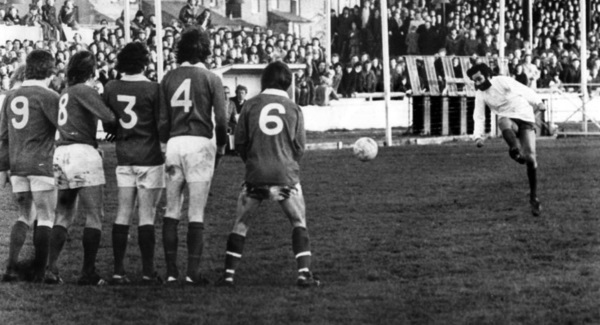
For most of the stadium’s lifespan there was always a secondary association with soccer, including extended residencies by Shelbourne and St Pats. But Harold’s Cross established its lasting stamp on Irish football history in January 1976, the day George Best togged out for Cork Celtic against Shels.
George had been lured over by the former Chelsea and England stalwart Bobby Tambling, who had come to Cork in 1973. A short time later he was the player manager leading Celtic to their only League title.
Tambling was aware of Best’s dire financial straits and promised him a grand an appearance, home games only. The gamble paid off. Over 12,000 supporters turned up to watch his debut at Flower Lodge over Christmas 1975 and the takings were huge.
Best only stayed around for a month, long enough for Shels chairman Ollie Byrne to persuade Celtic to play him at Harold’s Cross for a half share the gate money. Byrne duly got his record crowd, but by now George didn’t even try to hide his disinterest in Irish football. It was to be the last time he ever donned a Cork jersey.
Only time will tell if IGB have got this decision correct. Shelbourne Park will pick up the spare fixtures and there should be no impact on the races available for greyhound owners.
But it’s the intangible loss that’s impossible to measure. The loss of a place warmly embedded in the tribal memory of Dublin sporting culture, a place once vibrant with interesting characters from all walks of life. A place now only of empty traps and empty kennels, where all the dogs have been and gone.