Sport Ireland await key adult safeguarding report
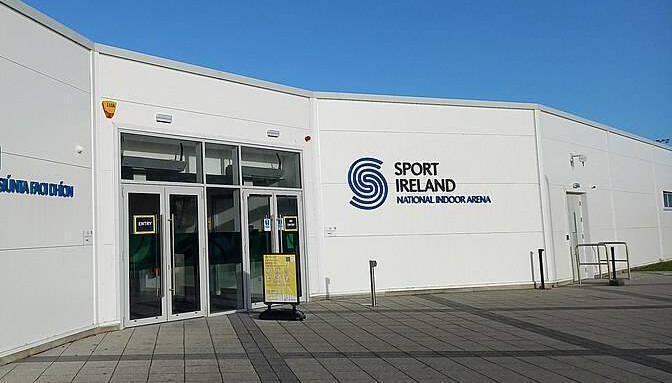
The forthcoming report is expected to contribute to ongoing policy development in this area, as attention grows on strengthening safeguarding frameworks for adult athletes.
Sport Ireland will receive a draft report in the coming weeks on safeguarding in adult sport, amid increased focus on athlete welfare following a series of allegations in recent years.
The review arises in part from allegations of misconduct in women’s football disclosed in 2024, highlighted in a joint investigation by the Sunday Independent and RTÉ Investigates. That process led to three coaches being stood down by the Football Association of Ireland (FAI), which also notified An Garda Síochána and Tusla. The former coaches deny any wrongdoing.
More recently, concerns have also been raised in relation to Rowing Ireland. A Sunday Independent investigation reported that a number of athletes, including former Olympians, expressed dissatisfaction with their treatment and criticised a culture that existed under former performance director Antonio Maurogiovanni.
Responding to parliamentary questions from Labour TD Robert O’Donoghue, Minister of State for Sport Charlie McConalogue confirmed that Safe Sport International has been commissioned to undertake a needs analysis of safeguarding in adult sport.
“Sport Ireland’s statutory function with regard to safeguarding is to develop and disseminate guidelines and codes of practice promoting best practice for the protection of children in sport, consistent with child protection legislation,” he said.
“As a result, its traditional focus has been on the safeguarding of children as outlined in the Sport Ireland Act 2015.
“However, in recognition of the emerging requirement for action both nationally and internationally, Sport Ireland recently commissioned Safe Sport International to conduct a needs analysis in the area of safe sport for adults, and my department continues to engage with it in that regard.
“Sport Ireland expects to receive a draft report from Safe Sport International in the coming weeks.” Mr McConalogue said it is anticipated that the findings and any recommendations will be considered as part of Sport Ireland’s wider governance and administrative framework, as well as in the development of the next 10-year National Sports Policy.
He said he supports the implementation of effective safeguarding policies across the sector, while noting that national governing bodies remain responsible for their own governance, including disciplinary and complaints procedures.
The minister also identified women’s participation in sport as a “core priority” within the current National Sports Policy, which runs until next year. The Government, he said, is committed to addressing the gender participation gap, currently estimated at 2.8 per cent, through a “Sport for All” approach aimed at ensuring equal access.
“Sport Ireland works with the national governing bodies of sport to ensure that appropriate safeguarding and athlete welfare policies are in place, as well as mechanisms to address complaints or issues when they arise,” he explained.
He added that Sport Ireland introduced a national Code of Conduct template for sporting organisations in 2023, setting out expected standards of behaviour across all levels of sport.
At a joint Oireachtas committee hearing in January on high-performance athlete welfare and safeguarding, Sport Ireland said it had responded “immediately, appropriately and promptly” to concerns raised in relation to Rowing Ireland.
Chief executive Dr Úna May told the committee that while the organisation’s remit has traditionally focused on child safeguarding, its role in adult welfare is continuing to develop.
“While Sport Ireland does not have statutory investigative powers, our role is one of guidance and support,” she said, noting that more than 3,500 child safeguarding workshops are delivered annually and that non-compliance with legislation can result in the suspension or withdrawal of funding.
The forthcoming report is expected to contribute to ongoing policy development in this area, as attention grows on strengthening safeguarding frameworks for adult athletes.

CONNECT WITH US TODAY



Be the first to know the latest news and updates