Olympics 2024: Why you shouldn't miss clash of true greats in 400m hurdles final showdown
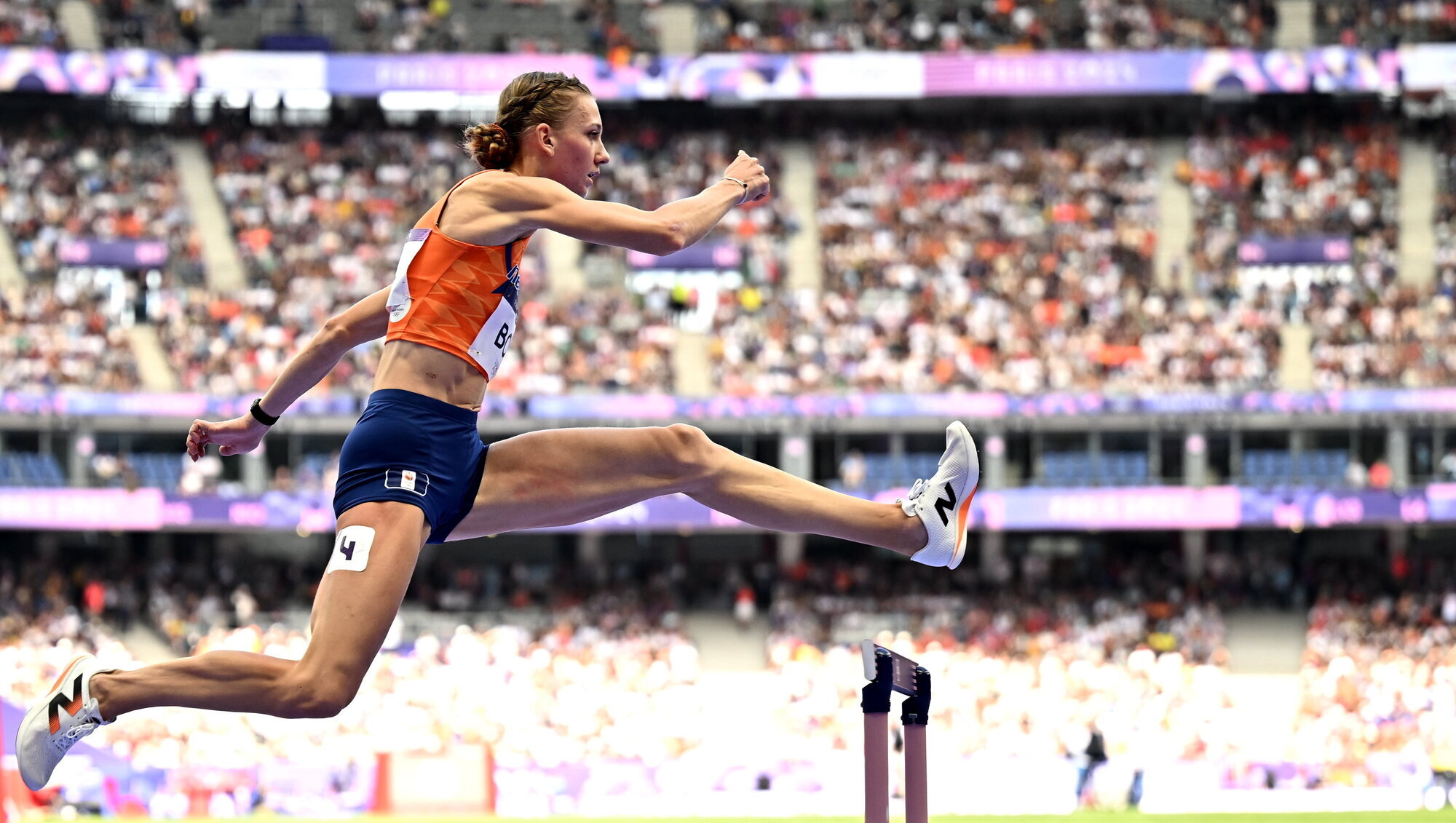
BRILLIANT ORANGE: Femke Bol of Team Netherlands in full flow during the women's 400m hurdles round 1. Pic: Sam Barnes/Sportsfile
Athletes like this don’t come along often. Once in a generation, if you’re lucky. In the 400m hurdles, there’s never been two like them, athletes whose freakish talent and outlying, jaw-dropping ability makes everyone stop and watch and stare in awe as they blitz a lap of the track and soar over 10 barriers – all of it in a shade over 50 seconds.
That’s an absurd, astonishingly difficult thing to do, but Sydney McLaughlin-Levrone and Femke Bol make it look easy.
They make everything look easy. Grab the baton and split sub-48 seconds on the anchor leg of a 4x400m relay? No worries. Leave world-class women trailing in a different postcode as you ease across the line in an Olympic 400m hurdles semi-final in a time of just over 52 seconds, which would have been a world record just five years ago? Grandest.
But what they are doing is not easy, and it’s never been anything remotely like achievable for anyone else besides these two. They are absolute outliers. Two global champions. Two world record holders.
But there’s only one gold medal.
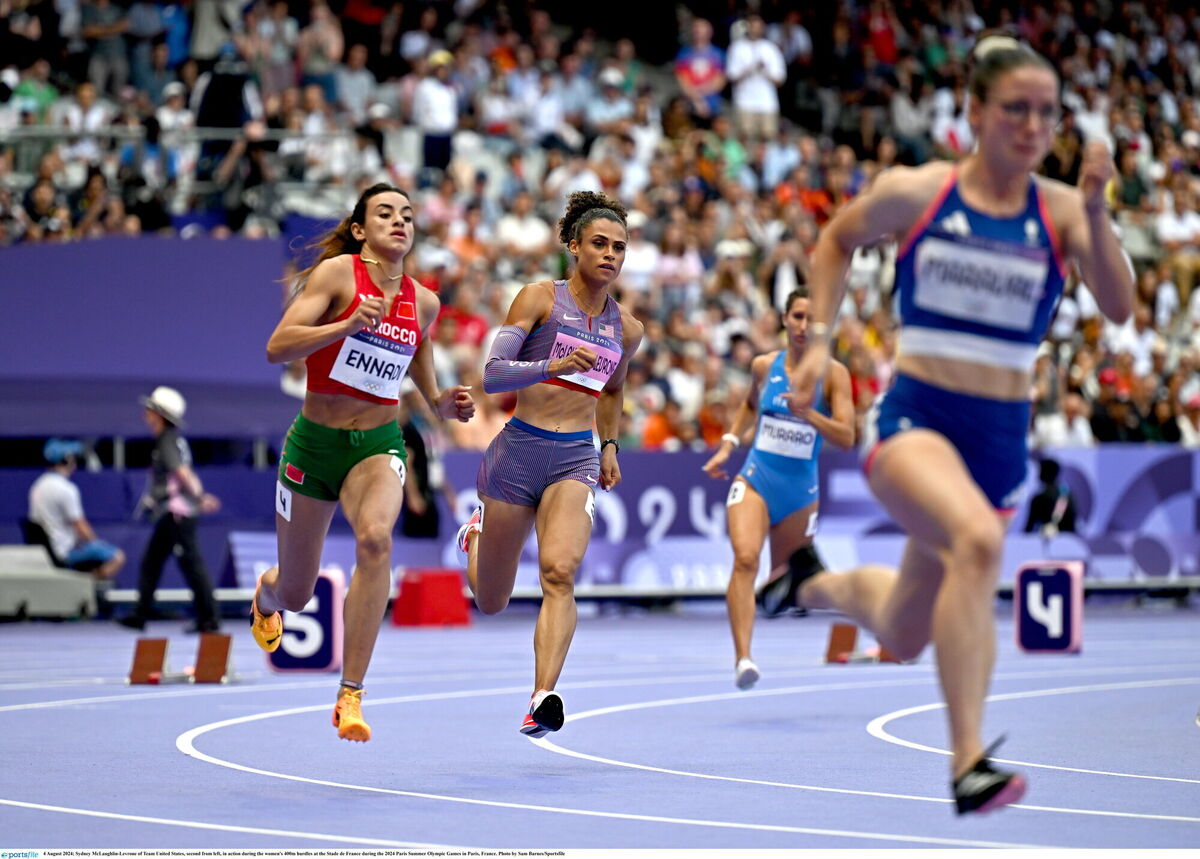
At the Stade de France in Paris tonight, fans of athletics – and of the Olympics in general – will get to savour one of the greatest head-to-head clashes of these Games. The women’s 400m hurdles final goes to the line at 8.25pm Irish time. Don’t miss it.
Given it’s one of the sport’s top rivalries, it’s strange to think they’ve actually only raced twice. That’s it. In the Olympic final in Tokyo, McLaughlin-Levrone smashed the world record with 51.46 to win gold, Bol finishing third in 52.03.
The other time was in the 2022 world final in Oregon, McLaughlin-Levrone ascending to a whole new level, clocking a mind-boggling 50.68 to win by a street ahead of Bol (52.27). McLaughlin-Levrone missed last year’s World Champs in Budapest due to a knee injury and Bol finally got the title her talent and ability long deserved, powering to gold in 51.70.
Bol is 24, McLaughlin-Levrone is 25, and both come in in the form of their lives.
On the track tonight, there will likely not be much separating them. McLaughlin-Levrone is the undoubted favourite, having broken her own world record to win the US title in June with 50.65. That weekend, many fans were essentially hanging the Olympic gold medal around her neck.
But then Bol went to La Chaux-de-Fonds in late July, a town in Switzerland synonymous with fast times due to it sitting at almost 1000m of altitude. She smashed the European record there, going under 51 seconds for the first time with 50.95. Suddenly, she was looming large in Sydney’s rear-view mirror.
The certainty was no more. The aura of invincibility may still follow in the scorching slipstream of McLaughlin-Levrone, but it’s affixed with an awareness that one slight error, one tactical misjudgement or one clipped hurdle or moment of mental fragility will be seized upon and devoured by her greatest – and in truth her only – rival.
They have vastly different approaches to the sport, even if their profiles and performances are strikingly similar.
Bol likes to race – a lot. Her coach Laurent Meuwly clearly subscribes to the theory that peaking for one event is not mutually exclusive from running many others on the way there. He doesn’t wrap Bol in cotton wool. She ran 29 races last year: on the flat, over hurdles, indoors, outdoors, relays. She is accessible. She is present. She is there from Continental Tours to Diamond Leagues to nationals to major championships. It’s why she’s the undoubted fan favourite.
McLaughlin-Levrone, however, doesn’t like to race a lot. Or more accurately: her coach Bobby Kersee doesn’t like her to race a lot. Her preternatural talent – which revealed itself in her early teens, when she set age world bests all the way up along during her adolescence – is kept wrapped up for so much of the year by Kersee, who has eyes only for one prize: the major championship.
To him, nothing else matters. Would it be nice if fans got to see more of one of the sport’s A-list stars? Sure, but in Kersee’s mind, a strained hamstring or a clattered hurdle is not worth the risk. And anyway, why is it his or her responsibility to grow the sport? Don’t her performances already do that? Isn’t her job – the one she’s paid a whopping amount of money to do by New Balance – to go and win Olympic gold? Absolutely.
And if that means she has shown up at a grand total of one Diamond League meeting – the sport’s top professional circuit – over the last four years? Well, that’s someone else’s problem.
Still, visibility earns you fans, and for years there’s been a marked difference in how they have viewed both McLaughlin-Levrone and Bol. After the semi-finals two nights ago, I put a poll up on Twitter/X to ask who would win the final. It got close to 2,000 votes, with 53% going for Sydney and 47% for Femke.
To me, many were choosing the result they wanted to see rather than the one they likely will see. But the great thing about this race? We just don’t know. Bol split a terrifying 47.93 on the anchor leg of the mixed 4x400m relay last Saturday to carry the Dutch to gold. She’s never been in form quite like this before.
To try to close the gap on her rival, she and her coach rebuilt her entire race approach last year. She now runs with 14 strides (instead of 15) to the seventh hurdle, each of them about 12cm longer than they used to be. With McLaughlin-Levrone around, they had no choice. It was either find a way to run faster or accept that you’ll only be running for silver.
McLaughlin-Levrone’s best split in a 4x400m relay? The 47.91 she ran to anchor USA to women’s 4x400m gold in Oregon two years ago, just two hundredths of a second faster than Bol the other night.
They look well matched even if, on recent form, McLaughlin-Levrone should just about have enough to shade it. But there is massive pressure on the shoulders of the US star and that can do strange things to an athlete. Bol has been building to this moment for years, making herself strong enough and fast enough and so technically proficient that she can finally take a realistic shot at the queen of her event.
Athletes like this don’t come along often. Clashes like this are even rarer. And so whatever way this goes, it’s best to savour every second.

CONNECT WITH US TODAY



Be the first to know the latest news and updates