Ireland's Golden Boys write final chapter of a Lightweight rowing legacy
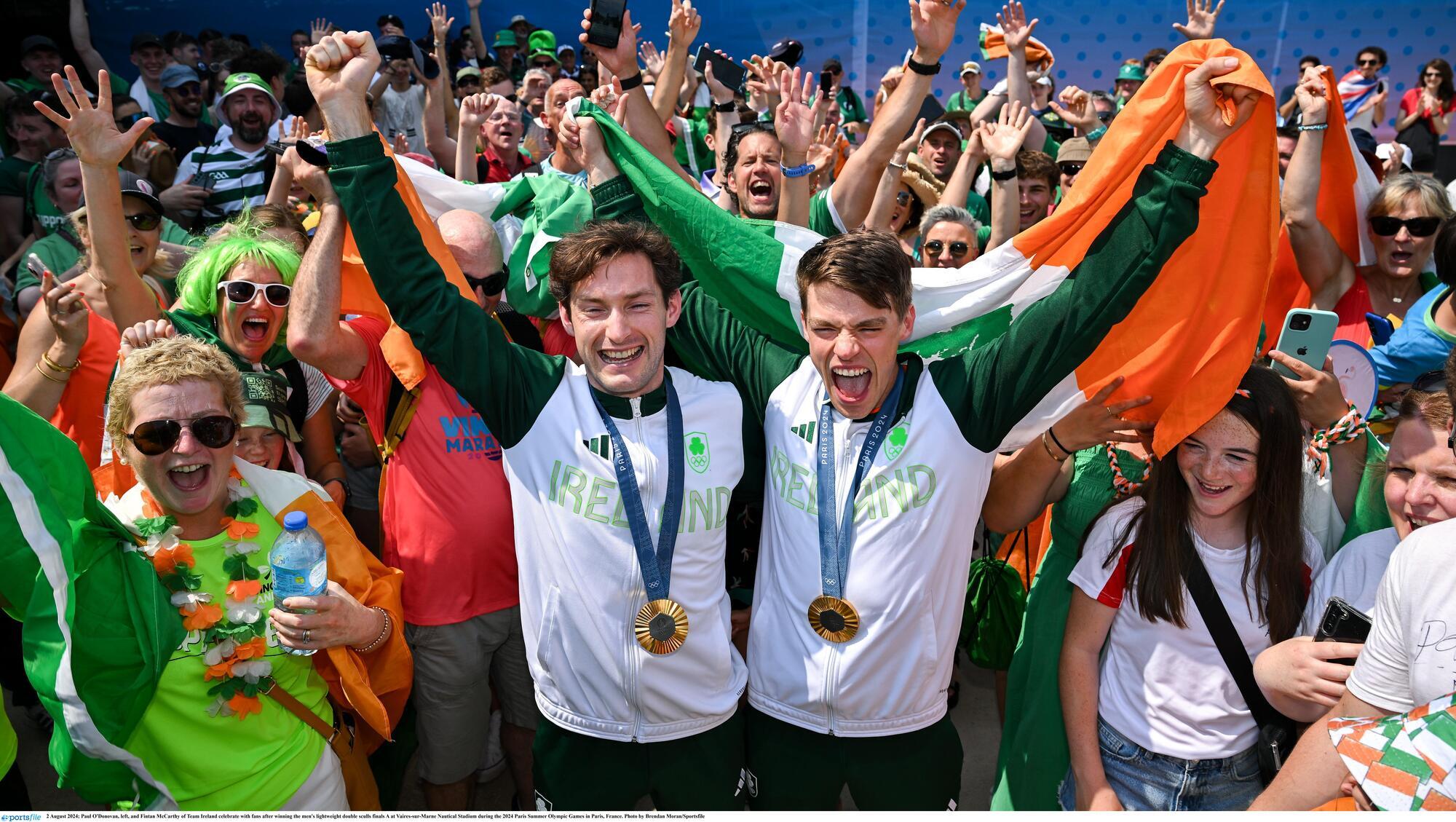
O'Donovan, left, and McCarthy of Team Ireland celebrate with fans
We’ll never see their like again. Ever. Lightweight Olympic rowing, after Friday’s events here on the outskirts of Paris, is now, officially, a thing of the past. Consigned to the attic of Pierre de Coubertin’s continuously remodelled house beside boxes labelled tug-of-war, motor boating, sculpture and literature competitions.
“We had our last ever weigh in this morning,” said Fintan McCarthy on Friday, and in a voice that suggested it had just then occurred to him. “I’d say this is the skinniest I’ll ever be. Weighed in at 68.9. A bit under the target. Who knows what would have happened if I had drank a little bit more? 69 is the target. Ahead of the curve.”
Lightweight rowing spanned eight Olympiads, from 1996 to 2024. It was introduced to grow the sport and it succeeded in spades on the small island of Ireland. It laid the stage for a crew of two that, whatever they do now, in or out of the water, has giddied an entire nation and spearheaded this country’s wider journey from Olympic nobodies to notables.
Paul O’Donovan and McCarthy’s gold medal on Friday made them the first Irish athletes since Pat O’Callaghan in 1932 to defend an Olympic title. O’Donovan is the first Irish athlete to medal in three Games. And they will be the last ever winners of a men’s lightweight double sculls race that has known just six champions in eight runnings.
McCarthy played down the relevance of all that at first. It was a reflexive move common to all athletes when the sweat is still pouring down their backs. It was later when he admitted that there was something in the knowledge that this page of history will end with their names attached to the closing lines.
Tomasz Kucharski and Robert Sycz trumped them by 20 years in retaining this particular crown but the Poles never came close to the numbers their Irish successors have generated, either in medals or in crossover appeal. The latter began, of course, in Rio eight years ago when Gary O’Donovan partnered his brother in the boat.
What a ride it’s been since.
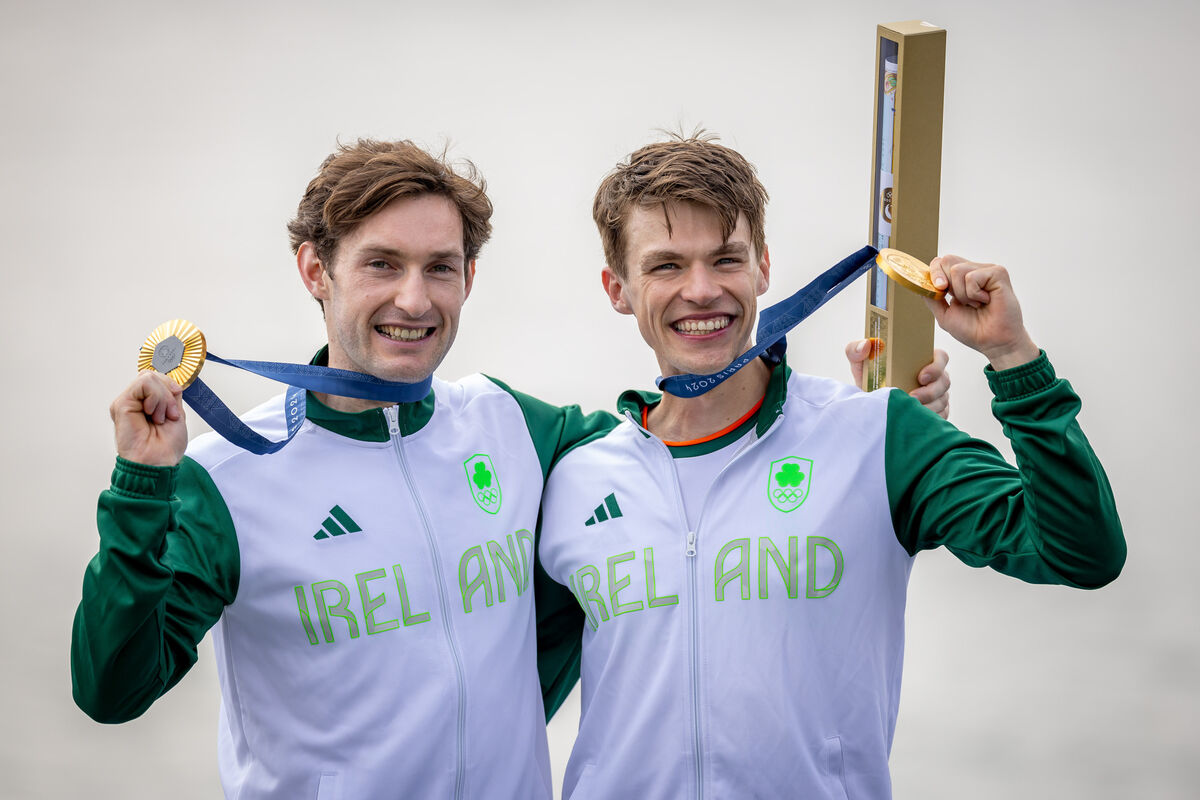
Paul O’Donovan and McCarthy have laid their own claim to hearts and minds and to back-to-back Olympic golds. There have been three top steps claimed in World Championships and another hat-trick in the Europeans. Wherever the path takes them now they have laid a carpet of crumbs for others to follow.
“We had three crews in Rio, we had a record number of qualifiers in Tokyo and we’ve broken that record again here,” said O’Donovan. “We had more boats again in finals this year and the heavyweight men took a [first ever] bronze medal as well.
“I don’t see any reason why we can’t continue that success into the future, you know? It is really exciting and really motivating for young people. Every year we see underage crews at World Championships, starting to make ‘A’ finals and win medals.”
Maybe we will see them both in LA in four years’ time. Maybe they will still be together, or hitched to other wagons, or paddling their own canoes. Maybe they will stand on another podium at the Long Beach Marine Stadium in 2028 which, interestingly, will be 500m shorter than the normal 2,000m that has become the norm.
They are both going along with this changing tide. Neither are big men in terms of physical stature but O’Donovan has already rowed at heavyweight earlier this year and the sheer joy they exhibited as they grinned and jumped around on that jetty before Amhran na bhFiann spoke for a love that burns as bright as ever.
“It’s been great,” said McCarthy. “It’s just been so much fun, and from the very first stroke I’ve just loved rowing. To be able to do it for the last however many years I’ve been at it, it’s an honour and a privilege, and not many people get to follow their dreams like that. It’s what I’ve come back to every time. It’s just been really good.” Both of them wear this greatness so lightly.
They are two of the most unremarkable remarkable sportspeople you could meet. They capped their dominance of lightweight men’s double sculls rowing in trademark style, and on the back of rarely heard doubts as to their chances. The Swiss were talked up, the Italians had put in a blistering World Cup season. People wondered.
Then the race was over with 500m to go. The Swiss were burned off first, then a Greek duo that surprised everyone by hanging in for bronze, and finally those Italians who had threatened to do what no-one had done across any entire Olympic cycle and beat the Skibbereen boys in a major championship race.
No histrionics. No dramatic last-ditch lunge for the line. Just the inevitable smooth surge of two ordinary, understated but extraordinary men pointed inexorably towards their destiny. And a sea of green, white and orange soundtracking them home.
That, as they say, is a wrap.

CONNECT WITH US TODAY



Be the first to know the latest news and updates