Rhys McClenaghan to unleash upgraded routine for pommel final
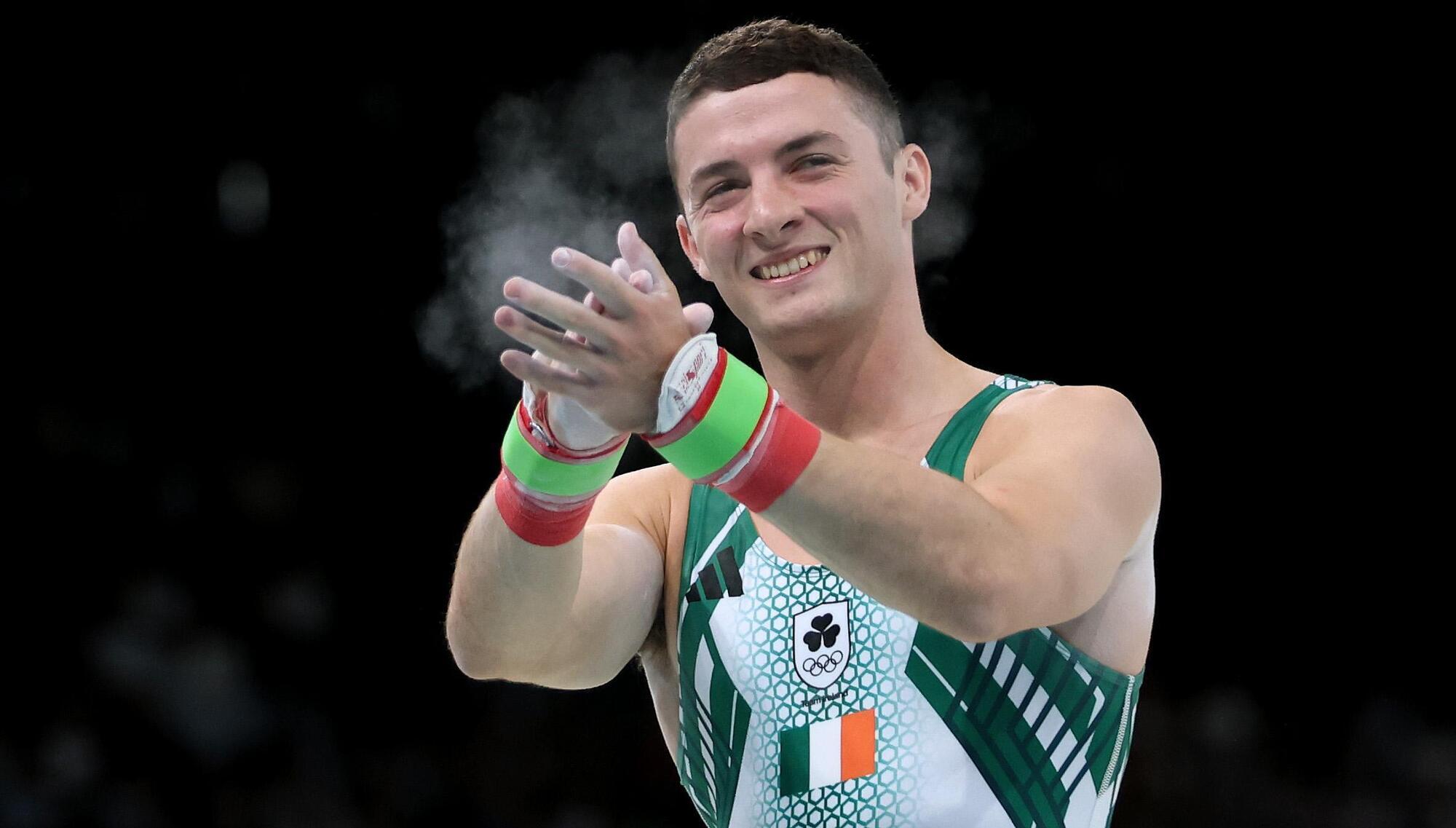
McClenaghan celebrates after his routine
Everyone has their story. %Rhys McClenaghan's has been one of the most absorbing of this last two Olympic cycles, his highs being World and European titles and his lows bringing panic attacks and a renewed focus on his mental health.
On Saturday, shortly after five o’clock French time, he will emerge onto the floor of the Bercy Arena and try to capture the one major title that eludes him in the men’s pommel final. It won’t ‘fix’ him, as he said on RTÉ’s Path to Paris programme, but he is in a good place.
McClenaghan nailed a 15.200 joint best score in qualifying last Saturday. He declared himself confident and happy to be doing what he loves in front of a full and appreciative crowd. It “means the world”, he said in one breath, then dismissed the idea of pressure in another.
The plan now is to unleash an upgraded routine from the one he nailed seven days ago so that he can post a higher score and put himself out of reach of the rest. But, again, everyone has their story, their ambitions and their abilities.
Loran De Munck will represent the Netherlands five years after a change of diet stopped him quitting the sport for good. Woong Hur is a last-minute injury replacement for a South Korean colleague with gold as his stated ambition.
Oleg Veniaiev is a Ukrainian whose four-year ban was reduced to two after testing positive for meldonium. The USA’s Stephen Nedoroscik is a 2021 World champion on the pommel who wears sports glasses for comfort and as a superstition while competing.
Everyone is different but, in other ways, the same.
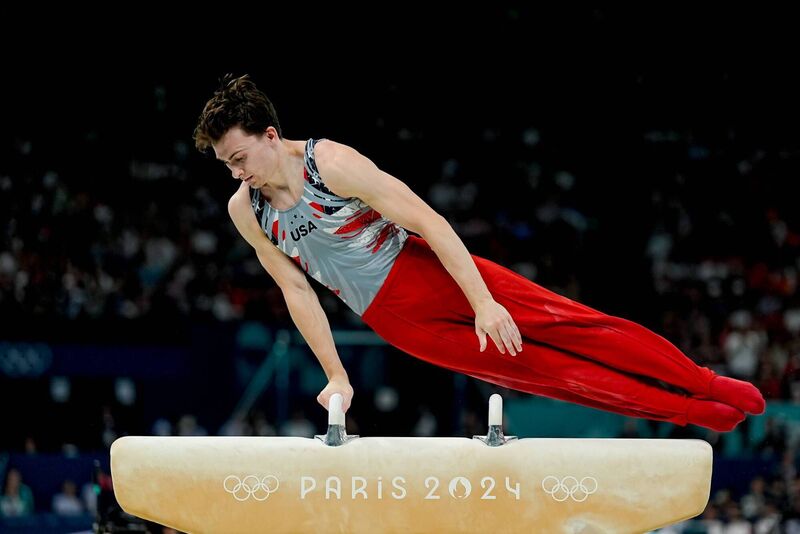
“This is truly a dream come true and it’s all still so surreal to me. I have experienced injury, failure, success, loss, and every feeling in between this quad. There have been moments where I thought, 'maybe I can’t', but I continued to dream big.”
That’s Nedoroscik speaking. It could be any one of the eight.
Max Whitlock could certainly have uttered those words. The man from Essex is the most successful British gymnast ever with three Olympic titles and three World titles. He is the reigning Olympic pommel champions having retained the title first won in Rio in 2016.
He is also, like McClenaghan, and so many other elite athletes, someone who has had his battles with his own mental health. He took 18 months out of the sport after Tokyo and is now competing at his fourth Olympic Games.
What brought him back?
“Understanding how I felt, talking to the people around me and getting back in the gym. I realised at that age that gym wasn't just a sport I was doing. It was something that gave me a lot of purpose, a lot of meaning.
“When that was taken up completely, that's when I struggled. So, I learned a lot of lessons through that period. Coming back to the gym, I had my ambitions, I had my pathway and things I wanted to achieve.”
Now 31, any illusion about top-level sport becoming easier was dispelled during these Games when he shared the emotional difficulties involved in a sport where one slip in qualifying or a final and your ambitions could be dust.
“They were absolutely more,” he said of the nerves. “I can't even put the feeling into words. I had to wait a while before that pommel routine as well. The judges said like, ‘it's gonna take some time’.
“And, yeah, the nerves were there big time. I think you'll never get used to the minute you kind of feel zero nerves in a competition. That's when you should have stopped, before that moment.”


CONNECT WITH US TODAY



Be the first to know the latest news and updates